

Film crew hire/Cambridge/Clapper loader
Hire a clapper loader in Cambridge. A clapper loader slates every take and looks after the cards or film on your shoot.
People book a clapper loader in Cambridge for labs on the Biomedical Campus, offices at the Science Park and the colleges. A clapper loader, or 2nd AC, helps prep the camera package, slates the takes, loads the cards or film magazines and keeps the camera report the edit relies on. Our clapper loader day rate starts at £355, and the loader gets all of it.
- 54 five-star Google reviews
- 2 hrs for our team to read your brief, in working hours
- £10m employers’ liability on every crew member we book
- 2,800+ freelance crew on our books, across the UK

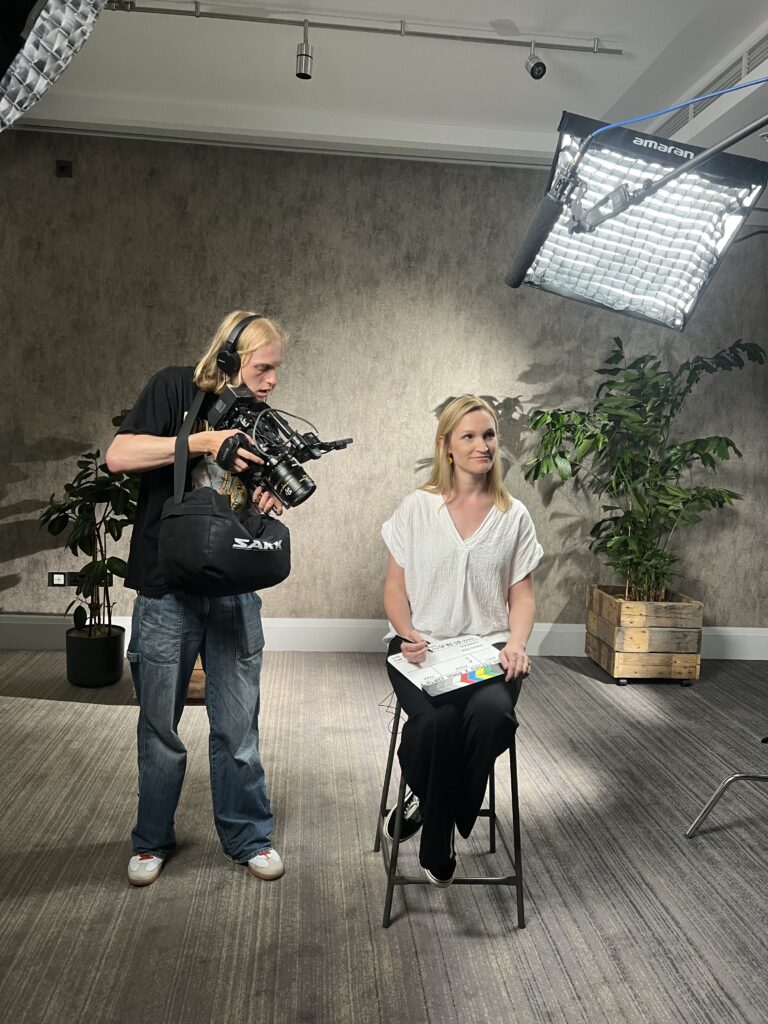
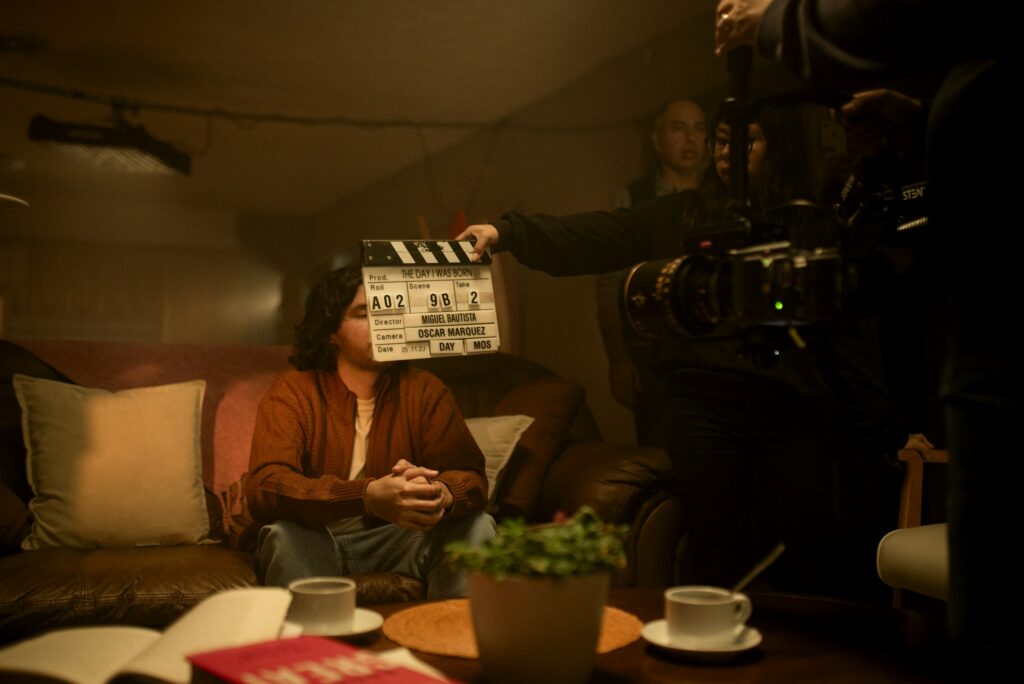
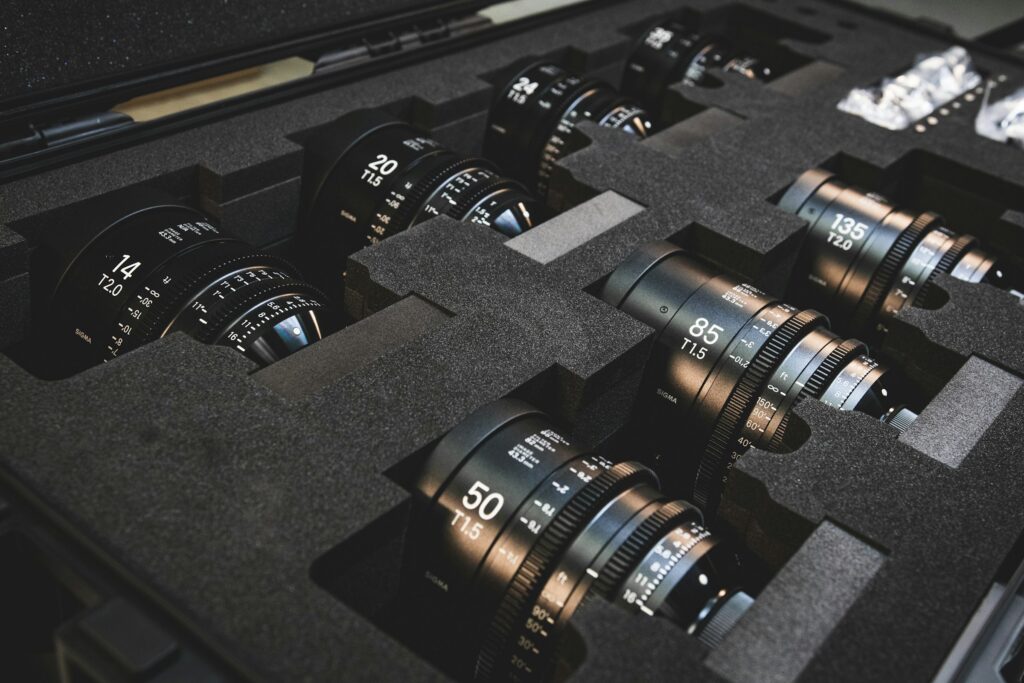

Photos: Here Now Films, Mike Bautista, Voice + Video and Nathália Arantes
The role
What a clapper loader does on your shoot
A clapper loader, or 2nd AC (second assistant camera), runs the paperwork and the media of the camera department. They mark every take with the slate, so sound and picture sync and the editor knows what’s what. They load and unload cards, or film magazines on a film shoot, and keep the camera report.
On film, the loader is the one person who handles the negative before the lab. They load magazines in a changing bag or a darkroom tent, can the exposed rolls and label every can. One mistake there costs a day.
Most of our Cambridge crews come from London. The fastest trains take under an hour. When a loader who lives in Cambridge fits the brief, we book them first. We add the travel to the quote before anything is booked. In practice, camera assistants for Cambridge shoots usually come from London with the camera package, after a prep day at the kit house. The loader helps the focus puller check it out, and the prep day goes on the quote as its own line.
- Every take is marked. The loader writes the scene, slate and take on the clapperboard, so the edit can find each take and sync it.
- Every card and roll is accounted for. The loader logs cards or film rolls in and out, and never formats a card before it’s backed up.
- The camera report is right. It records the lens, stop, filters and notes for every take, for the editor and the colourist.
- Batteries and lenses are ready. They’re charged, cleaned and where the focus puller needs them.
What’s included
What the day rate covers
In the day rate
- An 11-hour day, including an hour for lunch
- Slating every take, with timecode where it’s used
- Loading and unloading cards, or film magazines
- The camera report, lens log and media log
- Handing cards to the DIT, or film cans to the lab
- Batteries, consumables and the camera cart
On top, each on its own line
- Our 10% booking fee and 2% insurance, on the whole quote
- Film stock, processing and scanning, at cost, on a film shoot
- A prep day at the kit house, if the package needs one
- Travel from London or outside Cambridge, at cost
Read how our rates work and the two ways to book in crew rates in Cambridge.
Two ways to book
Crew hire or full production
The price depends on who is the producer of record. That’s the company responsible for the shoot. You can book a loader for your own shoot, or ask us to run the whole production.
Crew hire
You run the shoot.
10% + 2% booking fee and insurance on everything we book for you, including crew, kit and travel.
We do
- Find, book and brief the crew, and pay them
- Book kit, travel and hotels too, if you want them
- Send the full price before anything is booked
- One person to call all day
- Employers’ liability for the crew we book, and insurance on kit we hire in
You do
- Run the shoot, or your producer does
- The plan, the schedule and the call sheet
- The location, its permission and its public liability
- You’re the producer of record, so the production is your responsibility
The 2% covers employers’ liability for every crew member we book and the kit we hire in for you. It doesn’t cover anything else on the shoot. A large kit rental may need extra insurance, which goes on the quote as its own line.
Full production
We’re the producer of record.
15% + 5% production fee, plus insurance and contingency, on the whole production budget. We quote it as a production.
We do
- Our producer plans it with you and runs the day
- Locations, permits, kit, studio, travel and hotels, booked and paid in our name
- Insurance for the whole shoot, public liability included, plus the risk assessment and the call sheet
- One contract and one invoice, so overseas teams need no UK company
You do
- The creative calls
- Signing off the plan and the budget
The 5% pays for our production insurance across the whole shoot, including £10m public liability, and the contingency.
If your own producer or director will run the day, book crew hire. If you want us to run the production, ask for a full production quote.
On the day
An example day with a clapper loader
A 35mm advert with one set and two cameras, in a studio hired by the day in Cambridge. The times are an example. The call sheet sets the real ones.
- 06:30 Load the mags The camera van arrives at the studio from the kit house. In a darkroom tent off the set, the loader puts fresh rolls into the magazines and labels each one with the stock and roll number.
- 07:30 Camera cart The batteries are charged, the lenses are on the cart, and the slate and camera report are ready.
- 08:30 First take The loader puts the slate in, calls it clearly and steps out of shot. They write up every take with the roll, slate, take, lens and stop.
- 10:00 Mag change A 400ft roll of 35mm runs out after about four minutes at 25 frames. The loader puts a new magazine on in seconds, then cans and labels the exposed roll.
- 13:00 Lunch The loader logs the short ends and reloads the magazines for the afternoon.
- 14:00 Second camera The loader slates two cameras at once, with a mark for each.
- 18:30 Wrap Every can is taped, labelled and on the lab sheet. The camera report is signed and handed over.
On film, the job often starts the day before at the kit house. A 35mm package usually comes from London, and the loader preps it there with the focus puller before it travels. On a digital shoot the day is the same, with cards instead of film. The loader logs the cards out, hands them to the DIT, and only formats them once two verified copies exist.
We checked this in November 2026. Fees and rules change, and this page isn’t the official source. For the latest, check with Cambridge Production Studio.
Types
Types of loader we book
The job changes with the medium. These are the kinds of loader we book.
Digital 2nd AC Cards, slate and reports Card £355–448
A digital 2nd AC slates, swaps and logs cards, hands them to the DIT or data wrangler, and keeps the camera report.
Good for brand films, adverts and drama on cinema cameras.
Film loader 16mm and 35mm Card £355–448
A film loader loads and unloads magazines in the dark, cans and labels every roll, keeps the stock and lab sheets, and gets the cans to the lab.
Good for anything shot on film. Book someone who has loaded film recently, because it’s a skill you keep by doing it.
Loader and data Two jobs, one person Quoted on the brief
On a one-camera digital shoot, the 2nd AC can offload cards with verification software between set-ups, or take over as DIT at wrap, as ours did on a studio day in Woolwich, London. See DITs in Cambridge.
Good for small crews where a separate DIT would sit idle.
Focus puller, 1st AC Focus and the camera Card £461–575
The focus puller is the senior assistant, who pulls focus and runs the camera. See focus pullers in Cambridge.
Book one alongside the loader on any cinema camera shoot.
What it’s for
What people book a clapper loader for in Cambridge
Brand films in the city centre
Adverts round King’s Parade, Market Square and the river need every take slated and logged for the edit. Cambridgeshire County Council handles the streets, and the Conservators of the River Cam handle the river.
Life science and tech films
Interviews on cinema cameras are filmed in the Cambridge Biomedical Campus, the Science Park, Granta Park and the Wellcome Genome Campus at Hinxton.
Conferences and events
Two or three cameras on a talk or a panel are slated and logged at once, with interviews filmed between the sessions, at college conference venues.
University and research films
Crews film in courts, chapels, labs and libraries, with every take slated and logged. Each college decides on its own buildings.
Heritage locations out of town
Film shoots at Ely Cathedral, Grantchester and the Fens mean loading magazines in a tent on location, with the owner’s permission.
Recent work
Loaders on our jobs, and how we crew Cambridge
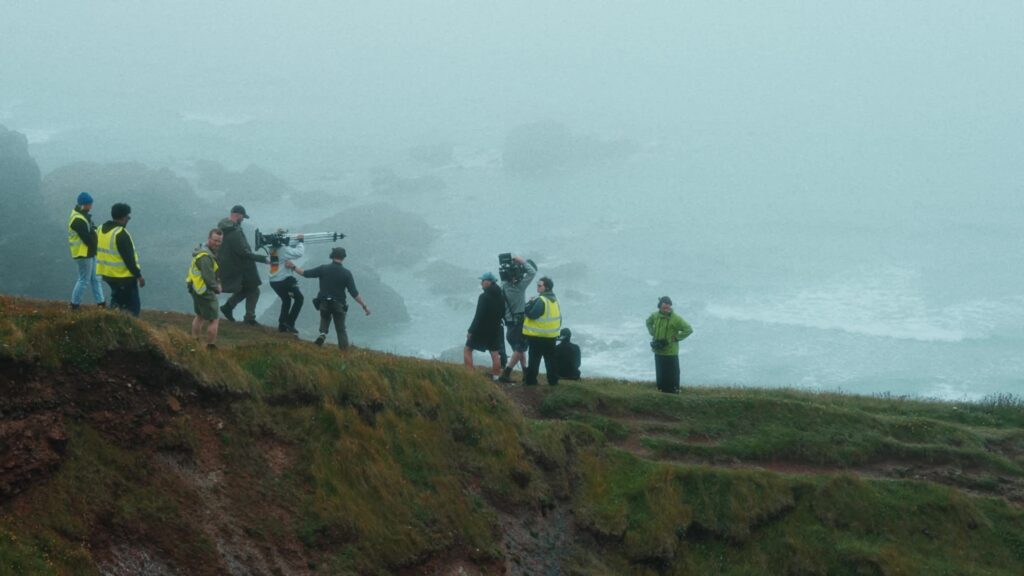
Our work · Canada, Norway, Cornwall and Portugal · 2026
Nine reels of negative, all accounted for
Cohere’s AI for Empowerment was shot on Kodak Vision3 35mm through an Arricam LT, one day in each of four countries. For the Lizard, in Cornwall, our 2nd AC travelled in with the 1st AC. Exposed negative can’t go through airport X-ray. Cinelab in Slough processed and scanned it in 4K. In Oslo, where the airline refused to carry it, it was processed and scanned locally and came home by courier. All nine reels came back.
How we crew it · Cambridge
A 2nd AC who travels with the camera package
In practice, camera assistants for Cambridge shoots usually come from London with the camera package, after a prep day at the kit house. The loader helps the focus puller check it out at the kit house the day before, then travels with the crew. When a loader who lives locally fits the brief, we book them first. We add the travel and the prep day to the quote before anything is booked.
Before you book
Things to know
The day
- The day is 11 hours, including an hour for lunch.
- Overtime is paid at card rates, and we agree it with you before it happens.
- A prep day at the kit house is quoted separately.
Kit and film
- Stock, processing and scans go on the quote at cost, each on its own line.
- Film packages, and most cinema camera packages, come from London kit houses.
- Exposed film never goes through an airport X-ray scanner. After a Cambridge shoot, the cans go to the lab by hand on the train, or by courier.
Studios and travel
- Travel for a loader from London or outside Cambridge, and the prep day, go on the quote before anything is booked.
- Cambridge Production Studio and Glisson Road Studios hire smaller studios by the hour or the day. For a big set build, we use studios round London. We checked this in November 2026. Fees and rules change, and this page isn’t the official source. For the latest, check with Cambridge Production Studio and Glisson Road Studios.
Paying and changes
- You pay nothing until you confirm the loader.
- We take 50% by card when you book and 50% when you receive the final rushes.
- The quote shows every line, including the day rate, booking fee, kit and travel.
- Cancellation terms are on every quote.
What our insurance covers
- Our insurance covers employers’ liability for the loader we book, up to £10m.
- Kit we hire in for you is insured. A large kit rental may need extra insurance, as its own line on the quote.
- On a crew hire, it doesn’t cover anything else. Public liability, the location and your own kit stay with you, and your venue will want to see your certificate. When we’re the producer of record, our policy covers the shoot.
- Venues usually ask to see it. Cambridgeshire County Council asks for £10m public liability for filming on streets and pavements. We checked this in November 2026. Fees and rules change, and this page isn’t the official source. For the latest, check with Cambridgeshire County Council.
£355 a day
APA/Bectu card: £355–448 a day for a clapper loader.
| Day rate, 11 hours | £355 |
| Booking fee, 10% | £35.50 |
| Insurance, 2% | £7.10 |
| One day, before travel | £397.60 + VAT |
The 2% covers employers’ liability for the loader we book and the kit we hire in. What it covers
You won’t pay anything until you confirm the loader.
- 50% by card at booking, 50% on the final rushes
- Our team reads every brief within 2 working hours
- Every line on the quote before anything is booked
Or call us on 07412 543822.
Reviews
What clients say about our crews
These reviews come from our Google Business Profile.

Book a clapper loader in Cambridge.
Tell us the date, the camera, where the package is coming from, and whether it’s digital or film. Our team reads every brief within 2 working hours. Or call us on 07412 543822.
Check availability
The whole crew
Every crew role we book in Cambridge
Send one brief and we send one quote, with every role on its own line. These are our day rates in Cambridge, and each crew member gets their full rate:
Production 06
- Director From £500
- Producer From £450
- Production manager £504–627
- 2nd AD £355–448
- Production assistant £400
- Runner £245
Camera 07
- DOP From £850
- Camera operator £529–656
- Focus puller £461–575
- Clapper loader This page £355–448
- Steadicam operator From £950
- Gimbal operator £529–656
- Drone operator From £750
Data and playback 02
- DIT £527
- Video playback £334–518
Sound 01
- Sound recordist £550
Hair, make-up and costume 02
- Hair and make-up £398
- Costume £519–694
Art department 02
- Art director £675–878
- Set builders £341–512
Post-production 01
- Editor From £350
See how our rates work in crew rates in Cambridge, or start from one of our crew set-ups in Cambridge.
Production support
Everything around the crew
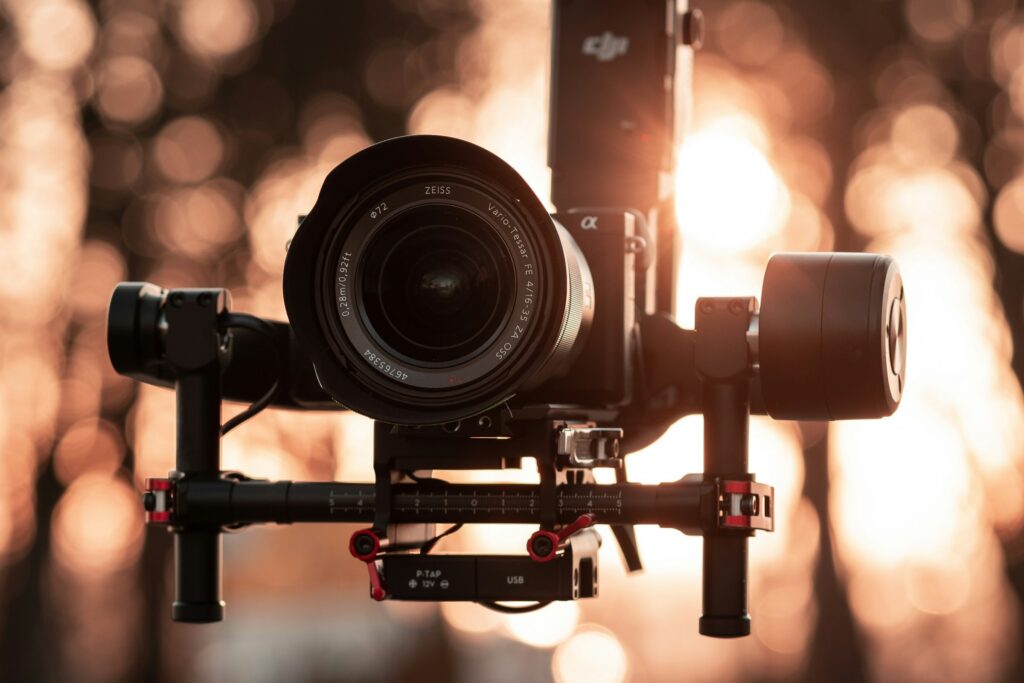
A loader works inside a camera package. The kit house, the stock, the lab and a studio each go on the quote as their own line, or you can sort them yourself.
01
Kit rental
Where to hire camera, lighting and sound kit for a Cambridge shoot, and when the crew bring their own.

02
Locations and permits
The county council for streets, the colleges, the river and the drone rules.
03
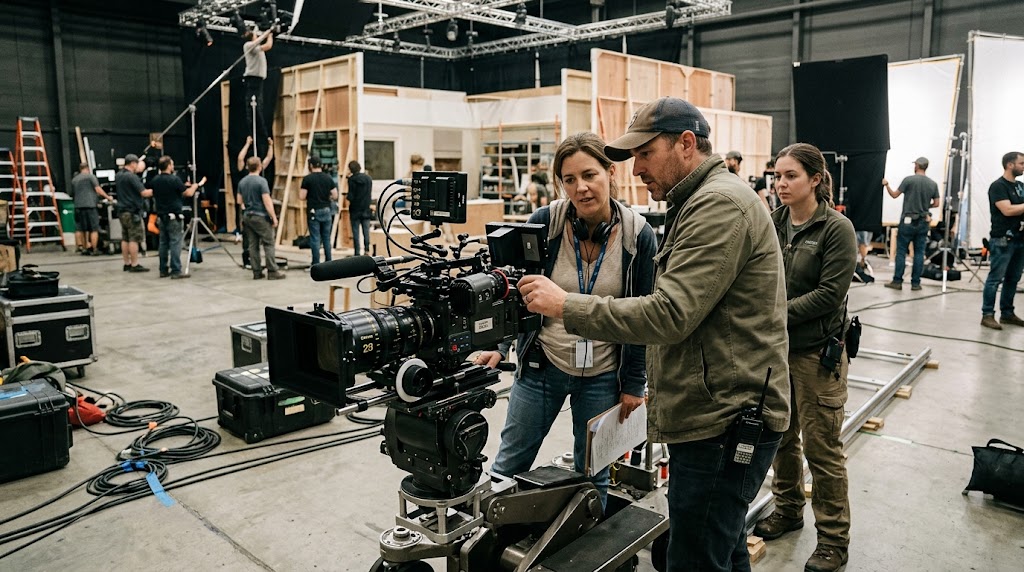
Studios and set builds
Smaller studios in Cambridge for interviews and product shots, and where to go for a bigger set build.

04
Props and wardrobe
Where props and costume come from, and the stylists and hair and make-up artists we book.

06
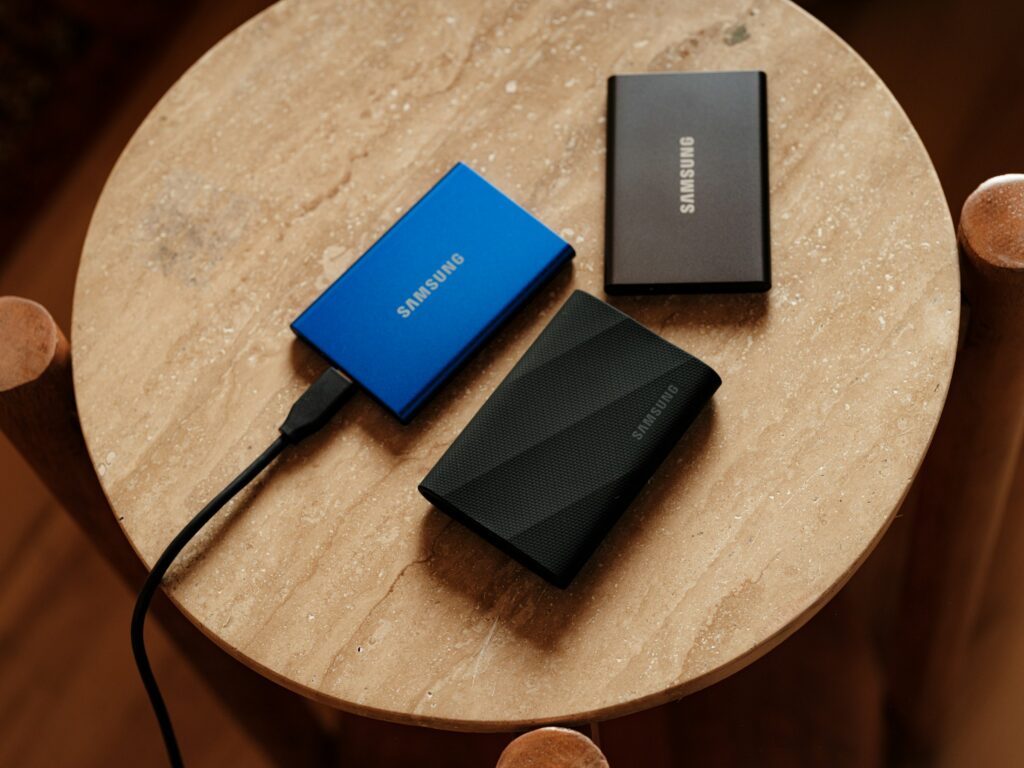
DIT and data
How the crew check and copy the cards in Cambridge, and get the footage to the edit.
Questions
Questions about hiring a clapper loader in Cambridge
How much does a clapper loader cost in Cambridge?
The APA/Bectu card puts a clapper loader at £355–448 for an 11-hour day, including an hour for lunch, and the loader is paid that in full. We add our 10% booking fee and 2% insurance, so one day comes to £397.60 + VAT. A prep day at the kit house and any travel are extra, and each goes on the quote as its own line.
What does the insurance on a crew booking cover?
It covers two things. The first is employers’ liability for every crew member we book, up to £10m. The second is the kit we hire in for you. That’s what the 2% pays for. A large kit rental may need extra insurance, which goes on the quote as its own line. On a crew hire, you’re the producer of record, so public liability, the location, your own kit and anything you book yourself stay with you. If you want us to be the producer of record, we quote it as a full production, and our insurance covers the whole shoot.
Is a clapper loader the same as a 2nd AC?
Yes. In the UK the second assistant camera is usually called the clapper loader, a name from the days when the job was mostly loading film.
Do I need a loader on a digital shoot?
On a cinema camera shoot with a focus puller, yes. Someone has to slate, log and look after the cards. On a small crew the loader can double as the DIT, as ours did on a studio day in Woolwich, London. On a small interview day the camera operator can do it.
Can your loaders load film?
Yes. We book loaders who have loaded 16mm or 35mm recently, which is the thing to ask for. For the Cornish leg of Cohere’s AI for Empowerment, shot on 35mm, our 2nd AC travelled in with the 1st AC. Tell us the camera and the stock when you book.
Where can we hire a film camera for a Cambridge shoot?
Ask us when you book. A 35mm or 16mm package is specialist kit, and for a Cambridge shoot it usually comes from a London kit house. The loader helps the focus puller prep it there the day before. The stock, processing and scan go on the quote at cost.
Is there a studio in Cambridge for a lit shoot?
Yes, for smaller set-ups. Cambridge Production Studio and Glisson Road Studios hire studios by the hour or the day, for interviews, product shots and podcasts. For a big set build, we use studios round London. If we book the studio, it goes on the quote as its own line. Check with the studio for the latest.
Are your loaders from Cambridge?
We book loaders who live in and around Cambridge when one fits the brief. Most of our Cambridge crews come from London, and the fastest trains from King’s Cross take under an hour. We add the travel to the quote before anything is booked. Our own base is London, at 124 City Road, and we have bases in Manchester, Bristol and Cornwall. Check with National Rail for the latest train times.
Where does the film go after a Cambridge shoot?
To a motion picture lab, by hand or by courier, and never through an airport X-ray scanner, which can fog exposed negative. Cohere’s 35mm was processed and scanned in 4K at Cinelab in Slough. After a Cambridge shoot, the cans can travel by hand with the crew, or go by courier. The stock, the processing, the scan and the courier each go on the quote at cost.