

Film crew hire/Spark
Hire a spark, anywhere in the UK. Lamps rigged, cable run, the next set-up ready.
Sparks, or lighting technicians, for brand films, adverts, studio days, conferences and night shoots anywhere in the UK, booked by our producers alongside the gaffer. They rig and run the lamps and the power to the gaffer’s plan, carry the kit in, and have the next set-up lit before it’s called. £457 a day, paid to the spark in full.
- 54 five-star Google reviews
- 2 hrs for our team to read your brief, in working hours
- £10m employers’ liability on every crew member we book
- 2,800+ freelance crew on our books, across the UK


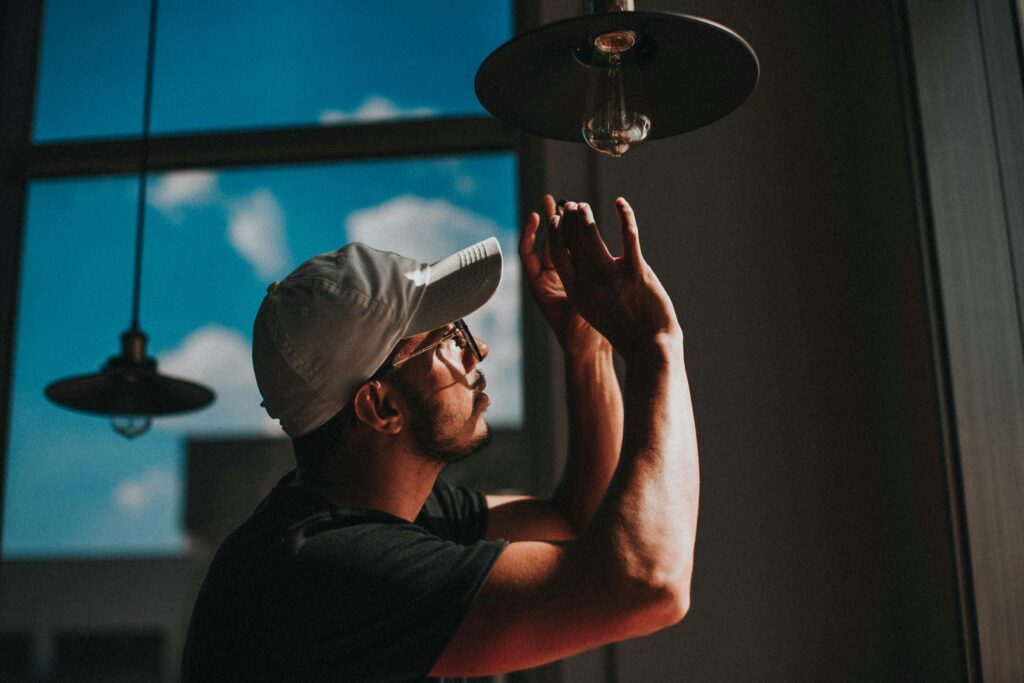
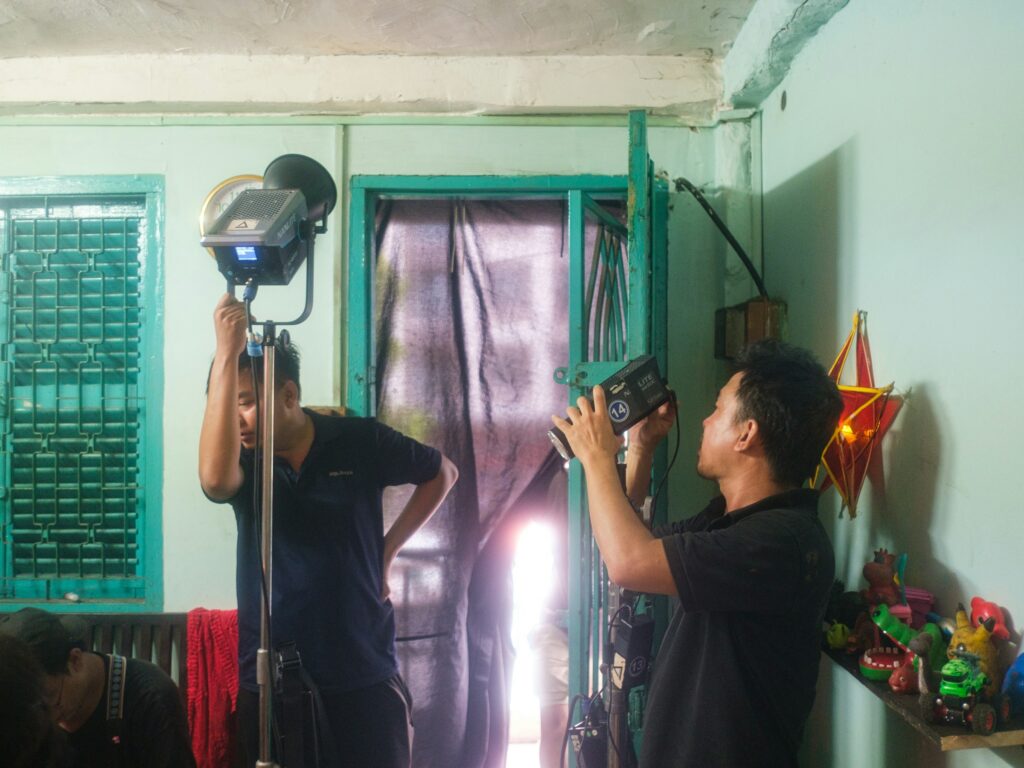

Photos: Here Now Films, H&CO, Marcos Paulo Prado and Tri Vo
The role
What a spark does on a UK shoot
A spark is a lighting technician, one of the gaffer’s crew. They unload the lamps, rig them on stands, booms and rigs, run the cable and the distribution, set flags and diffusion, adjust between takes and strike it all at wrap. In the UK the stands and flags are the sparks’ job; in the US they’d be the grips’.
On a two-person lighting team the spark pre-rigs the next set-up while the gaffer and the DOP shoot the current one. That’s where the time goes back into the day, and on a company move it’s what keeps the schedule: one location struck and loaded while the next is still being lit.
We book sparks with the gaffer they usually work with where we can. If that pair comes from another city, they travel in one van and arrive knowing the kit, and the travel is on the quote before anything is booked.
- Rigged to the plan. Lamps, stands, flags and diffusion where the gaffer wants them.
- Cable run safely. Out of doorways and fire exits, taped down, on distribution that won’t trip.
- The next set-up ready. Pre-rigged while the current one shoots.
- Kit looked after. Every lamp and cable counted out and counted back.
What’s included
What the day rate covers
In the day rate
- An 11-hour day, including an hour for lunch
- Rigging and focusing lamps to the gaffer’s plan
- Running cable and power distribution
- Pre-rigging the next set-up
- Flags, diffusion and gels, set and adjusted
- Striking, counting and loading out
On top, each on its own line
- Our 10% booking fee and 2% insurance, on the whole quote
- Lighting kit, from the gaffer’s van or a lighting house
- A cherry picker or a generator, with its operator, if the plan needs one
- Parking, and a clean air zone charge if the spark drives in, at cost
- Travel, mileage and hotels when the shoot is away from the crew member’s home city, at cost
How our rates work, overtime and the APA/Bectu card: film crew rates in the UK.
Two ways to book
Crew hire or full production: who’s the producer of record?
One question sets the price: who’s the producer of record? Book sparks for your own lighting crew, anywhere in the UK, or have us take the production on.
Crew hire
You run the shoot.
10% + 2% booking fee and insurance, on everything we book for you: crew, kit and travel.
We do
- Find, book and brief the crew, and pay them
- Book kit, travel and hotels too, if you want them
- Send the full price before anything is booked
- One person to call all day
- Employers’ liability for the crew we book, and insurance on kit we hire in
You do
- Run the shoot, or your producer does
- The plan, the schedule and the call sheet
- The location, its permission and its public liability
- Responsibility for the production: you’re the producer of record
What the 2% insures: employers’ liability for every crew member we book, and the kit we hire in for you. Nothing else on the shoot. A large kit rental may need extra insurance, as its own line on the quote.
Full production
We’re the producer of record.
15% + 5% production fee, plus insurance and contingency, on the whole production budget. Quoted as a production.
We do
- Our producer plans it with you and runs the day
- Locations, permits, kit, studio, travel and hotels, booked and paid in our name
- Insurance for the whole shoot, public liability included, plus the risk assessment and the call sheet
- One contract and one invoice, so overseas teams need no UK company
You do
- The creative calls
- Signing off the plan and the budget
What the 5% pays for: our production insurance across the whole shoot, £10m public liability included, and the contingency.
Not sure which you need? If your own producer or director will run the day, it’s crew hire. If you want us to take the production on, it’s a full production quote.
On the day
A day with a spark, call to wrap
A brand film in a converted mill in Leeds: a workshop scene in the morning, an interview in the afternoon, a dusk shot in the yard. The gaffer and the spark drive over from Manchester with the van. Times are an example; the call sheet sets the real ones.
- 07:00 Load in The van unloaded at the yard door, the lamps sorted by set-up along the wall.
- 07:30 Power Distribution off the mill’s supply, checked with the building’s electrician, cable run along the walls and clear of the fire exits.
- 08:00 Rig A big soft source through a frame of diffusion for the workshop, flags to cut the spill off the machines.
- 10:30 Pre-rig While the workshop scene shoots, the interview set lit at the far end of the floor.
- 13:00 Lunch Lamps cooled, gels changed for the afternoon.
- 14:00 Interview Small changes between takes: a flag in, a lamp down a stop.
- 16:30 The yard One lamp on a stand for the dusk shot, sandbagged, on the mill’s own land.
- 18:00 Wrap Everything struck, counted against the van’s list and loaded for the drive back over the Pennines.
Out on the street rather than the yard, filming goes to Leeds City Council’s highways team, from £84.20 + VAT for a small crew (checked October 2026).
Which kind
Which lighting technician do you need?
The UK lighting crew from the top down. The gaffer decides how many of the rest the plan needs.
Gaffer Runs the lighting department £550 a day
Plans the lighting with the DOP and runs the crew, usually with their own van. See gaffer hire in the UK.
Book one first: the gaffer decides how many sparks they need.
Best boy The gaffer’s second Quoted on the brief
Runs the sparks and the kit: what’s on the truck, what’s on set, what goes back to the lighting house.
Best on big lighting crews and multi-day shoots.
Spark Rigs and runs the lights £457 a day
Rigs, cables, focuses and strikes, to the gaffer’s plan.
Best on any shoot with more than a few lamps, a fast schedule or a company move.
Rigger Lights up high Quoted on the brief
Places and secures lamps up high for the gaffer: trusses, studio grids, a cherry picker over a night exterior. That’s work at height, which HSE wants properly planned, supervised and carried out by competent people (checked October 2026).
Best for stage rigs, venue builds and lamps on a cherry picker.
What it’s for
What people book a spark for across the UK
Studio days
Stages at Space Studios in Manchester, The Bottle Yard in Bristol and in west London, where the lights change between set-ups.
Conferences and events
A stage, an interview corner and a sponsor set at ExCeL, Manchester Central, the ICC in Birmingham or the SEC in Glasgow, each lit before the doors open.
Brand films with a move
Two locations in a day, one struck and loaded while the next is lit.
Night shoots
Big lamps, long cable runs and a generator, on a street, a harbour wall or a country estate.
Shoots on the road
The same set built in a new room each morning, so the films match from one city to the next.
Recent work
Sparks on our jobs, and why the gaffer asks for one
Both of these were London shoots. The pairing travels: a gaffer and the spark they usually work with, in one van.
Crew hire · Woolwich, London · January 2025
The gaffer asked for a spark
A sportswear brand’s social spot for Valentine Global, in from the US with their own director, DOP and camera kit: the hero video in an artist’s studio in Woolwich, then B-roll after a 15:30 company move. The client had first said no to an extra lighting tech. The gaffer made the case that the move needed a spark, and a spark worked the day.
Fireside chat · Battersea, London · March 2026
A spark with the gaffer at Many Rooms
For AlTi Tiedemann Global’s fireside chat at Many Rooms in Battersea we booked a DOP, sound, a gaffer with their van, and a spark to rig to the gaffer’s plan. The crew signed AlTi’s NDA, and every line was itemised on the cost sheet, the spark’s included.
Before you book
Things to know
The day
- 11 hours, including an hour for lunch: ten working hours.
- Overtime by the hour at the APA card’s rate for the role, agreed with you before it happens.
- At least 11 hours between wrap and the next day’s call.
Safety and power
- Sparks work to the gaffer and the location’s rules on power and working at height. Some buildings want PAT certificates before the kit comes in.
- A cherry picker of lamps is work at height: planned, supervised and carried out by competent people, as HSE puts it (checked October 2026).
- At the 18 stations on Network Rail’s small-scale filming agreement, the kit list has no lights on it (checked October 2026).
Paying and changes
- Nothing to pay until you confirm the spark.
- 50% by card when you book, 50% on receipt of the final rushes.
- Every line on the quote: day rate, booking fee, kit, travel.
- Moving the date? Tell us as soon as you know.
- Cancellation terms are on every quote.
What our insurance covers
- Employers’ liability for the spark we book: £10m.
- Kit we hire in for you is insured. A large kit rental may need extra insurance, as its own line on the quote.
- Nothing else on a crew hire. Public liability, the location and your own kit stay with you, and your venue will want your certificate. When we’re the producer of record, our policy covers the shoot.
£457 a day
APA/Bectu card benchmark (lighting technician): Up to £457 a day. We pay the full rate.
| Day rate, 11 hours | £457 |
| Booking fee, 10% | £45.70 |
| Insurance, 2% | £9.14 |
| One day, before travel | £511.84 + VAT |
The 2% is employers’ liability for the spark we book, and cover on kit we hire in. Insurance for a UK shoot
You won’t pay anything until you confirm the spark.
- 50% by card at booking, 50% on the final rushes
- Our team reads every brief within 2 working hours
- Every line on the quote before anything is booked
Or call us on 07412 543822.
Reviews
What clients say about our crews
Straight from our Google Business Profile.

Book a spark, anywhere in the UK.
Tell us the date, the location and who’s gaffing. Our team reads every brief within 2 working hours. Or call us on 07412 543822.
Check availability
The whole crew
Every role across the UK, booked the same way
One brief, one quote, every role on its own line. Our UK day rates, paid to the crew member in full:
Production 06
- Director From £500
- Producer From £450
- Production manager £504–627
- 2nd AD £355–448
- Production assistant £400
- Runner £245
Camera 09
- DOP From £850
- Camera operator £529–656
- Lighting camera operator £529–656
- Videographer £529–656
- Focus puller (1st AC) £461–575
- Clapper loader (2nd AC) £355–448
- Steadicam operator From £950
- Gimbal operator £529–656
- Drone operator From £750
Data and playback 02
- DIT £527
- Video playback £334–518
Sound 01
- Sound recordist £550
Hair, make-up and costume 02
- Hair and make-up £398
- Costume £519–694
Art department 02
- Art director £675–878
- Set builders £341–512
Post-production 01
- Editor From £350
How our rates work: crew rates across the UK. In one city? London, Manchester, Birmingham, Bristol and Cornwall have their own role pages.
Production support
Everything around the crew
Sparks need power, kit and a way in for the van. Each gets its own line on the quote, and the guides explain how each works across the UK.

01
Crew rates in the UK
Day rates for every role, the APA/Bectu card, overtime and what a day covers.
02
Kit and equipment hire
Rental houses across the UK, wet hire and dry hire, and the crew’s own kit.

03
Insurance for a UK shoot
Employers’ liability, public liability, kit cover, and what can leave you uninsured.
Questions
Hiring a spark in the UK: questions
How much does a spark cost in the UK?
We pay our sparks £457 for an 11-hour day, including an hour for lunch, wherever the shoot is (APA/Bectu card for a lighting technician: Up to £457). On top go our 10% booking fee and 2% insurance: £511.84 + VAT for the day. Travel is at cost when the spark comes from another city. Film crew rates in the UK
What does the insurance on a crew booking cover?
Two things. Employers’ liability for every crew member we book, up to £10m, and insurance on the kit we hire in for you. That’s what the 2% pays for. A large kit rental may need extra insurance, as its own line on the quote. The 2% doesn’t insure the rest of the shoot: public liability, the location, your own kit and anything you book yourself stay with you, because you’re the producer of record. If you’d rather we were, it’s quoted as a full production, and our insurance covers the whole shoot, public liability included.
How long is a spark’s day, and how does overtime work?
A day is 11 hours, ten of them working and one for lunch. After that, overtime is paid by the hour at the APA card’s rate for the role: 1.5×, 1.25× or single time on an hourly rate of a tenth of the day rate, graded by day rate, and we agree it with you before it happens. Between wrap and the next call there are at least 11 hours. Film crew rates in the UK
What’s the difference between a gaffer and a spark?
The gaffer runs the lighting department and plans the lighting with the DOP. A spark rigs and runs the lights to the gaffer’s plan. In the UK the sparks also set the stands, flags and diffusion that a US crew would give to the grips.
How many sparks do I need?
The gaffer decides, from the plan. An interview day often needs none; a brand film one; a night exterior, a stage day or a conference set two or more. A company move is a good reason to add one: on Valentine Global’s shoot in Woolwich, the gaffer asked for a spark because of the 15:30 move.
Where do your sparks come from?
From near the shoot where we can, from the 2,800+ freelance crew on our books, and with the gaffer they usually work with. If the pair comes from another city they share the van, and the travel and the hotel go on the quote before anything is booked. For one city, see sparks in London, Manchester, Birmingham, Bristol and Cornwall. Our own team is in London, on City Road, with bases in Manchester, Bristol and Cornwall.
Can a spark work from a cherry picker?
Yes, as part of the plan. A cherry picker of lamps is work at height, which HSE wants properly planned, supervised and carried out by competent people, so it goes on the quote with an operator and on the risk assessment. On a street, the council’s film office will want to know first. HSE on working at height
Can we light a scene at a station or on the Tube?
Not on the short-notice routes. Network Rail’s small-scale filming agreement, for crews of ten or fewer at its 18 stations, has a kit list with no lights on it, only a reflector up to 1.2 square metres, not silver or gold. On the Tube, TfL’s conditions of carriage from 24 September 2026 allow only what you can carry yourself, nothing over 2m, and no camera supports without permission; filming there goes through TfL’s filming team with three weeks’ notice (checked October 2026). Filming locations and permits in the UK
Is a spark self-employed?
HMRC’s list of behind-camera roles normally treated as self-employed includes electricians, lighting electricians and riggers, where they bring substantial equipment or work on a specific production for a finite period (checked October 2026). On a crew hire we book and pay the spark, so you get one invoice, and overseas teams contract with us, a UK company. Working with a UK production service company