Film crew hire/Cornwall/Locations and permits
Filming in Cornwall. Whose land it is, how much notice they want, and what it costs.
Cornwall Council gives permission for its own beaches, parks, woods and car parks, through FilmApp. Much of the rest of the coast is someone else’s: the National Trust’s headlands, Natural England’s nature reserves, the Duchy of Cornwall’s foreshore, each harbour’s own authority and the private estates. Here’s who to ask, how far ahead, and what each one wants. Fees and notice checked October 2026.
Council permit · 5 or more crew
10 working days
Commercial · a full day
£1,500 inc VAT
Road closure · notice
12 weeks
Drone permission · a full day
£216 on top
On this page
01 The short version
How filming permission works in Cornwall
01
Work out whose land it is
A beach, a park, a wood or an old mine site may be the council’s, and so FilmApp. The headland above it may be the National Trust’s, the nature reserve Natural England’s, the foreshore below it the Duchy of Cornwall’s and the quay a harbour authority’s. Screen Cornwall warns that car parks and access roads often have different owners again (checked October 2026).
02
Apply early enough
Cornwall Council asks ten working days for a crew of five or more, five for a smaller handheld crew, and 12 weeks for any traffic management. On a Site of Special Scientific Interest, Natural England aims to decide within 28 working days and can take up to four months.
03
Tell the people who need telling
The neighbours and the parish or town council, by letter; the lifeguards on a patrolled beach; the coastguard if you’re on the water; and the police about staged crimes, firearms or police uniforms. The council’s code of practice asks to hear about filming on private property too.
Finding the location first
Screen Cornwall’s Film Office
The screen agency for Cornwall and the Isles of Scilly, at Krowji in Redruth. Its Film Office gives advice, keeps a locations database, a crew database and, with Visit Cornwall, an accommodation list, and introduces productions to landowners. It doesn’t issue permits: filmoffice@screencornwall.com.
Cornwall Council’s own land
Beaches, woods, parks, gardens and mining sites across the county, all through FilmApp. For a unit base, the council’s map shows which car parks are its own.
What’s been filmed here
Port Isaac played Port Wenn in Doc Martin for 18 years, and Fisherman’s Friends was shot there too. House of the Dragon used Holywell Bay and St Michael’s Mount. Screen Cornwall’s Filmed in Cornwall list has the rest.
A fixer
New to filming here? Our guide to fixers and production assistants in Cornwall covers what a local fixer sorts out.
The recce
We walk it at the hour you’ll film and on the tide you’ll film on, and we find out the land designation before anyone falls for the view.
Who files it
On a full production our producer applies for all of it, in our name. On a crew hire the location and its permission stay with you: the council’s permit is a licence to the company that applied, and that company carries the liability. A production manager we book can run the applications, the parking and the call sheet for you.
02 The council
Cornwall Council and FilmApp: the permit for council land
Cornwall Council owns beaches, woods, parks, gardens and mining sites across the county, and filming or photographing on them commercially needs its permit, applied for through FilmApp. From the council’s own pages and documents, checked October 2026.
| What you need | Minimum notice | Who says so |
|---|---|---|
| A crew of under five, cast included, with a handheld camera | 5 working days | FilmApp terms |
| A crew of five or more | 10 working days | FilmApp terms and the council’s filming page |
| Any traffic management, a road closure included | 12 weeks | FilmApp terms and Street Works |
| Neighbours and the parish or town council told | 5 days before filming | FilmApp terms |
| A letter to the homes and businesses affected | 7 days | The code of practice |
| A parking dispensation | 5 working days | Street Works |
| Applying at short notice | Under 3 working days, with an accelerator fee | The 2026–27 fee guidelines |
| Cancelling | 48 hours, or a cancellation fee | FilmApp terms |
| A child performing | 21 days for a BOPA application | The council’s children in entertainment team |
| Consent on a Site of Special Scientific Interest | A decision aimed at 28 working days; up to 4 months | Natural England, on GOV.UK |
How applying works
One application
On FilmApp, for the location, with a certificate for at least £5m public liability, a risk assessment for that location, and a promise to keep to the code of practice. Questions go to the council’s events and filming team, eventsandfilming@cornwall.gov.uk.
Pay first
Since 1 April 2026 the fee is paid when you apply, and the permit isn’t issued until the payment has gone through. Every application pays a £10 admin fee that isn’t refunded, and paying by card adds 5%.
Moved for the weather
The council’s FAQ says a shoot that has to move for weather or scheduling can have its permit dates changed by the filming coordinator, extra days go on the same application, and a cancelled shoot is refunded to the card.
Personal stills
A photographer taking landscapes or views from council land for personal use needs no permission. Anything commercial goes through FilmApp.
Private land too
The code asks for the council to be told, through the application form, about filming on public or private property in Cornwall. On private land the owner’s yes comes first.
Local first
The council asks productions to use local companies, goods and services where they can. We’re a crew agency with 2,800+ freelance crew on our books across the UK, 30+ of them in Cornwall, so we can scale a crew from one camera operator on a beach to a full unit on a clifftop.
Two offices, two jobs
Screen Cornwall is the county’s screen agency: advice, locations, crew and introductions. Cornwall Council is the landowner that issues the permit. Filming in England lists Screen Cornwall as the local filming support for the South West.
03 Fees
What a Cornwall Council permit costs in 2026–27
One fee sheet, priced by the kind of production and including VAT. A drone, or an application at short notice, costs extra.
| Production | Half day | Full day |
|---|---|---|
| HETV, feature film, prime-time TV, commercial content | £900 | £1,500 |
| Daytime TV, documentary and entertainment, children’s | £360 | £660 |
| Short films, online content, GVs | £132 | £180 |
| Drone permission, on top of the location fee | £132 | £216 |
Which band
The band goes by the kind of production: commercial content sits with HETV and feature films at £1,500 a full day, online content and GVs at £180. Where a film could sit in either, we ask the council before it goes in the budget.
Short notice
Applying with less than three working days’ notice adds an accelerator fee: as we read the fee sheet, £120 for the top band and £60 for the others.
No fee
Student productions, community films and productions made entirely in Cornish pay only the £10 admin fee, and FilmApp’s front page says the same for charities and shoots with a total budget under £5,000. News pays nothing.
On a quote
On a full production the permit fees go in our budget, each on its own line. On a crew hire they’re yours, with the permit.
04 Roads and parking
Road closures, parking and unit bases
The road, and the bays at the side of it, go to Cornwall Council’s Street Works team, not FilmApp. Unit bases in council car parks go to its Parking Team.
| What | Who | Notice | Cost |
|---|---|---|---|
| A road closure or other Temporary Traffic Regulation Order | Street Works, streetworks@cornwall.gov.uk | 12 weeks | £1,942.50 with 12 weeks’ notice; £2,137 with less |
| Extending an order | Street Works | Ask early | £1,142 |
| A parking dispensation for vehicles essential to filming, or to clear space for the picture | Street Works | 5 working days; after 3pm counts as the next working day | £20 a day per vehicle |
| A unit base in a council car park | The Parking Team, parking@cornwall.gov.uk | Agreed outside FilmApp | Ask the team |
Where a dispensation won’t go
Not on double yellow lines, in a loading restriction during its hours, within 50 metres of a junction with traffic lights, on a pavement, or in a disabled, doctor’s, taxi, bus or residents’ bay.
Loading
In many places a van can load and unload on restricted lines as long as it moves straight after, so we read the signs before paying for a bay.
The closure plan
A signing schedule goes in with the application: the closure, the approved diversion and where every sign stands. Traffic management is set up by qualified people, and the code asks for Chapter 8 traffic control and hi-vis for everyone on the highway.
No driving on council land
FilmApp’s terms allow no vehicles on the council’s property without specific permission, and footpaths and rights of way stay open.
A private road instead
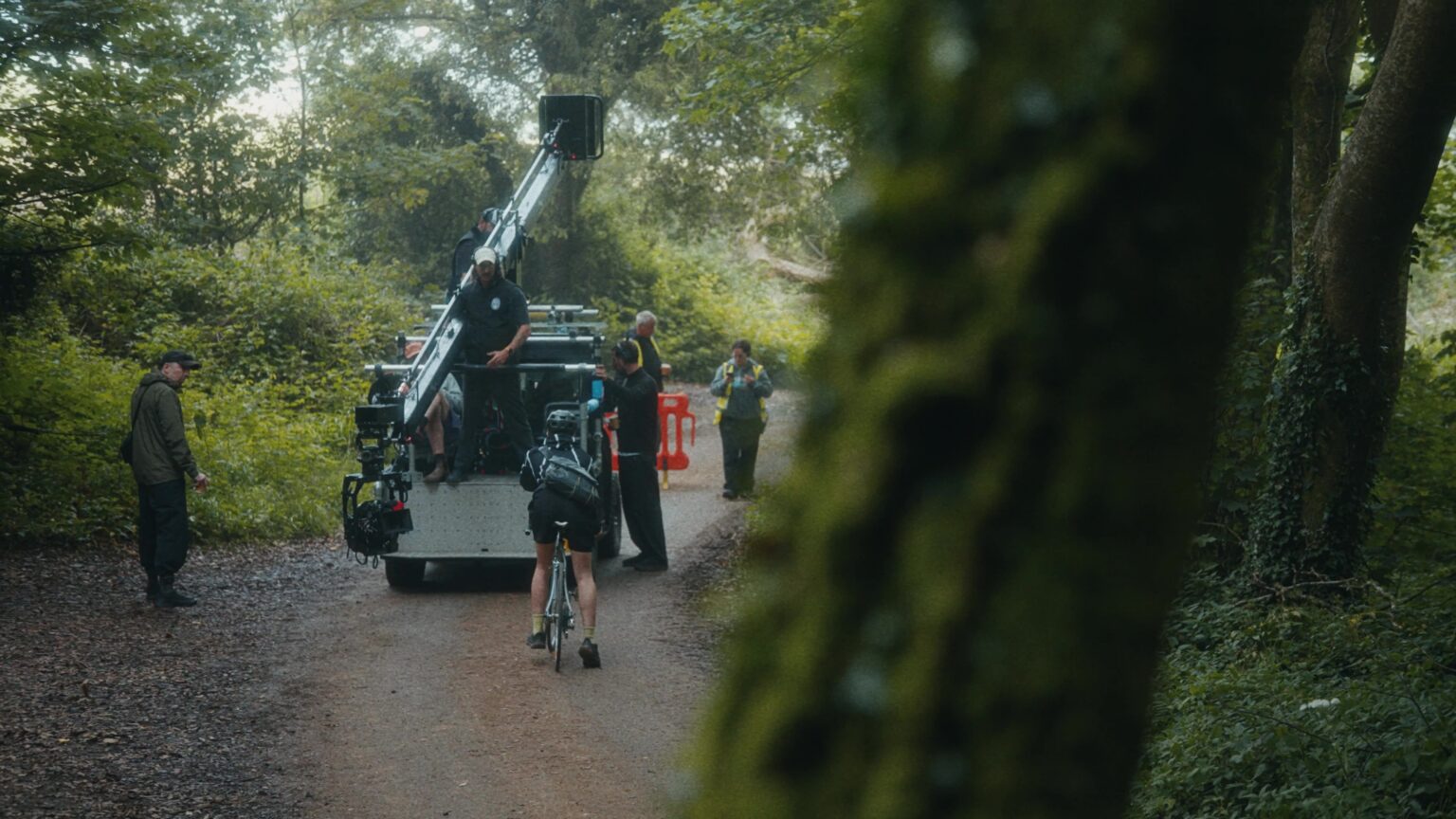
On the Lizard for Cohere, the cycling moved to a private road on the Trelowarren Estate. A non-athlete cycling on a public road, on camera, counts as a stunt, with what that means for insurance, supervision and closures. The estate road made that go away.
Who books it
A closure, a unit base and the bays are the production manager’s job: book one with the crew from the Cornwall crew page. Parking, lanes and getting the kit in are in the logistics guide.
05 Landowners
The coast’s other owners: who says yes
FilmApp covers council land only. Screen Cornwall names the main landowners as Cornwall Council, the Duchy of Cornwall and the National Trust, with private owners for the rest, and says one shoot may need several permissions. From each owner’s own pages, checked October 2026.
The National Trust
Any commercial shoot at a place in its care needs a contract signed by both sides, through its Filming and Locations Office, filmoffice@nationaltrust.org.uk, and the location fee goes to conservation. It publishes no fees, notice period or insurance figure, so we ask early. Unauthorised drones aren’t allowed over or from its land.
Natural England and SSSIs
On a Site of Special Scientific Interest the owner or occupier needs Natural England’s written consent before any operation on the site’s list, and anyone else works through them. Acknowledgement within ten working days, a decision aimed at 28, four months at most, and no answer by then counts as a refusal. Since 20 April 2026 requests go through Defra’s online forms. Screen Cornwall says filming on SSSI land can be allowed, with extra conditions.
The Lizard National Nature Reserve
Cared for by the National Trust, Natural England and Cornwall Wildlife Trust together, and grazed by ponies and cattle. Which of them you ask depends on where the camera stands.
The Duchy of Cornwall
18,530 acres in Cornwall, some of the coastline and riverbed among them, and over 160 miles of foreshore. Screen Cornwall goes further and says the whole foreshore is the Duchy’s, so filming on it at low tide needs its own permission. The Duchy publishes no filming terms, so we ask early.
English Heritage at Tintagel
English Heritage looks after Tintagel Castle, working with the Duchy. Commercial filming starts with an enquiry to Filming.enquiries@english-heritage.org.uk, and a commercial drone flies only with its paperwork approved, outside opening hours. The coast beside it is the National Trust’s: Barras Nose, its first coastal land in England, in 1897, and Smith’s Cliff, bought in 2023.
Cornwall Wildlife Trust
Asks for no drones on its reserves without permission, because many are breeding sites. It publishes no commercial filming process: info@cornwallwildlifetrust.org.uk.
Private estates and farms
The owner says yes, in writing. Screen Cornwall can help find out who owns what. On the Lizard, the Trelowarren Estate’s permission put Cohere’s cycling on a private road.
Places with their own rules
St Michael’s Mount
Commercial filming needs prior written permission and a separate licence agreement with the National Trust; requests go to St Aubyn Estates, marketing@staubynestates.com. The island sits in a flight restricted zone, and drones are banned on the beach, the causeway, the car parks and on or near the island without written consent from Penzance Heliport, St Aubyn Estates and the National Trust, given at least two weeks before.
The Eden Project
Always asks a location fee, and says it’s negotiable: make a reasonable offer. Drones fly only outside opening hours, with approval, for recognised media outlets. We’ve made films for its Festival of Discovery.
The Minack Theatre
No drones on or above any of its property except by prior agreement, and no filming terms published: info@minack.com.
Tate St Ives
Tate publishes filming terms for Tate Modern and Tate Britain only, so for St Ives we ask Tate directly. We’ve made films for Tate St Ives since 2022.
The Lost Gardens of Heligan
No published filming terms; its venue hire page takes enquiries. We’ve made two summer campaigns and a documentary there.


06 From our own production
Three permissions for one sequence
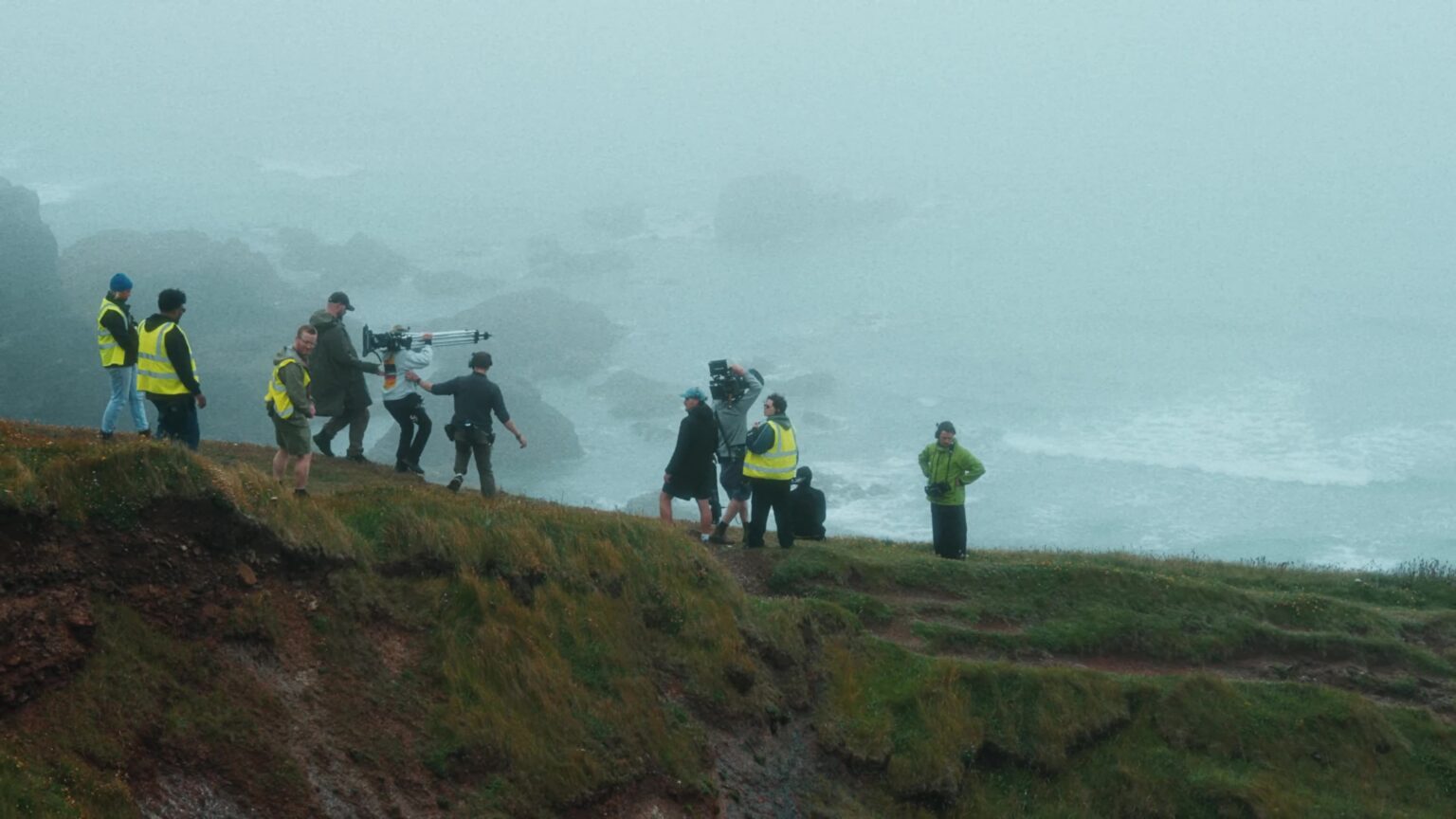
For Cohere’s AI for Empowerment, shot on 35mm in four countries, the Cornish leg was one sequence on the Lizard: a designer hiking the coast path above Kynance Cove and cycling a road above the sea. The route crossed three ownerships, so it took three permissions.
Our own production · The Lizard, Cornwall · 16 June 2026
Three landowners
Each agreed in writing before a camera went up, with conditions of their own.
A private road
The cycling moved to the Trelowarren Estate’s private road, so it could be shot from a tracking vehicle without a public road or a stunt.
The site’s conditions
The clifftops are a Site of Special Scientific Interest. No drones. No generators, so the shoot ran on portable power stations. Nothing pegged into the ground, so every gazebo was weighted. A water-only fire response on the heathland, and the kit carried in on beach carts.
No signal
No phone signal on the headland, so the unit ran on twelve walkie-talkies along a mile of cliff path.
The weather
Fog came in the evening before. We put the options to Cohere in writing, moved the unit call to 07:00 and wrapped at 21:00.
Watch Cohere’s AI for Empowerment, and read what shooting it on 35mm taught us.

07 The coast
Beaches, harbours and the sea
Cornwall has over 300 beaches. The beach may be the council’s, the foreshore below it the Duchy’s and the quay beside it a harbour authority’s, and the lifeguards and the coastguard want to know you’re there. Checked October 2026.
Patrolled beaches
From 2 May 2026 RNLI lifeguards patrol 20 Cornish beaches every day: 16 came back for the season, and Fistral, Perranporth, Porthmeor and Sennen were already patrolled daily. Polzeath’s patrol runs 10:00 to 18:00. FilmApp’s terms say the lifeguards must be told before filming on a patrolled beach.
The coastguard
Screen Cornwall says to tell the coastguard when and where you’re filming on the water.
The council’s harbours
Cornwall Council’s harbour masters look after harbours including Newquay, Truro, Penzance and St Ives, with byelaws they enforce. Newquay’s North Quay is closed to the public behind a coded gate.
Falmouth, Padstow and Mevagissey
Not the council’s. Falmouth Harbour Commissioners take an event application form and publish byelaws and notices to mariners; Padstow Harbour Commissioners are a trust port on the Camel estuary; Mevagissey’s harbour is looked after by a charity. None publishes filming or drone rules, so we ask the harbour office first.
Tides
ADMIRALTY EasyTide gives free predictions for today and the next six days at more than 600 ports, and Screen Cornwall calls Cornish tides unpredictable and uneven. How the tide sets a call is in the logistics guide.
On the water
For The Sustainable Catch we went out on the Atlantic Voyager from Newquay harbour, and on the Camel Estuary. Airbnb’s Guardians of Cornwall had in-water sequences shot by our own crew, and Kärcher and the RNLI’s Float to Live was filmed at Bude’s tidal pool.


08 Paperwork
What the paperwork looks like
The council, the National Trust, Natural England and the estates mostly ask for the same handful of documents. Here’s each one, who wants it and when.
RA
Everyone asks
Risk assessment
Cornwall Council wants one written for the location with every application, and says it neither checks nor approves it: the production stays responsible. The code asks for a first aider on location all day. Ours is written for the place, the tide and the weather, not the job in general.
£5m
Everyone asks
Public liability certificate
At least £5m for Cornwall Council, for the company named on the application. The National Trust, the Duchy and English Heritage publish no figure, so we ask with the request.
Contract
The owner
Location agreement
The National Trust signs a contract for any commercial shoot, and the council’s code asks for an approved location contract with every owner, with any art department dressing or build set out.
7 days
The neighbours
Neighbours’ letter
Seven days ahead to the homes and businesses affected, under the code, and the parish or town council told at least five days ahead, under the FilmApp terms. With less than seven days, someone from the production calls in person. A runner usually walks it round.
Flight path
Drones
Drone paperwork
For council land, a flight path document, the pilot’s CAA qualification and certification, drone insurance and a drone risk assessment, all in before the drone goes up.
SSSI
Protected sites
Natural England’s consent
Asked for by the owner or occupier, up to four months ahead on a Site of Special Scientific Interest. We allow for it before a location is locked.
21 days
Children
Child performance licence
A child performing in a film, TV programme or advert needs one: it’s illegal for the child to perform without it. Cornwall Council’s children in entertainment team wants BOPA applications at least 21 days ahead and a four-day-rule notification at least 28, and a chaperone looks after 12 children at most. For Whistlefish’s first TV ad, with real families on camera, a chaperone looked after the children.
Police
Staged crime and uniforms
Police and emergency services
The code asks for the local police to be told about filming, with special guidance for staged crimes, accidents, firearms and police uniforms, which are covered between takes. The ambulance service hears about look-alike ambulances, the fire service about fire, explosions and special effects. Replica weapons are in the props guide.
09 Drones and airspace
Drones in Cornwall: who has to say yes
There’s no county-wide ban, but much of the coast belongs to owners who don’t allow drones without permission, and St Michael’s Mount sits in a flight restricted zone. One flight can need the landowner, the council and air traffic control, on top of the pilot’s CAA paperwork. Checked October 2026.
| Where | Who says yes | What they ask |
|---|---|---|
| Council land: beaches, parks, woods | Cornwall Council, through FilmApp | £132 a half day or £216 a full day on top of the location fee, with a flight path document, a CAA-qualified pilot, drone insurance and a drone risk assessment |
| National Trust land | Its Filming and Locations Office | No unauthorised flying over or from its land; commercial drone filming may be allowed, with a location fee and a drone processing fee |
| English Heritage sites, Tintagel among them | English Heritage | Paperwork, risk assessments and a flight plan approved in advance; flown outside opening hours |
| St Michael’s Mount | Penzance Heliport, St Aubyn Estates and the National Trust | Written consent from all three, at least two weeks before; otherwise banned on the beach, causeway, car parks and island |
| Near an aerodrome | The aerodrome’s air traffic control, or its operator | A circle of 2 or 2.5 nautical miles centred on the longest runway, plus zones 5km out from each runway end, up to 2,000ft. We found no drone guidance from Cornwall Airport Newquay or RNAS Culdrose, so we check the UK AIP and the NOTAMs before the flight |
| The Isles of Scilly | St Mary’s Airport’s air traffic control; on Tresco, the estate | St Mary’s zone is active at all times, for drones of any size; Tresco bans all drone use without the estate’s express permission |
| Cornwall Wildlife Trust reserves, the Minack, the Eden Project | Each owner | No drones without permission; at Eden, only outside opening hours, for recognised media outlets |
IDs
A Flyer ID for any drone of 100g or more, since 1 January 2026, and an Operator ID from 250g, or from 100g with a camera: £12.34 a year, for operators of 18 or over.
Class marks
New drones on sale since 1 January 2026 carry a UK class mark, UK0 to UK6.
On the Lizard
No drones at all for Cohere: the clifftops are a Site of Special Scientific Interest.
When the drone is the film
For the Woodland Trust’s Sky Seeding, on drone trials in Cornwall and Devon, the drone was the subject.
Most of that paperwork sits with the pilot. Here’s how we book a drone operator in Cornwall, and the national rules are in our UK locations and permits guide.

10 On the day
The rules on the day in Cornwall
From Cornwall Council’s code of practice and FilmApp terms. It isn’t legal advice: check them before you shoot.
Emergency access
Kept open at all times.
Noise
Kept down, above all from 22:00 to 08:00. Silent generators wherever possible; if not, baffled or built into the vehicle.
Cables and lights
Flown 2.6 metres above a pavement and 5.2 above a road, or matted where they cross. No dazzle for drivers or anyone else.
Pavements and paths
If filming blocks a footway, a safe, supervised way round it. Footpaths and rights of way across council land stay open.
Vehicles
Parked where and when agreed, engines off on arrival, never on a pavement or kerb. Cast and crew don’t park near the location unless spaces were set aside, and nothing drives onto council property without permission.
Hi-vis and first aid
Hi-vis for everyone on the highway, Chapter 8 traffic control where traffic is managed, and a first aider on location.
Nothing launched
No lanterns or balloons on council land, biodegradable ones included.
Leave it as found
Rubbish cleared every day, signs down, anything moved put back, and any damage made good. Council officers may visit unannounced.
On a protected site
On the Lizard’s SSSI that also meant no drones, no generators, nothing pegged into the ground and a water-only fire response.
11 Insurance
Public liability: £5m, and whose certificate it is
Cornwall Council asks for at least £5m public liability with every FilmApp application. Which certificate goes in depends on who the producer of record is.
| Who’s asking | Public liability |
|---|---|
| Cornwall Council: beaches, parks and council land | At least £5m, with a copy of the certificate in with the application |
| Cornwall Council: drones | Drone insurance, with the pilot’s certification and a drone risk assessment |
| The National Trust, the Duchy of Cornwall, English Heritage | No figure published: ask with the request |
| The Eden Project: drones | Drone insurance and a liability certificate |
Crew hire
You’re the producer of record.
The certificate the landowner gets
Yours, for the company named on the application.
What our insurance covers
What the 2% insures: employers’ liability for every crew member we book, and the kit we hire in for you. Nothing else on the shoot.
What it costs
10% booking fee + 2% insurance, on everything we book.
Permits
Yours to hold. A production manager we book can apply for you.
Full production
We’re the producer of record.
The certificate the landowner gets
Ours: our production policy, £10m public liability included, with a certificate naming the landowner.
What our insurance covers
What the 5% pays for: insurance across the whole shoot, and the contingency.
What it costs
15% production fee + 5% insurance and contingency, on the production budget.
Permits
We apply in our name, and the fees go in the budget.
Not sure which it is? If your own producer or director will run the day, it’s crew hire. If you want us to take the production on, it’s a full production quote, and the Cornwall crew page takes either brief. Shooting from abroad? Here’s how overseas teams book Cornwall. Employers’ liability, kit cover and what to declare: insurance for a UK shoot.
Need a Cornwall location sorted?
Tell us where and when. We’ll come back with whose land it is, the notice it takes and the insurance they’ll ask for. Or call us on 07412 543822.
Quick contact form
12 Questions
Filming in Cornwall: questions
Do I need a permit to film in Cornwall?
On Cornwall Council land, yes: its beaches, woods, parks, gardens and mining sites need a permit through FilmApp, from £180 a full day for online content to £1,500 for commercial content, including VAT (checked October 2026). Much of the coast belongs to someone else, the National Trust, the Duchy of Cornwall, Natural England’s reserves, the harbour authorities and private estates, and each gives its own permission on top. Screen Cornwall’s Film Office advises, but doesn’t issue permits.
How much does a filming permit cost in Cornwall?
Cornwall Council’s 2026–27 fees, including VAT: £900 a half day and £1,500 a full day for HETV, feature films, prime-time TV and commercial content; £360 and £660 for daytime TV, documentary and children’s; £132 and £180 for short films, online content and GVs. Drone permission is £132 or £216 on top, every application pays a £10 admin fee, cards add 5%, and the fee is paid when you apply. Checked October 2026.
How much notice does Cornwall Council need for filming?
Ten working days for a crew of five or more, five for a smaller handheld crew, and 12 weeks for any traffic management or road closure. A parking dispensation takes five working days, and the neighbours get a letter seven days ahead under the code of practice. Under three working days is possible, with an accelerator fee. Our team reads every brief within 2 working hours, so it’s usually the notice that sets the date.
Can I film on a beach in Cornwall?
Yes, with the owner’s permission. A council beach goes through FilmApp, and its terms say the lifeguards must be told first if the beach is patrolled: from 2 May 2026 the RNLI patrols 20 Cornish beaches every day. The foreshore below the high-tide line may be the Duchy of Cornwall’s, and Screen Cornwall advises telling the coastguard before filming on the water. Checked October 2026.
Can I film on National Trust land in Cornwall?
With a contract signed by both sides, through the National Trust’s Filming and Locations Office, and a location fee that goes to conservation. The Trust publishes no fees or notice period, so ask early. Drones need its permission as well: unauthorised flying over or from its land isn’t allowed.
Can I fly a drone in Cornwall?
With permission, and often several. On council land, Cornwall Council’s drone permission is £132 a half day or £216 a full day on top of the location fee, with a flight path document and a CAA-qualified pilot. The National Trust, English Heritage and Cornwall Wildlife Trust don’t allow drones without permission, St Michael’s Mount is a flight restricted zone, and near an aerodrome air traffic control says yes first. The pilot needs a Flyer ID from 100g. Checked October 2026.
Can I film at St Michael’s Mount?
With prior written permission and a separate licence agreement with the National Trust, arranged through St Aubyn Estates. Drones are banned on the beach, the causeway, the car parks and on or near the island unless Penzance Heliport, St Aubyn Estates and the National Trust all consent in writing, at least two weeks before. Checked October 2026.
How do I close a road for filming in Cornwall?
With a Temporary Traffic Regulation Order from Cornwall Council’s Street Works team: at least 12 weeks’ notice, £1,942.50 with that notice or £2,137 with less, a signing schedule with the application, and traffic management set up by qualified people (checked October 2026). Sometimes a private road is the better answer: for Cohere on the Lizard, the cycling moved to an estate road.
What public liability insurance do I need to film in Cornwall?
Cornwall Council asks for at least £5m with every FilmApp application; the National Trust, the Duchy and English Heritage publish no figure. On a crew hire you’re the producer of record, so the certificate is yours. On a full production our policy covers the shoot, £10m public liability included, and the certificate names the landowner.
Around the crew
More for Cornwall shoots
01
Kit rental
The Cornish Camera Co., Falmouth University’s stores, the crew’s own kit, and what comes down from Bristol.
03
Studios and set builds
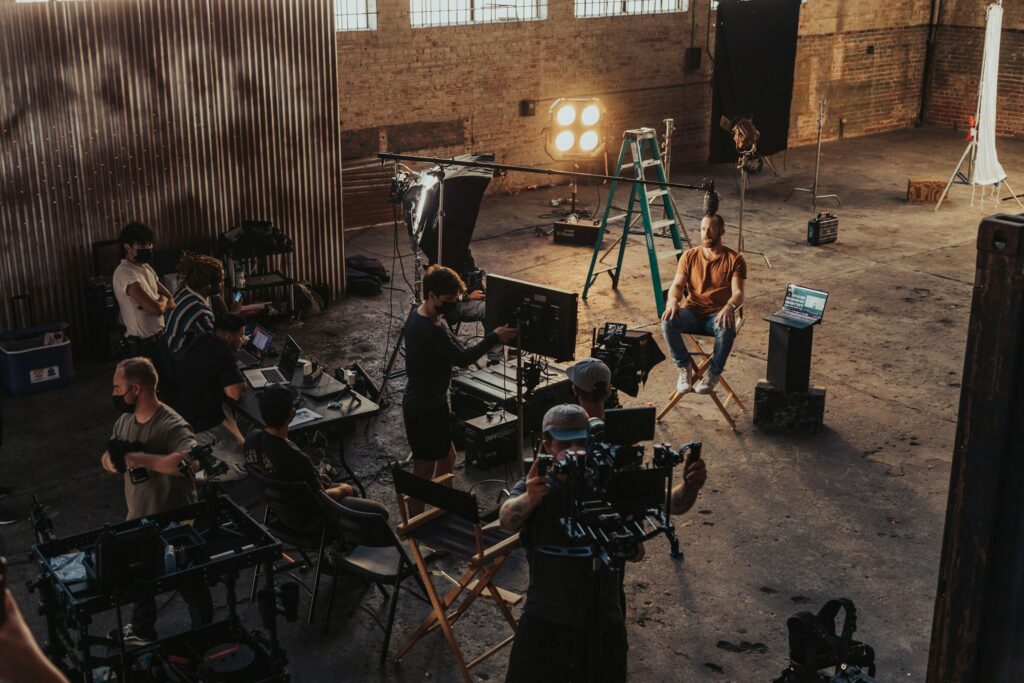
Falmouth University’s studios, converted barns and pop-up spaces, and the stages in Bristol.
04
Props and wardrobe
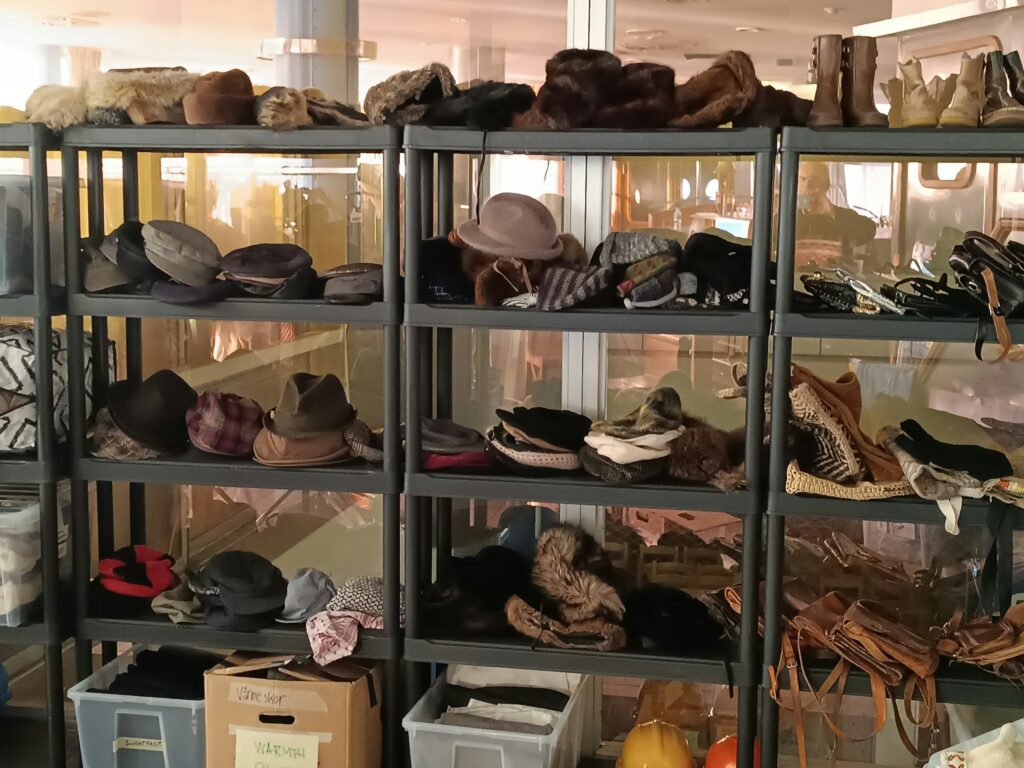
Falmouth’s wardrobe store, props from upcountry, replica weapons, stylists and HMU.
05
Logistics
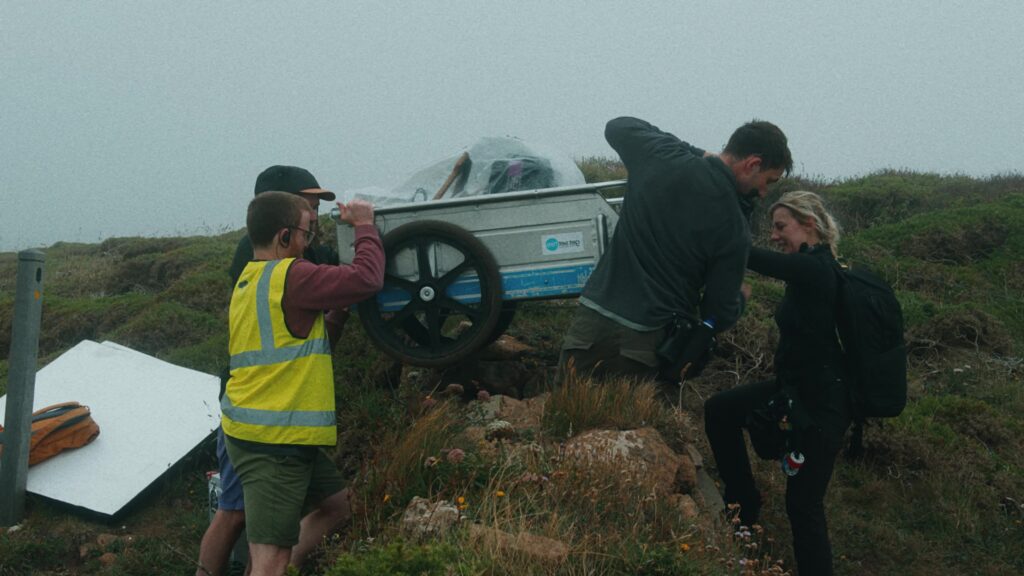
The A30, the sleeper, Newquay airport, narrow lanes, tides, weather days and crew hotels.