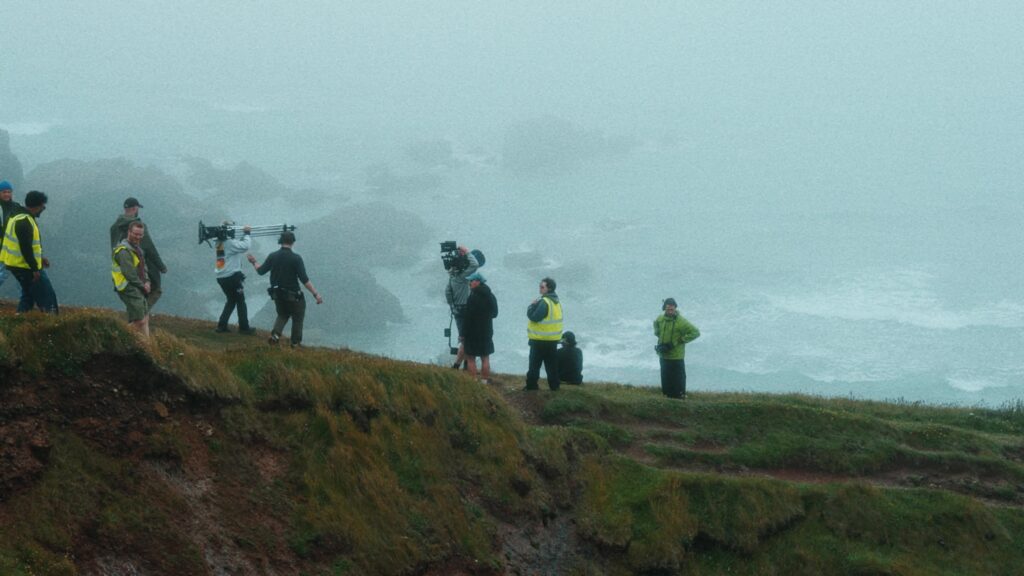
Film crew hire/Locations and permits
Filming locations and permits in the UK. Who says yes, and how far ahead to ask.
There’s no UK filming permit. The council has its streets and land, the landowner has everything else, and England, Scotland, Wales and Northern Ireland each do it their own way: a small crew needs no permit on an Edinburgh street, and pays £84 + VAT for one in Bristol. This is the guide our producers work from. Fees and notice checked October 2026.
A UK-wide filming permit
There isn’t one
Most councils · public liability
£5m
TfL and Network Rail
£10m
Drones in an airport zone
21 days’ notice
On this page
01 The short version
How filming permission works in the UK
No national body issues a filming permit. Whoever owns the ground says yes or no, and a film office, where there is one, speaks for the council.
01
Work out whose land it is
The pavement and the road are the council’s. A station is Network Rail’s or TfL’s, a towpath the Canal & River Trust’s, a clifftop often the National Trust’s, and the beach below may be someone else’s. One shot can cross three owners.
02
Ask the right office, early enough
Most cities have a film office or a council film service: Film London points you to the borough, Production Central WM covers seven West Midlands councils. Notice runs from three days for a small London crew to 12 weeks for a road closure in Cornwall.
03
Tell the people who need telling
Residents get a letter: seven days ahead in Bristol and the North East, a week in Northern Ireland, where the PSNI and the council hear about filming on public property too.
Who files the paperwork
On a crew hire
The location and its permission stay with you, as producer of record. A production manager we book can run the applications, the parking and the call sheet.
On a full production
Our producer applies for all of it, in our name, and the fees go in the budget.
A fixer for the day
One of our producers on the ground for the permits and the recce, from £450 a day. Flying in from abroad? We can hold the permits.
02 Film offices and councils
Who says yes, nation by nation
The council gives permission for its own streets, parks and buildings, usually through a film office: who that is across the UK, and what each asks of a small crew.
| Where | Who says yes | A small crew on the street | Public liability |
|---|---|---|---|
| London’s boroughs | The borough’s film service; Film London points you to it | Five or fewer, handheld, not obstructing: no permission needed on the highway, though Film London advises telling the borough | £5m; £10m for some large shoots and parks |
| The City of London | The City of London Film Office | £95 + VAT, handheld, five or fewer | No figure published |
| Manchester | Screen Manchester, through Open Brolly | Every shoot needs one: £100 for up to 10 | £5m; £10m in city-centre event spaces |
| Salford | No film office: council teams for highways and parks; MediaCity has its own | Ten days’ notice for any enquiry | No figure on its page |
| Birmingham and the West Midlands | Production Central WM, for seven councils | No exemption: £84 + VAT for up to 10 in Birmingham | £5m |
| Bristol | Bristol Film Office, inside the city boundary | All location filming, students included: £84 + VAT for up to 10 | £5m |
| Liverpool | Liverpool Film Office | All filming: £50 + VAT for up to 10; free for Liverpool City Region companies | No figure on its page |
| Leeds | The council’s highways team | £84.20 + VAT for up to four crew, or 10 with cast | No figure on its page |
| Newcastle and the North East | Each council, through North East Screen’s film office | Three or fewer may not need every part of its Code | £10m, available on request |
| Cornwall | Cornwall Council, through FilmApp, for its beaches, woods and parks; the Duchy of Cornwall for the foreshore | Council land: an application, paid for when you apply | £5m |
| Edinburgh, the Lothians and the Borders | Film Edinburgh | No permit unless you cause an obstruction, nuisance or offence; parks, beaches and cemeteries need permission | £10m |
| Glasgow | Glasgow Film Office, a free service that liaises with the council | No fees or notice published | “Adequate”, no figure |
| Wales | The council: Creative Wales sends you there. In Cardiff, the Cardiff Film Office | Cardiff: a permit for all commercial filming, £100 to £250 + VAT by where your company is based | £5m in Cardiff |
| Northern Ireland | The council and the PSNI; always tell Northern Ireland Screen | Its Code isn’t meant for news and documentary crews of five or fewer | £10m for traffic management |
Scotland
Screen Scotland lists the local film offices but issues no permits, and the trunk roads are Transport Scotland’s.
Wales
Cadw, Natural Resources Wales and the national park authorities for Bannau Brycheiniog and Eryri decide for their own land.
Northern Ireland
Northern Ireland Screen hears about every shoot, and road closures take 12 weeks.
03 Small crews
Small crews: permit or no permit
Filming in public isn’t illegal anywhere in the UK. What needs permission is the kit and the space it takes, and how small counts as small depends on the council.
No permit if you don’t obstruct
The public highway in London’s boroughs, for five or fewer handheld, and the streets of Edinburgh, the Lothians and the Borders. Film London still advises telling the borough, three days ahead.
A permit, however small
The City of London, Manchester, the West Midlands, Bristol, Liverpool, Leeds and Cardiff, from £50 + VAT in Liverpool (checked October 2026).
What tips you over
A tripod in Westminster or the City, which needs a Notice of No Objection; lights, cables, a parked van, or anything that blocks the pavement.
04 Landowners
Landowners with their own rules
The council’s permit covers the council’s land. Railways, canals, parks, heritage sites, forests and shopping centres each say yes for themselves, with their own fees, notice and insurance.
| Landowner | What it asks | Notice | Public liability |
|---|---|---|---|
| Network Rail stations | A Small Scale Filming Agreement for 10 or fewer, with a set kit list: no boom poles | 5 working days | £10m |
| TfL: Underground, Overground, DLR | £900 an hour for 1 to 10 crew, supervision from £70 an hour; weekdays 10:00–15:30 and 20:00–23:30 | 3 weeks, or a £600 late fee | £10m, in the filming company’s name |
| The Canal & River Trust | A permit through FilmApp: brand video from £196 an hour + VAT, drones £179 | An admin fee inside 48 hours | £5m |
| The Royal Parks | Permission and a fee from its rate card, paid 24 hours before | 5 working days for 10 or fewer | £5m |
| The National Trust | A contract and a location fee; no drones without permission | Not published | Not published; the National Trust for Scotland asks £2m |
| English Heritage | An enquiry first; drones flown outside opening hours | Not published | £10m |
| Historic Royal Palaces | Its Press Office handles every filming request; location fees | Not published | No figure |
| Forestry England | A permit, from free to fully commercial, and one for any drone | At least 8 weeks | £5m; £10m for high-risk work |
| Cadw, in Wales | Your public liability certificate and a risk assessment | Not published | A copy of yours |
| The foreshore | The Crown Estate manages around half of it in England, Wales and Northern Ireland, with no published filming process. In Cornwall, the Duchy | Ask early | Ask the owner |
| Shopping centres, such as Manchester Arndale | A location fee, a method statement, a risk assessment and a signed agreement | Not published | £5m at least |
Private land
A farm, an office, a pub or an estate road: the owner says yes, in writing. The council’s permit doesn’t cover private land, and the owner’s yes doesn’t cover the pavement outside. Agree the hours, where the vans park, and whose logo, staff or neighbours can be in shot.

05 From our own production
Three permits for one sequence
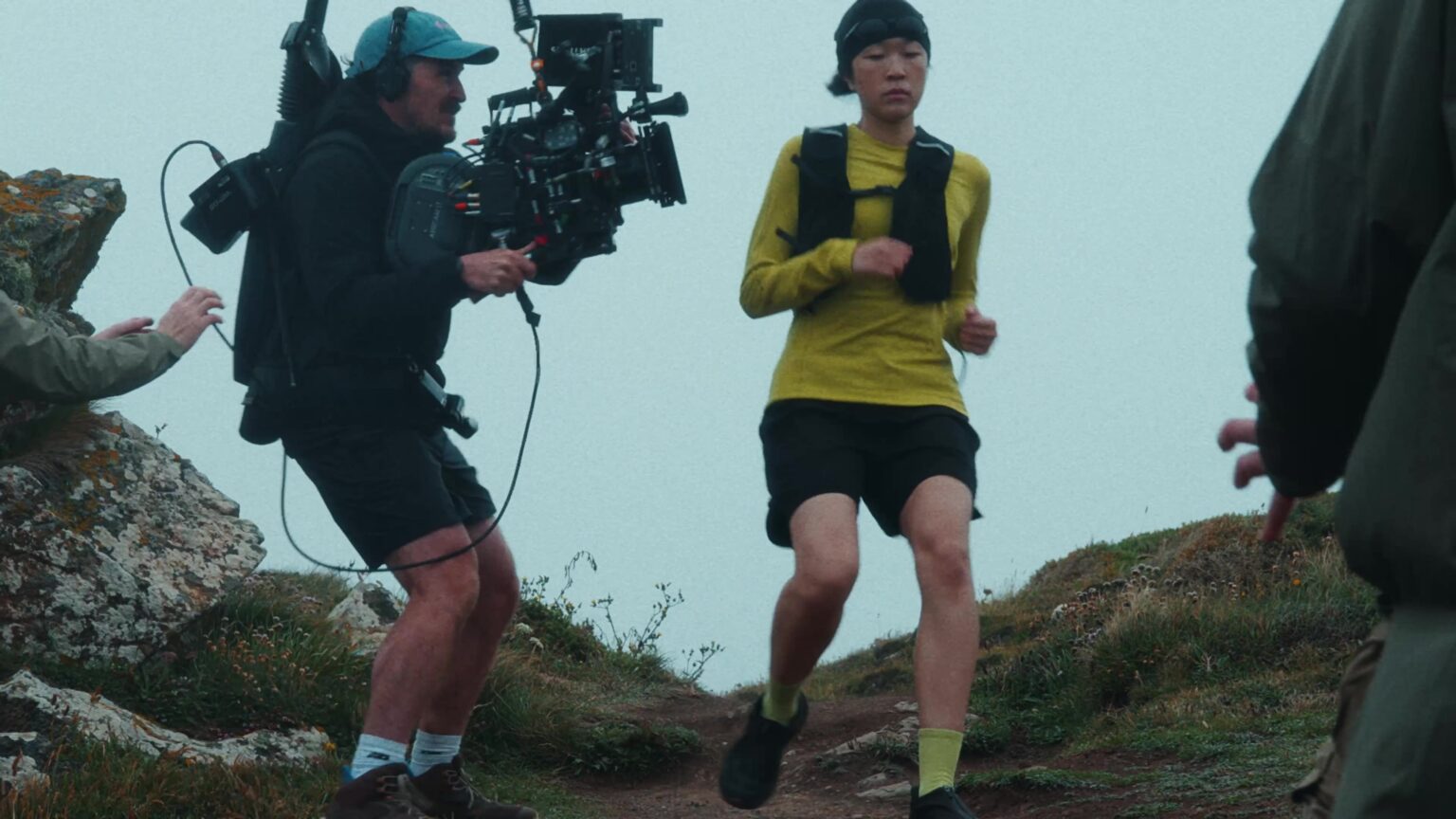
For Cohere’s AI for Empowerment, our own production on 35mm, the Cornish leg was one sequence on the Lizard: a walk along the coast path and a ride above the sea. It crossed three land ownerships, so it took three permits.
Our own production · The Lizard, Cornwall · 16 June 2026
The National Trust
For the clifftops at Kynance Cove.
Natural England
For the Lizard National Nature Reserve.
The Trelowarren Estate
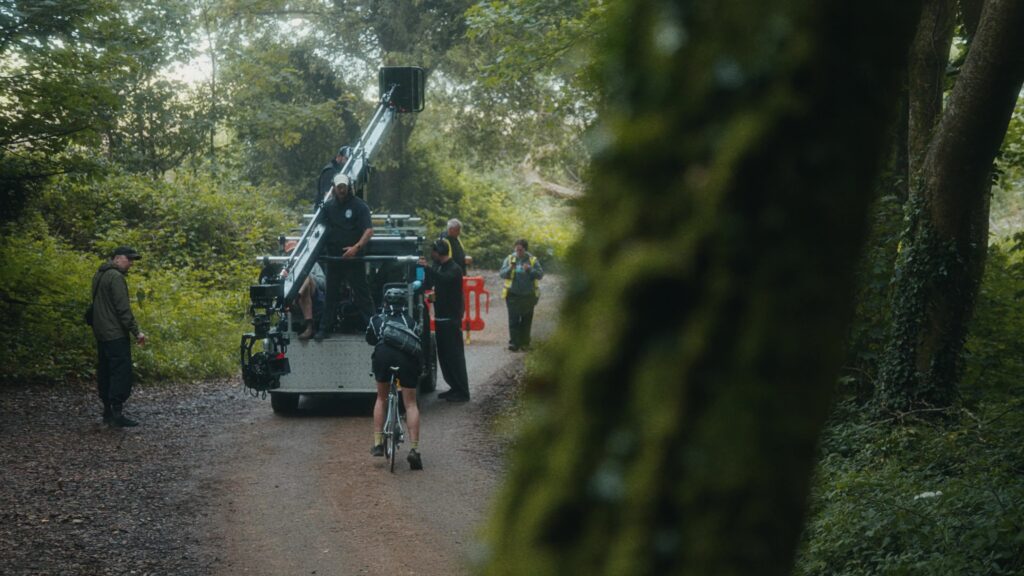
For the cycling, moved to a private estate road, with a tracking vehicle for the moving shots.
The site’s rules
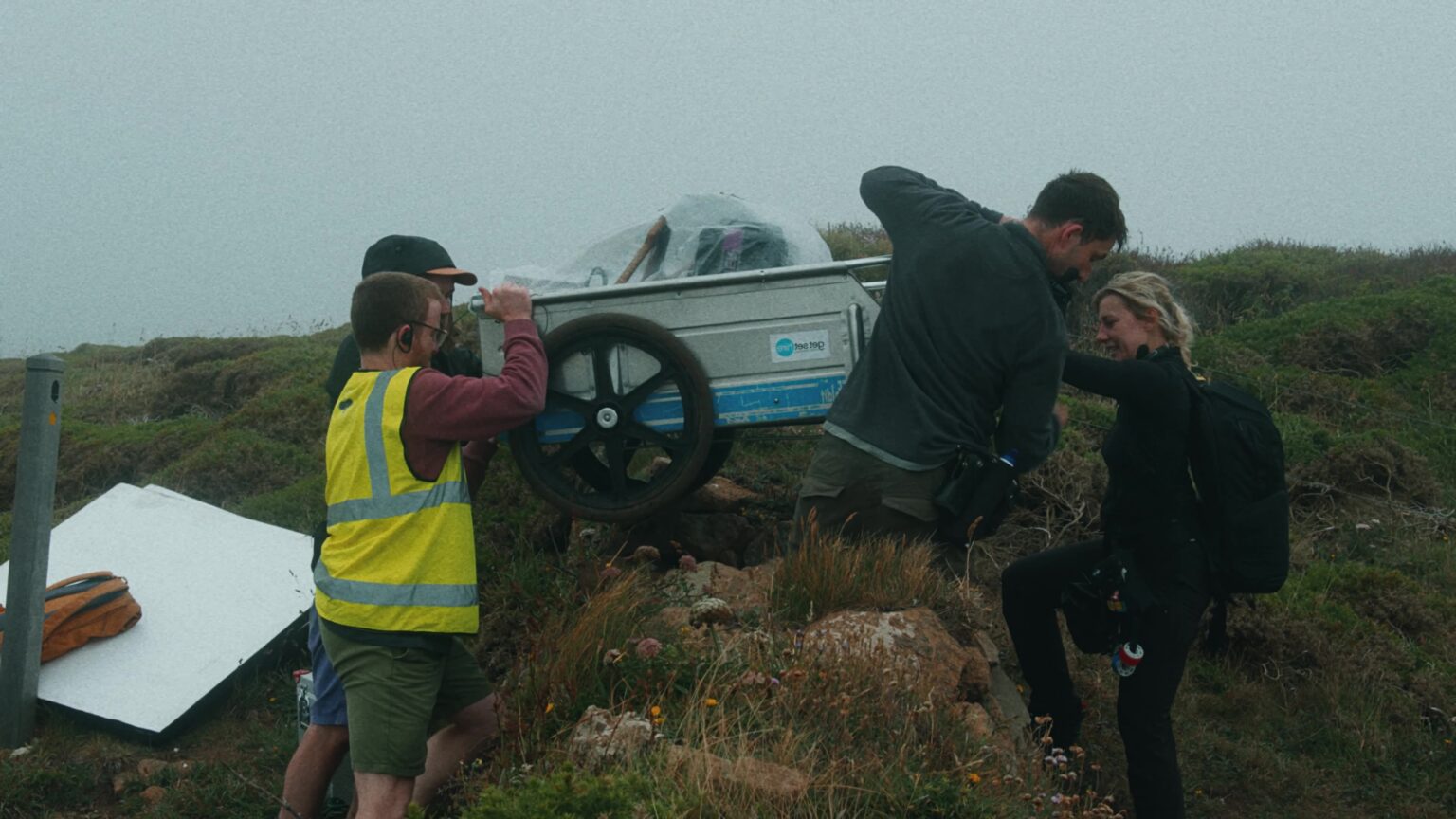
The clifftops are a Site of Special Scientific Interest. No drones. No generators, so portable power stations. No breaking ground, so every gazebo weighted. A water-only fire response on the heathland, and the kit carried in on beach carts.
No signal
No phone signal anywhere, so the unit ran on twelve walkie-talkies.
The weather
Fog came in the night before. We put the options to the client in writing, moved the call earlier and shot a 14-hour day in the mist.
Watch Cohere’s AI for Empowerment, and how we shot it in four countries.
06 Drones and airspace
Drones: the CAA, the airport and the landowner
There’s no UK drone permit either. A paid flight needs the pilot’s CAA paperwork, air traffic control’s yes inside an airport’s zone, and the landowner’s yes for take-off and landing.
IDs
A Flyer ID for any drone of 100g or more; an Operator ID from 250g, or from 100g with a camera. Operators are 18 or over.
Since 1 January 2026
New drones carry a UK class mark, UK0 to UK6, and UK1 to UK3 fly with Remote ID on. EU C-marks count until 31 December 2027.
The open category
120m at most, never over crowds. With an A2 certificate of competency, 30m from uninvolved people (5m in low-speed mode); in A3, 50m from people and 150m from residential, commercial, industrial and recreational areas.
The specific category
An Operational Authorisation such as PDRA01, and a pilot with an RPC-L1 or a GVC. The GVC stops being issued on 31 December 2027.
Insurance
Third-party cover for any commercial flight. Film London and Bristol ask £5m.

| Where | Who says yes | Notice |
|---|---|---|
| An airport’s flight restriction zone: 2 or 2.5 nautical miles round it, plus zones off each runway end, up to 2,000ft | The airport’s air traffic control, through NATS | NATS asks 21 days; Birmingham and Manchester airports say 14 |
| London’s restricted areas (Hyde Park, the City, the Isle of Dogs) and Windsor | An Enhanced application through NATS | At least 21 days |
| Other restricted airspace | The CAA’s ACOMS; check the NOTAMs on the day | Before the flight |
| Take-off and landing | The landowner. In London, within 30m of a road, the road authority too | Ask early |
| London | A Drones CAD reference from the Met Police Film Unit, and £5m public liability | Before the flight |
| Council land | A drone permit: Production Central WM £229, Bristol £245 to £465, Edinburgh £184 an hour, plus VAT | With the street permit |
| The National Trust, Forestry England | Permission first; Forestry England issues a permit for any drone | Forestry England 8 weeks |
Most of that paperwork sits with the pilot. Here’s how we book a drone operator.
07 Roads
Roads: closures, traffic and parking
A pavement is a permit. The road itself is a traffic order, weeks of notice and, usually, the police.
The law
Most filming closures are temporary orders under section 16A of the Road Traffic Regulation Act 1984, like Lambeth’s April 2025 notice closing a Waterloo Bridge slip road for filming.
London’s filming orders
Under the London Local Authorities and Transport for London Act 2008: up to six a year on any road, each up to seven days, with at least eight weeks’ notice (up to 24 in some boroughs). The police assess the plan.
Notice elsewhere
21 days in the West Midlands; 12 weeks in the City of London, Cornwall and Northern Ireland. Edinburgh: a traffic notice in two weeks (£675 + VAT), an order in ten (£1,980 + VAT, plus advertising).
Scotland’s trunk roads
Transport Scotland’s: at least six weeks, three months recommended. No consent fee, but you contact Police Scotland and use a qualified traffic management contractor.

Parking
Bay suspensions are the council’s: £30 a bay in Manchester, £30 plus £25 admin in Liverpool. Cornwall’s Parking Team agrees unit bases.
Private roads
On the Lizard the cycling moved to a private estate road: one permit, from the estate.
08 What catches people out
What catches productions out
Most permit trouble isn’t the permit. It’s the second landowner, the wrong name on the insurance, or a notice period nobody counted.
Two owners, one view
The clifftop and the beach below it can belong to different people, and on the water the harbour authority has its say. In Cornwall, tell the lifeguards and the coastguard too.
Protected sites
A Site of Special Scientific Interest or a nature reserve comes with conditions. On the Lizard that meant no drones, no generators and nothing driven into the ground.
The name on the certificate
TfL wants public liability in the name of the company actually filming, and Bristol won’t take a policy in an individual’s name, sole traders aside.
People and music
Film London says consent is essential when someone is the focus of a shot. Copyright law excuses incidental music (section 31 of the Copyright, Designs and Patents Act 1988), but not music that’s deliberately included.
Children and animals
A child performance licence comes from the council where the child lives: apply 21 days ahead in England, 30 in Northern Ireland. In England, animal suppliers need a licence: ask for the number.
Late and cancelled
TfL’s late fee is £600 and Cardiff’s £250 + VAT. Screen Manchester and Cardiff keep half the fee if you cancel with more than 48 hours’ notice, and all of it with less.
09 Lead times
Lead times at a glance
Count back from the shoot day. These are minimums: a complex shoot takes longer everywhere.
| What | Notice | Who says so |
|---|---|---|
| A small crew in a London borough | At least 3 days | Film London |
| A street permit in Liverpool, Cardiff or the West Midlands | 5 working days | Each film office |
| Network Rail or the Royal Parks, 10 or fewer | 5 working days | Each landowner |
| Bristol | 7 days, and a letter to residents 7 days ahead | Bristol Film Office |
| Cornwall Council land | 10 working days | Cornwall Council |
| TfL | 3 weeks | TfL |
| A drone in an airport zone or London’s restricted areas | 21 days | NATS |
| A child performance licence | 21 days in England; 30 in Northern Ireland | The councils; Northern Ireland Screen |
| A road closure | 21 days in the West Midlands; 8 weeks or more in London; 12 weeks in the City, Cornwall and Northern Ireland | Each council and film office |
| A Scottish trunk road | 6 weeks; 3 months recommended | Transport Scotland |
| Forestry England land | At least 8 weeks | Forestry England |
Our team reads every brief within 2 working hours, so it’s usually the notice period that sets the date.
10 Insurance
Public liability, and whose name is on the permit
Public liability isn’t a legal requirement, but almost every permit asks for it: £5m for most councils, £10m for TfL, Network Rail, English Heritage and Film Edinburgh. Which certificate goes in depends on who the producer of record is.
Crew hire
You’re the producer of record.
The certificate the venue gets
Yours, in the name of the company on the application.
What our insurance covers
What the 2% insures: employers’ liability for every crew member we book, and the kit we hire in for you. Nothing else on the shoot. A large kit rental may need extra insurance, as its own line on the quote.
What it costs
10% booking fee + 2% insurance, on everything we book.
The permits
Yours to hold. A production manager we book can apply for you.
Full production
We’re the producer of record.
The certificate the venue gets
Ours: £10m public liability, with a certificate naming the venue.
What our insurance covers
What the 5% pays for: our production insurance across the whole shoot, £10m public liability included, and the contingency.
What it costs
15% production fee + 5% insurance and contingency, on the production budget.
The permits
We apply in our name, and the fees go in the budget.
Employers’ liability, kit cover and what to declare: Insurance for a UK shoot. If your own producer will run the day, it’s crew hire; if you want us to take it on, it’s a full production, from £9,500.
Need a UK location sorted?
Tell us where and when, anywhere in the UK. We’ll come back with whose permission it needs, the notice it takes and the insurance they’ll ask for. Or call us on 07412 543822.
Quick contact form
11 Questions
Filming permits in the UK: questions
Do I need a permit to film in the UK?
There’s no national filming permit. On council land (streets, parks, beaches, council buildings) you ask the council, usually through its film office; anywhere else you ask the owner. A small handheld crew needs none on the public highway in London’s boroughs or on Edinburgh’s streets, if it obstructs nobody.
Can a small crew film in the street without a permit?
On the public highway in London’s boroughs and on Edinburgh’s streets, yes, if it causes no obstruction: Film London puts the line at five or fewer, handheld, and still advises telling the borough. The City of London, Manchester, the West Midlands, Bristol, Liverpool, Leeds and Cardiff all issue permits for small crews.
How much does a filming permit cost in the UK?
For a small crew on the street, checked October 2026: £50 + VAT in Liverpool, £84 + VAT in Birmingham and Bristol, £84.20 + VAT in Leeds, £95 + VAT in the City of London, £100 in Manchester, and £100 to £250 + VAT in Cardiff, by where your company is based. Landowners charge more: TfL £900 an hour on the Underground for up to 10 crew.
How much notice do I need to film in the UK?
From three days for a small crew in London to five working days in Liverpool, Cardiff and the West Midlands, and ten on Cornwall Council land. TfL wants three weeks, a drone in an airport zone 21 days, and a road closure up to 12 weeks. Our team reads every brief within 2 working hours, so it’s usually the notice that sets the date.
Can I fly a drone on a commercial shoot in the UK?
Yes, with the paperwork: a Flyer ID and Operator ID, the open category’s distances or an Operational Authorisation such as PDRA01, and third-party insurance. Inside an airport’s flight restriction zone you need air traffic control’s permission through NATS, at least 21 days ahead, and the landowner says yes to take-off and landing.
Can I film on a beach in the UK?
Usually, with the owner’s permission. Council beaches go through the council: Cornwall Council through FilmApp, Edinburgh’s through Film Edinburgh. The Crown Estate manages around half the foreshore in England, Wales and Northern Ireland, and in Cornwall it’s the Duchy of Cornwall’s.
What public liability insurance do I need to film in the UK?
Most councils, the Royal Parks and the Canal & River Trust ask £5m; TfL, Network Rail, English Heritage and Film Edinburgh ask £10m. On a crew hire you’re the producer of record, so the certificate is yours. On a full production our policy covers the shoot, £10m public liability included.
Can you get the permits for us?
On a full production, yes: our producer applies in our name and the fees go in the budget. On a crew hire the permits stay yours, and a production manager we book can run the applications for you.
Around the crew
More for UK shoots

01
Crew rates
Day rates for every role, the APA/Bectu card, overtime and turnaround, and what goes on the quote.
02
Insurance
Employers’ and public liability, kit cover, who asks for what, and how a shoot ends up uninsured.
03
Kit and equipment hire
Rental houses across the UK, wet hire and dry hire, and the crew’s own kit.
05
Travel, hotels and vans
Travel days and mileage, vans and licences, clean air zones, trains and hotels.