Brands pay for documentaries all the time. Some are very good. Some are adverts with a documentary filter on. Before we take one on, we run a simple test: take the logo off. If the people in it would tell the same story with the brand out of the room, it’s a documentary, and it’s worth making properly. If the story falls apart, it’s an advert, and it should be made as one.
Here’s how the test works, with four films that pass it: a centenary film for a London engineering firm, a world record for Panasonic, a film for the Sony World Photography Awards and a year on a Cornish farm.
What the test is
Picture the film with every logo, product shot and brand line taken out. Then ask three questions.
- Would the people in it still have something to say?
- Would a stranger still watch to the end?
- Is the brand in the story because it’s really there, or because it paid?
If the answers are yes, yes and really there, you’ve got a documentary a brand can pay for. The brand doesn’t disappear. It sits where it really sits in the story, and people trust it more for that.
JA Brooks: the people are the brand
JA Brooks fits the plumbing and mechanical services in London buildings, and has done since 1925, when Jimmy Brooks started out with a handcart. For its hundredth year it wanted a film that its own staff, and the people who’d retired from it, would see themselves in.
Take the logo off and the film still stands, because it’s made of the people who do the work: the morning shift arriving in the dark at The Pod, its fabrication unit in Essex, the welding bay, people who’ve been there for decades, a scene on the Underground. The history, from the handcart to the Blitz, comes from them too.


It premiered on the big screen at the centenary party, in front of more than 100 people.
The atmosphere at our 100 year party was electric after showing the film on the big screen and that was the main goal.
An executive at JA Brooks, in a verified Clutch review
At 2 minutes 11 it’s what we’d call a micro-documentary. The test works at any length. See more of our micro-documentary production in London.
Panasonic and the Turner Twins: a record you can’t fake
Hugo and Ross Turner had an idea: fit an electric motor to a paraglider and see how high it would go. Over the French Alps they set the altitude record for an electric paramotor, with Panasonic’s name on the wing.

The test is easy here, because the story is the attempt itself. Nothing in it needs the brand to be true. Panasonic is in the film because it’s in the sky, not because a voiceover says so. That’s also why the trailers could run on Waterbear’s streaming platform as well as the twins’ own channels.
The Sony World Photography Awards: when the subject is bigger than the sponsor
Some documentaries pass the test before you start, because the subject is bigger than whoever is paying. The Sony World Photography Awards asked us for the film that would introduce Joel Meyerowitz, the 2026 recipient of its Outstanding Contribution to Photography award, at the ceremony in London.
The job wasn’t to sell the awards. It was to do justice to a photographer who started shooting in colour in 1962, when the art world still thought colour beneath it. Meg Amos, our producer, spent a day with Joel and his wife, the writer Maggie Barrett, at home. Alexander Webb, who runs our post-production, built the edit around Joel’s voice rather than his CV.
A real treasure. A special day.
Joel Meyerowitz, writing to our producer after the shoot
Heligan: when the brand is a place
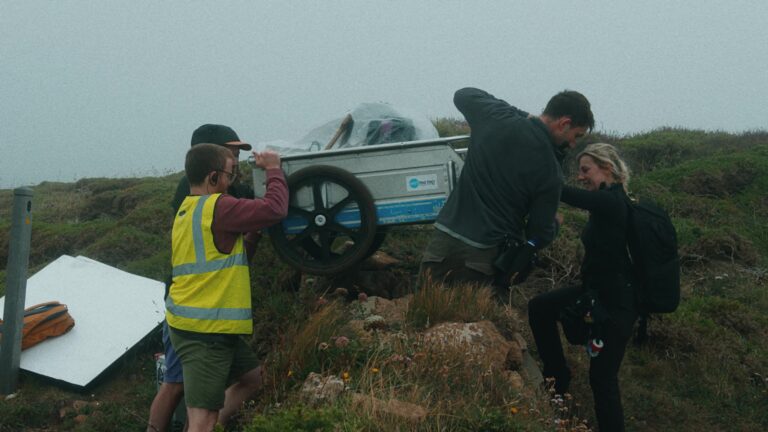
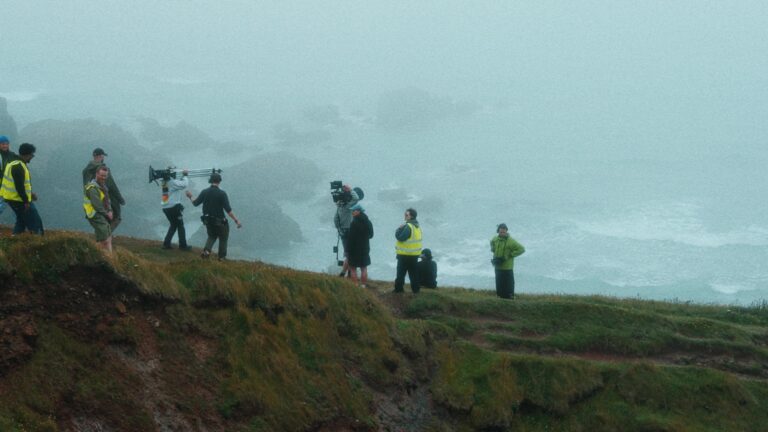
For a place, the test is whether the film is about something that’s really happening there. The Lost Gardens of Heligan were lost after the Second World War and restored when they were rediscovered. Now Heligan is bringing its farmland back, soil first, and we filmed it over a year.

Take the logo off and it’s a film about regenerative farming, which is exactly why it works for Heligan. Visitors watch it in a room of its own in the gardens, and Good Fest, a sustainability festival in Cornwall, selected it.
When it fails the test
Some briefs don’t pass, and it’s better to find out before anyone books a crew. The usual signs:
- The story only works with the product in every shot.
- There’s a list of messages, and the people on camera are there to say them.
- The real audience is the board, not the people the film is supposedly about.
- Nothing would happen in the film if the brand weren’t paying for it.
None of that makes it a bad film. It makes it an advert, a brand film or a corporate film, and those can be very good when they’re made as what they are. What doesn’t work is dressing one up as the other. Audiences can tell.
How to make one that passes
- Find the people before the angle. The best line in the film usually comes from someone who wasn’t in the brief. At JA Brooks that meant people who’d been on the tools for decades.
- Ask, don’t script. Write questions, not lines, and build the script from what people actually say.
- Put the brand where it really is. On the wing, on the hi-vis, on the building. Not in a voiceover.
- Agree what the brand can change before you film. Facts, names and anything legally sensitive, yes. The story, no. JA Brooks’ notes on the edit were about accuracy: a reworked history of the Blitz, a line on its work beyond London, its change of ownership in 2016.
- Plan the film’s life after delivery. A centenary party, a room in a garden, a streaming platform, pitches and recruitment. Where it’s shown changes how long it should be.

What it costs
A short documentary of two to ten minutes runs from £9,500 to £25,000. A long-form film or a series runs £25,000 to £100,000, and broadcast-length work starts at £100,000. Most documentaries that brands pay for sit in the first band. JA Brooks’ film took three shoot days. Time in the field, travel and how much the edit has to do move the number.
Got a story that passes?
If you’ve got a story that would stand up with the logo off, tell us about it. Our team reads every brief within 2 working hours, or you can call us on 07412 543822. You can also see more of our documentary production in London and our documentary production across the UK.
Questions about branded documentaries
What is a branded documentary?
A branded documentary is a documentary a brand pays for: real people and real events, filmed as they happen, with the brand in the story only where it really is. The test we use is to take the logo off. If the people in it would tell the same story with the brand out of the room, it’s a documentary.
How is a branded documentary different from an advert?
An advert exists to deliver the brand’s message, and it’s written that way. A branded documentary exists because something real is worth showing, and the brand pays for it to be shown properly. If nothing would happen in the film without the brand, it’s an advert, and it’s better made openly as one.
Can the brand appear in a branded documentary?
Yes, where it really is: on the wing of a record-breaking paraglider, on the hi-vis of the people doing the work, on the farm that’s doing the regenerating. What doesn’t work is a voiceover doing the brand’s job, or a product in a scene it was never part of.
How long should a branded documentary be?
As long as the story holds. JA Brooks’ centenary film runs 2 minutes 11, and Heligan’s Regenerative Farm runs just under 11 minutes. Where the film will be shown matters as much: a party, a room in a garden and a streaming platform all want different lengths.
How much does a branded documentary cost?
A short documentary of two to ten minutes runs from £9,500 to £25,000, a long-form film or series from £25,000 to £100,000, and broadcast-length work starts at £100,000. Most documentaries brands pay for sit in the first band. Shoot days, travel and the edit move the number.