

Film crew hire/Oxford/Clapper loader
Hire a clapper loader in Oxford. A clapper loader slates every take and looks after the cards or film on your shoot.
People book a clapper loader in Oxford for college halls, labs at the Science Park and Harwell, and shoots on the street. A clapper loader, or 2nd AC, helps prep the camera package, slates the takes, loads the cards or film magazines and keeps the camera report the edit relies on. Our clapper loader day rate starts at £355, and the loader gets all of it.
- 54 five-star Google reviews
- 2 hrs for our team to read your brief, in working hours
- £10m employers’ liability on every crew member we book
- 2,800+ freelance crew on our books, across the UK


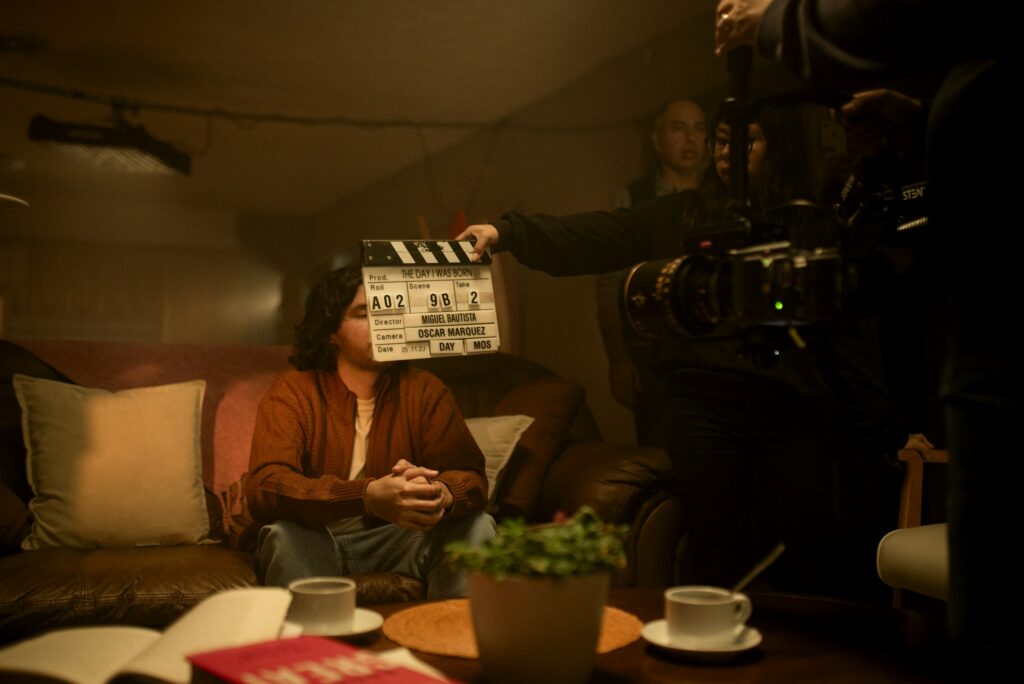
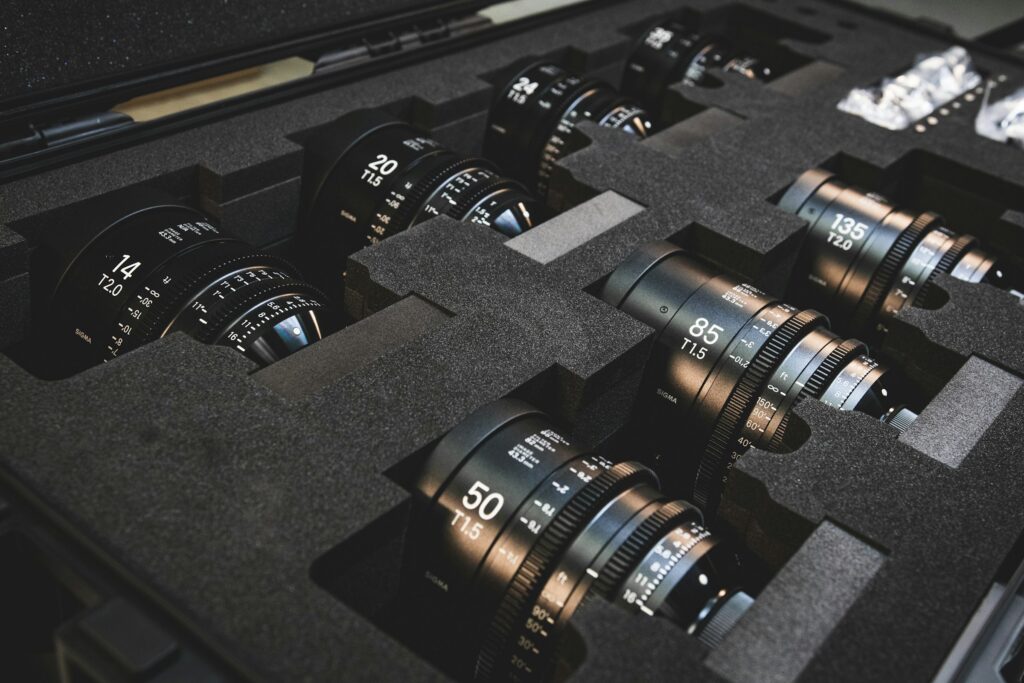

Photos: Here Now Films, Mike Bautista, Voice + Video and Tim Wildsmith
The role
What a clapper loader does on your shoot
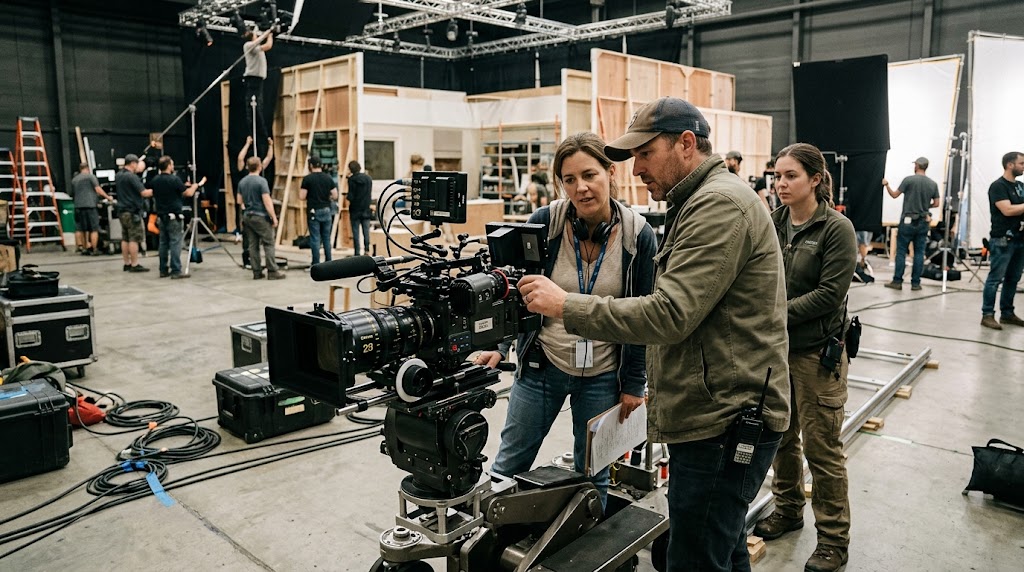
A clapper loader, or 2nd AC (second assistant camera), runs the paperwork and the media of the camera department. They mark every take with the slate, so sound and picture sync and the editor knows what’s what. They load and unload cards, or film magazines on a film shoot, and keep the camera report.
On film, the loader is the one person who handles the negative before the lab. They load magazines in a changing bag or a darkroom tent, can the exposed rolls and label every can. One mistake there costs a day.
We book a loader who lives in or near Oxford first. If nobody local is free, or the shoot needs more people, we bring crew from London. We add the travel to the quote before anything is booked. In practice, camera assistants for Oxford shoots usually come from London with the camera package. The loader helps the focus puller check it out at the kit house the day before, and the prep day goes on the quote as its own line.
- Every take is marked. The loader writes the scene, slate and take on the clapperboard, so the edit can find each take and sync it.
- Every card and roll is accounted for. The loader logs cards or film rolls in and out, and never formats a card before it’s backed up.
- The camera report is right. It records the lens, stop, filters and notes for every take, for the editor and the colourist.
- Batteries and lenses are ready. They’re charged, cleaned and where the focus puller needs them.
What’s included
What the day rate covers
In the day rate
- An 11-hour day, including an hour for lunch
- Slating every take, with timecode where it’s used
- Loading and unloading cards, or film magazines
- The camera report, lens log and media log
- Handing cards to the DIT, or film cans to the lab
- Batteries, consumables and the camera cart
On top, each on its own line
- Our 10% booking fee and 2% insurance, on the whole quote
- Film stock, processing and scanning, at cost, on a film shoot
- A prep day at the kit house, if the package needs one
- Travel from London or outside Oxford, at cost
Read how our rates work and the two ways to book in crew rates in Oxford.
Two ways to book
Crew hire or full production
The price depends on who is the producer of record. That’s the company responsible for the shoot. You can book a loader for your own shoot, or ask us to run the whole production.
Crew hire
You run the shoot.
10% + 2% booking fee and insurance on everything we book for you, including crew, kit and travel.
We do
- Find, book and brief the crew, and pay them
- Book kit, travel and hotels too, if you want them
- Send the full price before anything is booked
- One person to call all day
- Employers’ liability for the crew we book, and insurance on kit we hire in
You do
- Run the shoot, or your producer does
- The plan, the schedule and the call sheet
- The location, its permission and its public liability
- You’re the producer of record, so the production is your responsibility
The 2% covers employers’ liability for every crew member we book and the kit we hire in for you. It doesn’t cover anything else on the shoot. A large kit rental may need extra insurance, which goes on the quote as its own line.
Full production
We’re the producer of record.
15% + 5% production fee, plus insurance and contingency, on the whole production budget. We quote it as a production.
We do
- Our producer plans it with you and runs the day
- Locations, permits, kit, studio, travel and hotels, booked and paid in our name
- Insurance for the whole shoot, public liability included, plus the risk assessment and the call sheet
- One contract and one invoice, so overseas teams need no UK company
You do
- The creative calls
- Signing off the plan and the budget
The 5% pays for our production insurance across the whole shoot, including £10m public liability, and the contingency.
If your own producer or director will run the day, book crew hire. If you want us to run the production, ask for a full production quote.
On the day
An example day with a clapper loader
A 35mm advert with one set and two cameras, on the 22,000 sq ft main stage at Rebellion Film Studios at Didcot. The times are an example. The call sheet sets the real ones.
- 06:30 Load the mags The camera van arrives at the stage from the London kit house. In a darkroom tent off the set, the loader puts fresh rolls into the magazines and labels each one with the stock and roll number.
- 07:30 Camera cart The batteries are charged, the lenses are on the cart, and the slate and camera report are ready.
- 08:30 First take The loader puts the slate in, calls it clearly and steps out of shot. They write up every take with the roll, slate, take, lens and stop.
- 10:00 Mag change A 400ft roll of 35mm runs out after about four minutes at 25 frames. The loader puts a new magazine on in seconds, then cans and labels the exposed roll.
- 13:00 Lunch The loader logs the short ends and reloads the magazines for the afternoon.
- 14:00 Second camera The loader slates two cameras at once, with a mark for each.
- 18:30 Wrap Every can is taped, labelled and on the lab sheet. The camera report is signed and handed over.
On film, the job often starts the day before at the kit house. A 35mm package usually comes from London, and the loader preps it there with the focus puller before it travels. On a digital shoot the day is the same, with cards instead of film. The loader logs the cards out, hands them to the DIT, and only formats them once two verified copies exist.
We checked this in November 2026. Fees and rules change, and this page isn’t the official source. For the latest, check with Rebellion Film Studios.
Types
Types of loader we book
The job changes with the medium. These are the kinds of loader we book.
Digital 2nd AC Cards, slate and reports Card £355–448
A digital 2nd AC slates, swaps and logs cards, hands them to the DIT or data wrangler, and keeps the camera report.
Good for brand films, adverts and drama on cinema cameras.
Film loader 16mm and 35mm Card £355–448
A film loader loads and unloads magazines in the dark, cans and labels every roll, keeps the stock and lab sheets, and gets the cans to the lab.
Good for anything shot on film. Book someone who has loaded film recently, because it’s a skill you keep by doing it.
Loader and data Two jobs, one person Quoted on the brief
On a one-camera digital shoot, the 2nd AC can offload cards with verification software between set-ups, or take over as DIT at wrap, as ours did on a studio day in Woolwich, London. See DITs in Oxford.
Good for small crews where a separate DIT would sit idle.
Focus puller, 1st AC Focus and the camera Card £461–575
The focus puller is the senior assistant, who pulls focus and runs the camera. See focus pullers in Oxford.
Book one alongside the loader on any cinema camera shoot.
What it’s for
What people book a clapper loader for in Oxford
Brand films and adverts on the street
Adverts on Broad Street, the High and the Covered Market need every take slated and logged for the edit. Oxfordshire County Council handles filming on streets and pavements.
Founder films for spin-outs and biotech
Founder interviews on cinema cameras are filmed in labs and offices at the Oxford Science Park, Begbroke and Harwell Campus.
Conferences and events at college venues
Two or three cameras on a talk or a panel are slated and logged at once, with interviews filmed between the sessions. Keble is one of the colleges that takes location filming.
University and research films
Crews film in labs, lecture theatres and libraries, with every take slated and logged. Start with the University’s filming coordinator or the college.
Heritage locations out of town
Film shoots at Blenheim Palace at Woodstock or on the edge of the Cotswolds mean loading magazines in a tent on location, with the owner’s permission.
Recent work
Loaders on our jobs, and how we crew Oxford
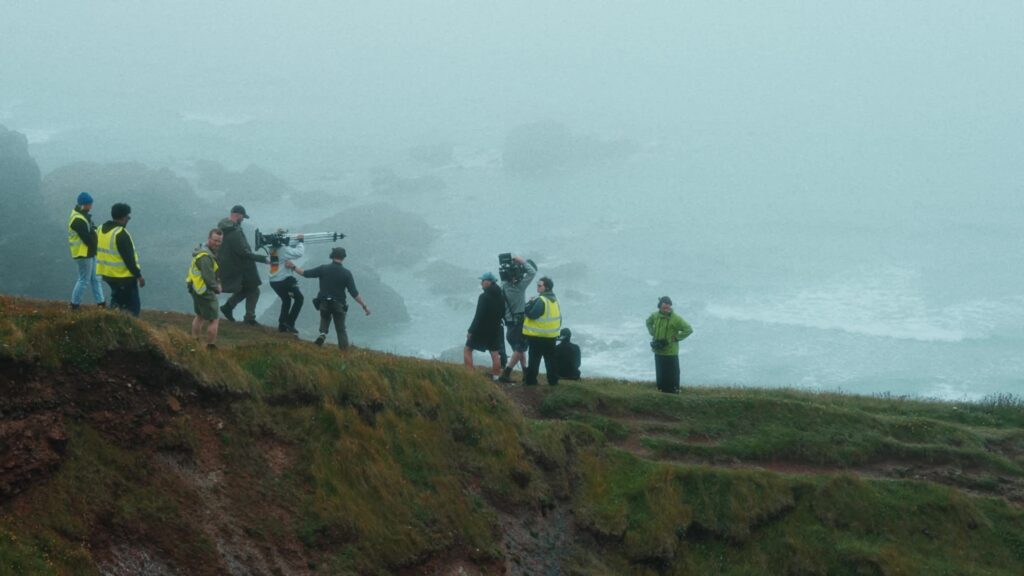
Our work · Canada, Norway, Cornwall and Portugal · 2026
Nine reels of negative, all accounted for
Cohere’s AI for Empowerment was shot on Kodak Vision3 35mm through an Arricam LT, one day in each of four countries. For the Lizard, in Cornwall, our 2nd AC travelled in with the 1st AC. Exposed negative can’t go through airport X-ray. Cinelab in Slough processed and scanned it in 4K. In Oslo, where the airline refused to carry it, it was processed and scanned locally and came home by courier. All nine reels came back.
How we crew it · Oxford
A 2nd AC who travels with the camera package
Camera assistants for Oxford shoots usually come from London with the camera package. The loader helps the focus puller check it out at the London kit house the day before, then travels with the crew. When a loader who lives in or near Oxford fits the brief, we book them first. We add the travel and the prep day to the quote before anything is booked.
Before you book
Things to know
The day
- The day is 11 hours, including an hour for lunch.
- Overtime is paid at card rates, and we agree it with you before it happens.
- A prep day at the kit house is quoted separately.
Kit and film
- Stock, processing and scans go on the quote at cost, each on its own line.
- Film packages, and most cinema camera packages, come from London kit houses.
- Exposed film never goes through an airport X-ray scanner. After an Oxford shoot, the cans go to the lab by hand on the train, or by courier.
Studios and travel
- Travel for a loader from London or outside Oxford, and the prep day, go on the quote before anything is booked.
- Rebellion Film Studios at Didcot has a 22,000 sq ft main stage. For a bigger set build, Shadowbox Studios Shinfield, south of Reading, has 18 stages. We checked this in November 2026. Fees and rules change, and this page isn’t the official source. For the latest, check with Rebellion Film Studios and Shadowbox Studios.
Paying and changes
- You pay nothing until you confirm the loader.
- We take 50% by card when you book and 50% when you receive the final rushes.
- The quote shows every line, including the day rate, booking fee, kit and travel.
- Cancellation terms are on every quote.
What our insurance covers
- Our insurance covers employers’ liability for the loader we book, up to £10m.
- Kit we hire in for you is insured. A large kit rental may need extra insurance, as its own line on the quote.
- On a crew hire, it doesn’t cover anything else. Public liability, the location and your own kit stay with you, and your venue will want to see your certificate. When we’re the producer of record, our policy covers the shoot.
- Venues usually ask to see it. Oxfordshire County Council, for example, asks for at least £10m public liability for filming on streets and pavements. We checked this in November 2026. Fees and rules change, and this page isn’t the official source. For the latest, check with Oxfordshire County Council.
£355 a day
APA/Bectu card: £355–448 a day for a clapper loader.
| Day rate, 11 hours | £355 |
| Booking fee, 10% | £35.50 |
| Insurance, 2% | £7.10 |
| One day, before travel | £397.60 + VAT |
The 2% covers employers’ liability for the loader we book and the kit we hire in. What it covers
You won’t pay anything until you confirm the loader.
- 50% by card at booking, 50% on the final rushes
- Our team reads every brief within 2 working hours
- Every line on the quote before anything is booked
Or call us on 07412 543822.
Reviews
What clients say about our crews
These reviews come from our Google Business Profile.

Book a clapper loader in Oxford.
Tell us the date, the camera, where the package is coming from, and whether it’s digital or film. Our team reads every brief within 2 working hours. Or call us on 07412 543822.
Check availability
The whole crew
Every crew role we book in Oxford
Send one brief and we send one quote, with every role on its own line. These are our day rates in Oxford, and each crew member gets their full rate:
Production 06
- Director From £500
- Producer From £450
- Production manager £504–627
- 2nd AD £355–448
- Production assistant £400
- Runner £245
Camera 07
- DOP From £850
- Camera operator £529–656
- Focus puller £461–575
- Clapper loader This page £355–448
- Steadicam operator From £950
- Gimbal operator £529–656
- Drone operator From £750
Data and playback 02
- DIT £527
- Video playback £334–518
Sound 01
- Sound recordist £550
Hair, make-up and costume 02
- Hair and make-up £398
- Costume £519–694
Art department 02
- Art director £675–878
- Set builders £341–512
Post-production 01
- Editor From £350
See how our rates work in crew rates in Oxford, or start from one of our crew set-ups in Oxford.
Production support
Everything around the crew
A loader works inside a camera package. The kit house, the stock, the lab and a studio each go on the quote as their own line, or you can sort them yourself.
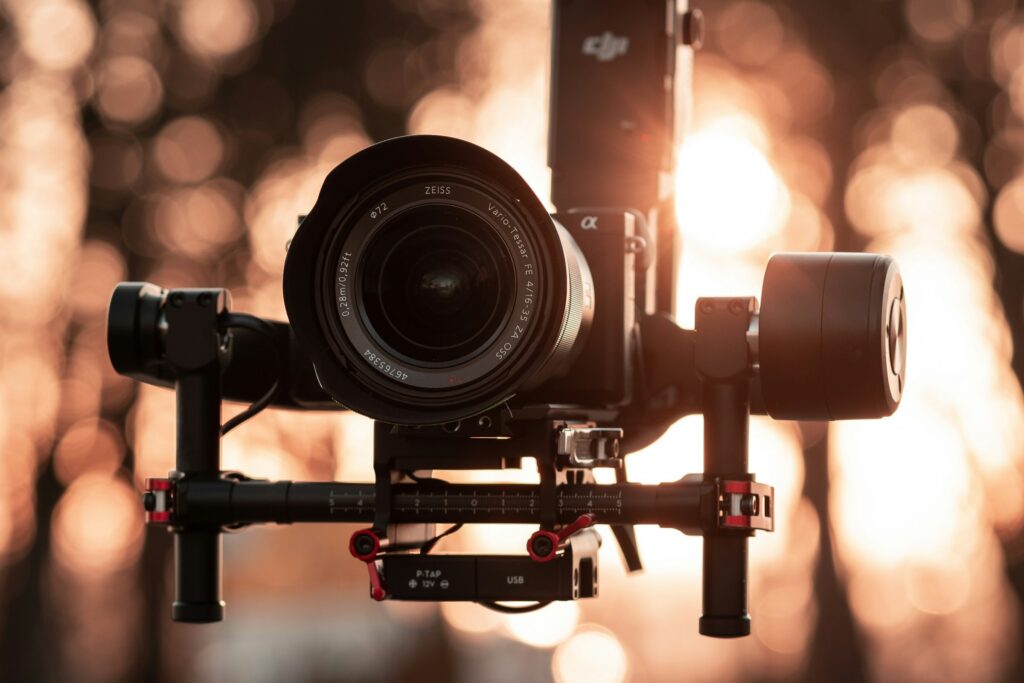
01
Kit rental
Where to hire camera, lighting and sound kit for an Oxford shoot, and when the crew bring their own.

02
Locations and permits
The county council for streets, the colleges and the University, the Bodleian and the drone rules.
03
Studios and set builds
Studios at Didcot and south of Reading for set builds, and college rooms hired by the day for interviews.

04
Props and wardrobe
Where props and costume come from, and the stylists and hair and make-up artists we book.

Questions
Questions about hiring a clapper loader in Oxford
How much does a clapper loader cost in Oxford?
The APA/Bectu card puts a clapper loader at £355–448 for an 11-hour day, including an hour for lunch, and the loader is paid that in full. We add our 10% booking fee and 2% insurance, so one day comes to £397.60 + VAT. A prep day at the kit house and any travel from London are extra, and each goes on the quote as its own line.
What does the insurance on a crew booking cover?
It covers two things. The first is employers’ liability for every crew member we book, up to £10m. The second is the kit we hire in for you. That’s what the 2% pays for. A large kit rental may need extra insurance, which goes on the quote as its own line. On a crew hire, you’re the producer of record, so public liability, the location, your own kit and anything you book yourself stay with you. If you want us to be the producer of record, we quote it as a full production, and our insurance covers the whole shoot.
Is a clapper loader the same as a 2nd AC?
Yes. In the UK the second assistant camera is usually called the clapper loader, a name from the days when the job was mostly loading film.
Do I need a loader on a digital shoot?
On a cinema camera shoot with a focus puller, yes. Someone has to slate, log and look after the cards. On a small crew the loader can double as the DIT, as ours did on a studio day in Woolwich, London. On a small interview day the camera operator can do it.
Can your loaders load film?
Yes. We book loaders who have loaded 16mm or 35mm recently, which is the thing to ask for. For the Cornish leg of Cohere’s AI for Empowerment, shot on 35mm, our 2nd AC travelled in with the 1st AC. Tell us the camera and the stock when you book.
Where can we hire a film camera for an Oxford shoot?
Ask us when you book. A 35mm or 16mm package is specialist kit, and for an Oxford shoot it usually comes from a London kit house. The loader helps the focus puller prep it there the day before. The stock, processing and scan go on the quote at cost.
Is there a studio near Oxford for a shoot like this?
Yes. Rebellion Film Studios at Didcot has a 22,000 sq ft main stage and two location shooting areas of over 19,000 sq ft. For a bigger set build, Shadowbox Studios Shinfield, south of Reading, has 18 stages. If we book the studio, it goes on the quote as its own line. There’s more in film studios near Oxford. Check with the studio for the latest.
Are your loaders from Oxford?
We book loaders who live in or near Oxford first. Camera assistants for Oxford shoots usually come from London with the camera package. The fastest trains from Paddington take 52 minutes. We add the travel and the prep day to the quote before anything is booked. Our own base is London, at 124 City Road, and we have bases in Manchester, Bristol and Cornwall. Check with GWR for the latest train times.
Where does the film go after an Oxford shoot?
To a motion picture lab, by hand or by courier, and never through an airport X-ray scanner, which can fog exposed negative. Cohere’s 35mm was processed and scanned in 4K at Cinelab in Slough. After an Oxford shoot, the cans can travel by hand with the crew, or go by courier. The stock, the processing, the scan and the courier each go on the quote at cost.