

Film crew hire/Cornwall/DIT and data
DIT and data on Cornish shoots. Every card checked and copied before it leaves the headland.
The edit for a Cornish shoot is usually a long way off: in London with our post team, at your own post house, or abroad. On the Lizard there was no phone signal at all. Here’s how the footage gets to the edit in one piece: who handles the cards, what they need on a remote location, how much a day makes, how many copies, and every way rushes leave Cornwall, from a drive on the sleeper to an upload from a wired line. And what changes when it’s shot on film.
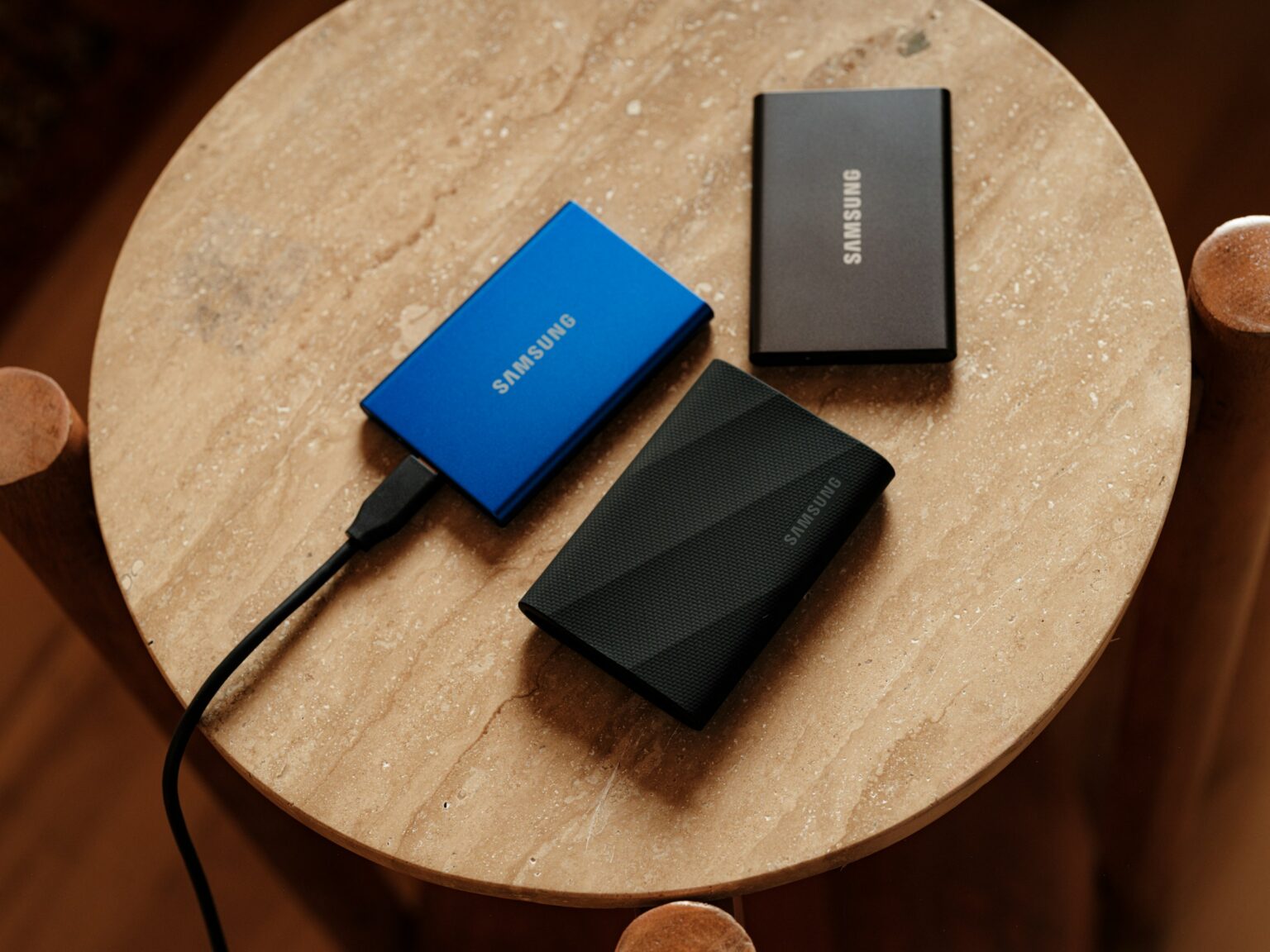
DIT · day rate
£527
Verified copies before a card is wiped
2
1 hour of Sony FX6 4K at 25p
up to about 112 GB
The sleeper · Truro to Paddington
22:29 to about 05:05
On this page
01 Who does what
DIT, data wrangler or loader?
Three jobs that overlap, and get called different things on different sets. Which one a Cornish shoot needs comes down to the cameras, the formats, and how far away the edit is.
Digital imaging technician
DIT
Works with the DOP on the camera settings and the look, checks every take for focus, exposure and noise, sets up colour for dailies, and runs the backups. The one to book for RAW, ARRI or RED, or when the edit wants dailies the same night.
Backups and the log
Data wrangler
Takes the cards from the cameras, copies them to drives with verified backups, and keeps the log. On a multi-camera day at a festival or an event, the wrangler keeps up with the cards so the camera team never stops.
On smaller jobs
Camera assistant or loader
On a small shoot the 2nd AC offloads cards between set-ups with verification software. On a one-camera day on a beach, that’s usually enough.
Our view
For a one- or two-camera FX6 day, a camera assistant with the right software does the job. Book a wrangler once there are three or more cameras, and a DIT for RAW, ARRI or RED, dailies the same night, or an edit in another city or time zone waiting on proxies. Cornwall is short of DITs, so when a shoot needs one, the DIT usually comes down from Bristol, Devon or London, with travel and a hotel on the quote before anything is booked. The cart and the drives go on the quote as their own lines. We’re a crew agency with 2,800+ freelance crew on our books across the UK, 30+ of them in Cornwall, so we can scale a crew from one camera operator on a beach to a full unit on a clifftop. Every role is on the Cornwall crew page.
02 On set
How we handle data on a Cornish shoot
Five steps, every shoot, whoever is doing them, and whether the set is a studio or a clifftop.
01
Offload, verified
Cards are copied with checksum-verified software such as Silverstack, ShotPut Pro or OffShoot, which reads each copy back against the card. Never by dragging files across.
02
Two copies, then three
Two verified copies on separate drives before a card goes back to camera to be formatted, and a third away from the location by the end of the day.
03
Check it
Spot checks for focus, exposure, sound and timecode, while the crew and the light are still there to go again. On a beach, that can mean before the tide turns.
04
Log it
A report for every card, and a checksum file that travels with the media: a checksum for every file and a record of every copy made.
05
Hand it over
At wrap the drives go to you, onto the sleeper at Truro, up from a wired line, or to our edit in London.
Card handling
A full card comes off camera marked as not yet copied, and goes straight to whoever is handling data, never into a pocket. It goes back to camera only when two verified copies exist and it’s been marked safe to format. On a two-camera day each camera’s cards live in their own case.
Why it matters
Copying without a checksum means a corrupted file can go unnoticed until the card is formatted and the original has gone. The baseline we work to is the 3-2-1 rule: three copies, on two kinds of storage, one of them off site. On a remote location, off site can simply mean the drive that leaves with someone else.
03 Shooting on film
On 35mm, there are no cards to copy
Film takes the DIT out of the picture and puts a lab in. The Cornish leg of a campaign we produced in four countries is the example.
Our own production · The Lizard, Cornwall · 16 June 2026
The format
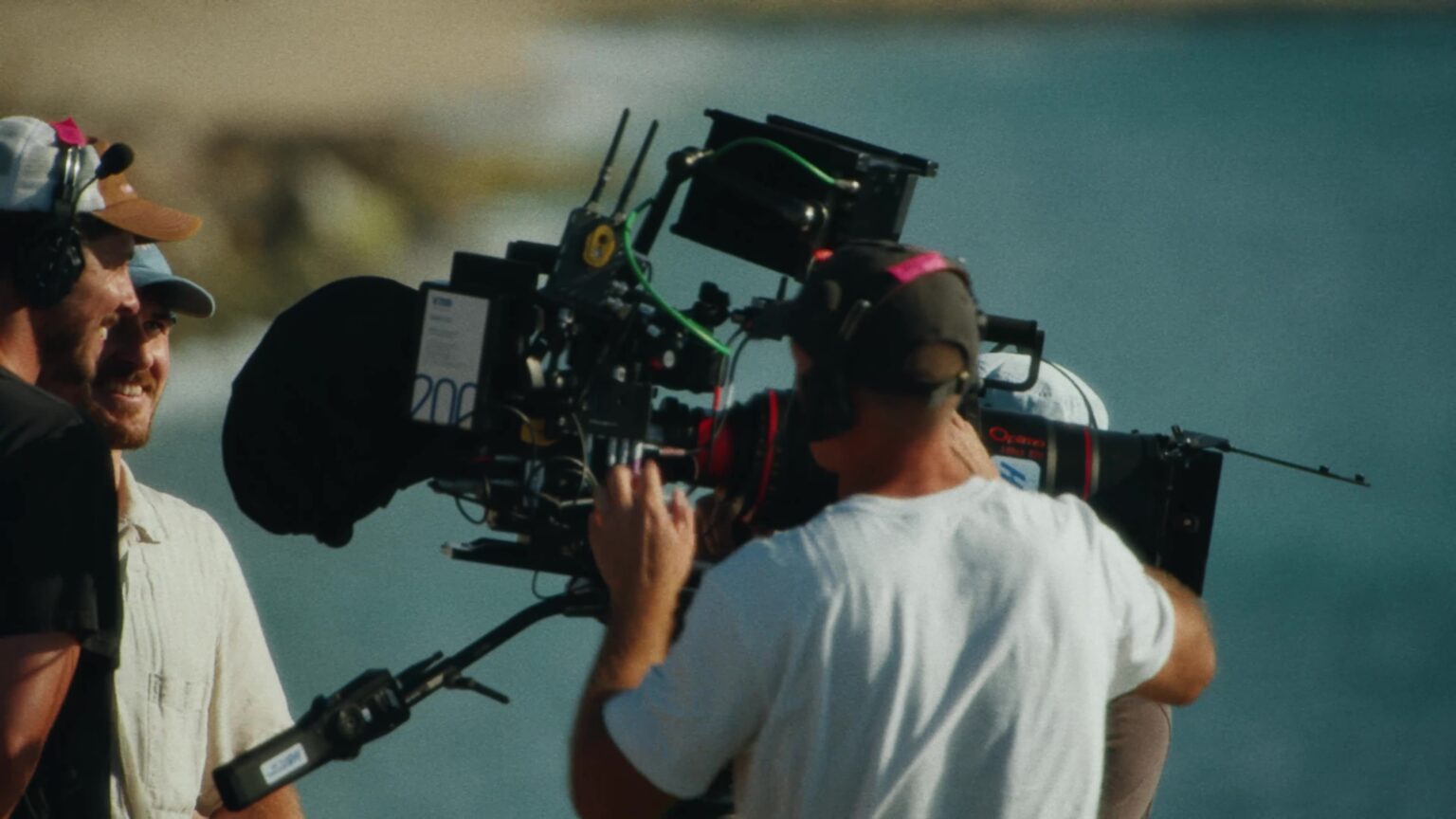
Cohere’s AI for Empowerment was shot on 35mm, Kodak Vision3 through an Arricam LT. A 400ft roll runs about three and a half minutes, so the shot list was finished before the recce, not after.
No playback
The camera’s video tap is for framing and focus. What’s on the negative stays unseen until the lab has processed and scanned it.
The lab
The negative was processed and scanned in 4K at Cinelab in Slough, and on this campaign that was days after each shoot. The negative is the master: there’s no second copy until the scan exists.
No X-ray
Exposed, undeveloped film is destroyed by airport X-ray, so the route to the lab is planned before the shoot, not at a check-in desk.
The cards that were there
The campaign’s behind-the-scenes films were shot on digital, on Sony FX6 and FX3 cameras, and digital cards get the usual copy, check and log, film shoot or not.
More on the format, the lab and the negative: what shooting Cohere on 35mm taught us.
04 Power and signal
Power and signal on a remote location
A Cornish location can have no mains, no generator allowed and no phone signal. Here’s what that means for the data.
No generator
The Lizard’s clifftops are a Site of Special Scientific Interest, so there were no generators for Cohere and the shoot ran on portable power stations. A DIT cart on a headland runs on batteries the same way, with an uninterruptible supply so a flat battery doesn’t stop a copy halfway. Elsewhere the council’s code of practice asks for silent generators wherever possible.
A corner out of the weather
A spot out of the wind and the spray, close enough for the camera team to hand over cards. On a protected site that’s a gazebo weighted down, not pegged.
No signal
There was no phone signal on the headland, so the unit ran on twelve walkie-talkies, and nothing uploaded from set. We plan every remote location the same way: no signal until the recce proves otherwise, and the drives leave by hand.
Broadband
When the government awarded Wildanet £36m in January 2023 to connect up to 19,250 rural premises, it put Cornwall’s gigabit-capable full fibre at 49% (checked October 2026; the figure is dated). So we don’t assume a fast line at a farmhouse or a holiday let: we ask for a wired connection and test it before the day.
Playback and streams
A client watching from London needs a stream, and a stream needs a line. On a location with no signal, playback is a monitor on set. A video playback operator in Cornwall is £334–518 a day, with the kit on its own line.
Parking the cart
A parking dispensation for vehicles essential to filming is £20 a day per vehicle from Cornwall Council, with at least five working days’ notice (checked October 2026). A DIT who drives in by car parks at the unit base, and the cart goes in with the kit. Lanes and unit bases are in the logistics guide.
05 Storage
How much data a shoot day makes
Per hour of recording, from the manufacturer’s own figures. Multiply by the hours you roll and the number of cameras, then by the copies you keep.
| Camera and format | Per hour of recording |
|---|---|
| Sony FX6, XAVC-L 4K, 25p | up to about 45 GB |
| Sony FX6, XAVC-I 4K, 25p | up to about 112 GB |
| Sony FX6, XAVC-I 4K, 50p | up to about 225 GB |
| 35mm film, a 400ft roll | about three and a half minutes of picture, and nothing to copy until it’s scanned |
Worked example
Two FX6s on a coastal brand film day, each rolling four hours in XAVC-I 4K at 25p, make up to about 900 GB. Keep three copies and that’s about 2.7 TB of drives, sized before the day, because there’s nowhere to buy one on a headland. Shoot XAVC-L and the same day is about 360 GB.
06 Delivery
Getting rushes out of Cornwall
Every way footage leaves Cornwall, with a person, on a train or down a line. We plan the route at the recce.
Handed over at wrap
The drives go to your producer on set, with the media log. Whoever takes them, the masters stay with the production until the copy has arrived and been checked.
On the sleeper
The Night Riviera picks up at Truro at 22:29 on weeknights and reaches Paddington at about 05:05 (GWR timetable, checked October 2026). A runner or the DIT takes a shuttle drive on it and hands it to the edit first thing. It’s a copy, never the only one.
On a daytime train
GWR’s fastest trains run between Paddington and Truro in 4 hours 21 minutes, so a drive that leaves on a morning train is in London the same afternoon.
By upload
The line is the limit. At 100 megabits a second, the 900 GB two-camera day above takes about 20 hours; at a gigabit, about two. So on a Cornish shoot the drives usually travel and the upload carries proxies, from a wired line in a town, not from the location.
Proxies as you shoot
Camera-to-cloud needs signal. Where there is a usable connection we send proxies as we go; on a headland like the Lizard’s, they go up that night, from wherever the wired line is.

To an overseas edit
When the edit’s abroad, the proxies go up from a wired line and the drives follow by hand, or fly home with the visiting team. Shooting on film? Plan the negative’s route to the lab before anyone books a flight. Here’s how overseas teams book a Cornwall crew.
07 Post
Where it’s cut: your edit, or ours
Cornish rushes usually go one of three ways. We plan the route at the recce, so the format, the drives and the delivery match the edit.
Your spec
Wherever it is
Your post house
Send us your post house’s spec before the shoot, and the format, the drives and the route out of Cornwall are set to it. We hand over rushes only, with the media log.
Edit days
Crew hire
An editor in Cornwall
An editor booked for the edit days, cutting from the drives the DIT hands over, in your office or theirs.

Here Now Films
Our own edit, in London
Our post team works from our London headquarters, so the people who shoot a Cornish film can cut it, with no drives changing hands between companies. Cohere’s AI for Empowerment, the Lizard leg included, went through our London post team from the first assembly to the last of about 190 files.
- Video production in Cornwall
- Hire an editor in Cornwall, from £350 a day
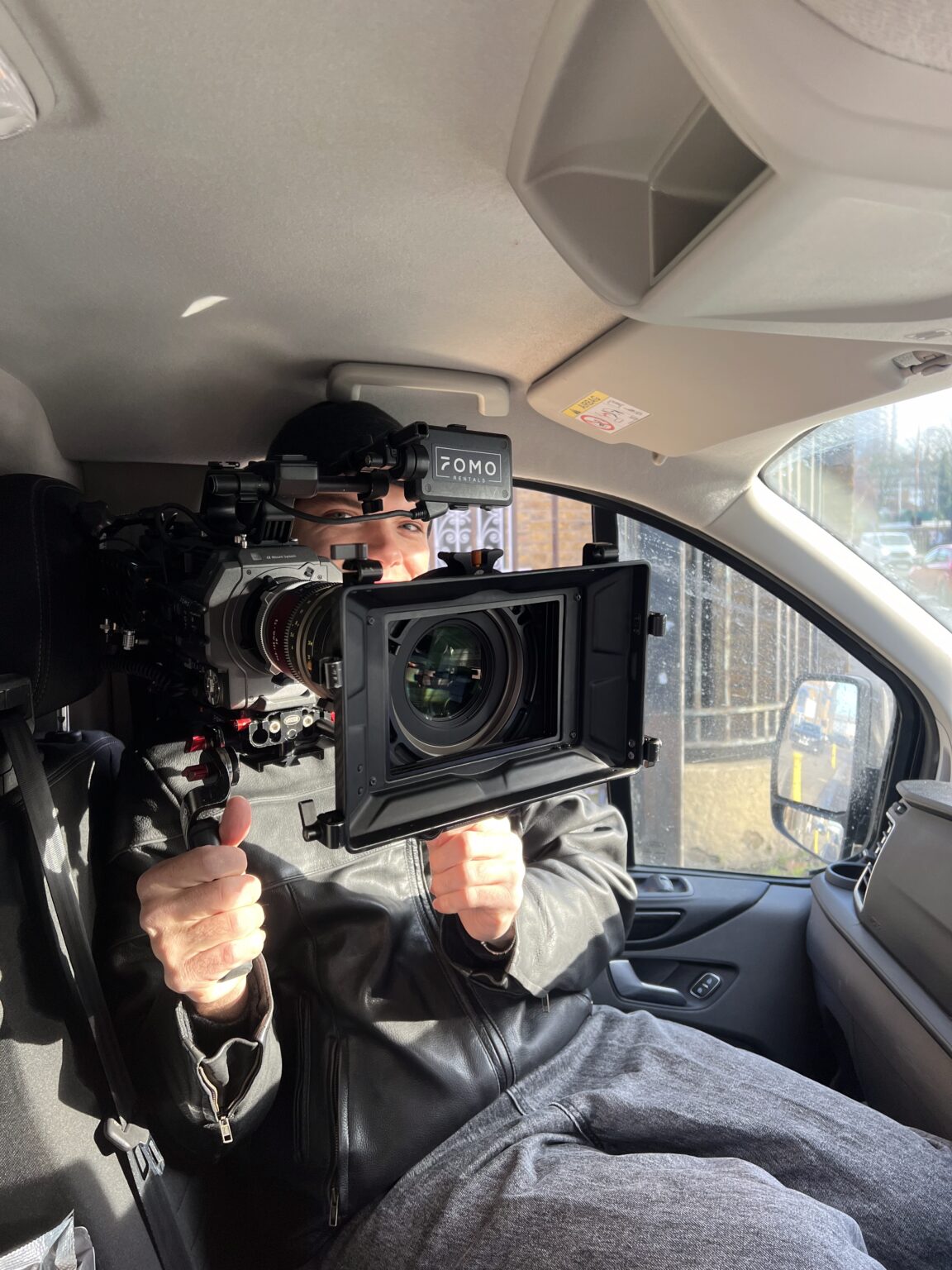
Need a DIT, or the rushes handled?
Tell us the cameras, the formats, the location and where the footage needs to end up: London, your post house or overseas. We’ll book the DIT or wrangler, the drives and the delivery. Or call us on 07412 543822.
Quick contact form
08 Questions
DIT and data in Cornwall: questions
Do I need a DIT on a Cornwall shoot?
Not for a one- or two-camera FX6 day: a camera assistant with verification software does the job. Book a data wrangler for three or more cameras, and a DIT for RAW, ARRI or RED, dailies the same night, or an edit in another city waiting on proxies.
Can you find a DIT in Cornwall?
Cornwall is short of DITs, so when a shoot needs one, the DIT usually comes down from Bristol, Devon or London, with travel and a hotel on the quote before anything is booked. A DIT is £527 a day. For a smaller shoot, a camera assistant or loader based in Cornwall can handle the cards.
How do I get rushes from Cornwall to a London edit?
With a person. The Night Riviera sleeper picks up at Truro at 22:29 on weeknights and reaches Paddington at about 05:05, and GWR’s fastest daytime trains run between Paddington and Truro in 4 hours 21 minutes (checked October 2026). Proxies can go up from a wired line. The masters stay with the production until the copy has arrived and been checked.
Can we upload rushes from a location in Cornwall?
Plan on not. On the Lizard there was no phone signal at all, and a farmhouse or holiday let may not have a fast line. We ask for a wired connection in a town or a hotel, test it before the day, send proxies up from there, and let the drives travel by hand.
How much storage does a Cornish shoot day need?
Two Sony FX6s rolling four hours each in XAVC-I 4K at 25p make up to about 900 GB, from Sony’s maximum bit rates. With three copies, that’s about 2.7 TB of drives, sized before the day. In XAVC-L the same day is about 360 GB.
How many copies of the footage should we make?
Three, each checksum-verified, on at least two kinds of storage, with one away from the location: the 3-2-1 rule. Cards don’t go back to camera to be formatted until two verified copies exist.
What happens to the footage on a 35mm shoot?
There are no cards to copy for the film itself. On Cohere’s AI for Empowerment, shot on the Lizard on 35mm, the negative was processed and scanned in 4K at Cinelab in Slough, days after the shoot, and exposed film can’t go through airport X-ray. The behind-the-scenes films were shot on digital cameras, and digital cards get the usual copy, check and log.
What does data handling add to a Cornwall quote?
The DIT’s day rate, £527, or a wrangler’s, quoted on the brief; the cart and the drives, each on its own line; travel and a hotel if the DIT comes from outside Cornwall; and the delivery, by train or by hand. On a crew hire, everything we book carries our 10% booking fee and 2% insurance. Our team reads every brief within 2 working hours.
Around the crew
More for Cornwall shoots
01
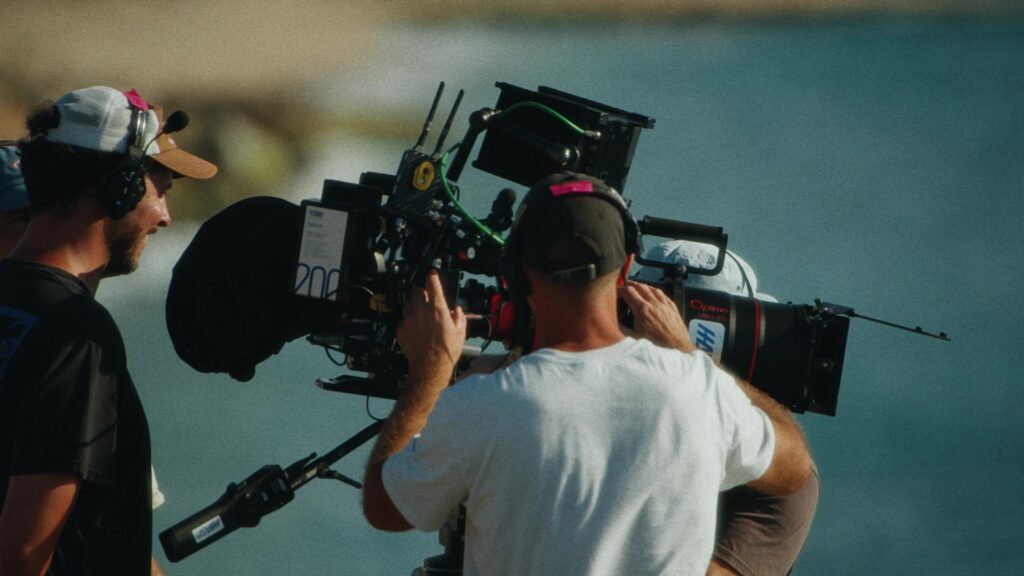
Kit rental
The Cornish Camera Co., Falmouth University’s stores, the crew’s own kit, and what comes down from Bristol.
02
Locations and permits
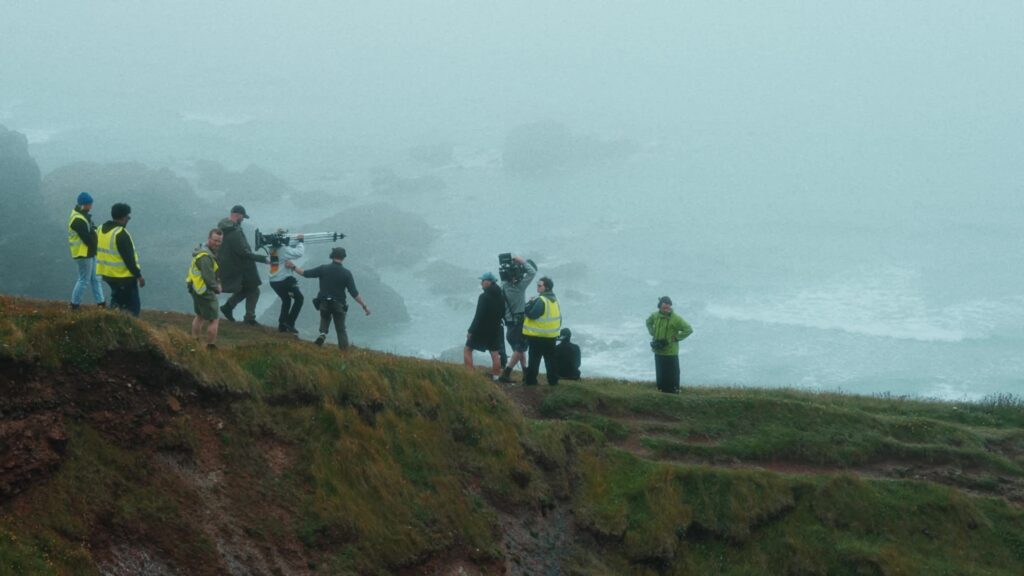
Cornwall Council, the National Trust, Natural England, the Duchy, the harbours and the drone rules.
03
Studios and set builds
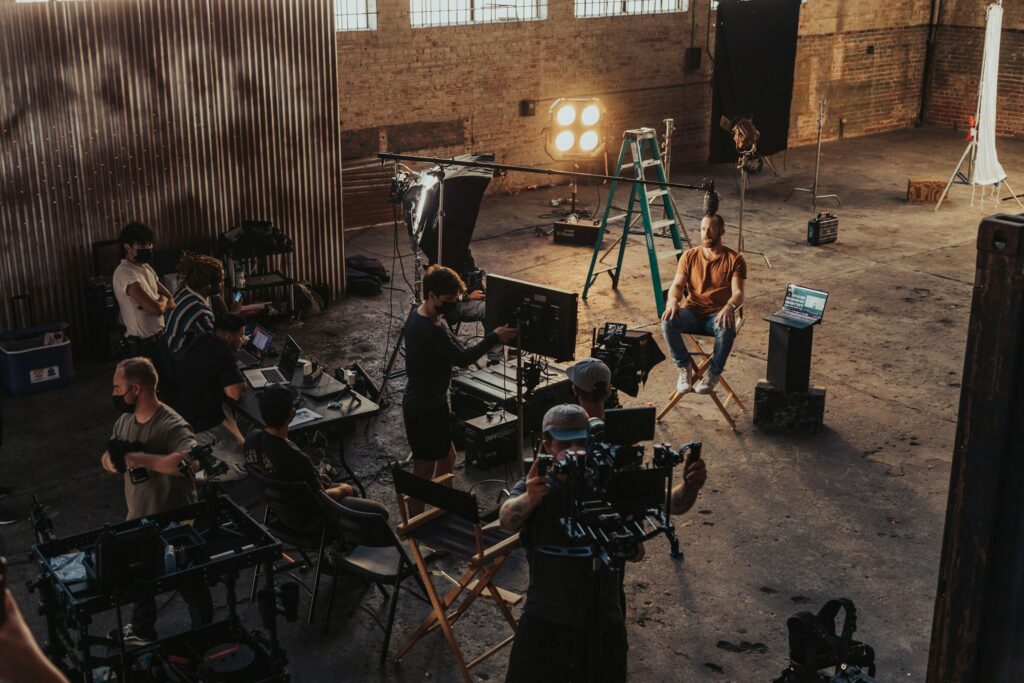
Falmouth University’s studios, converted barns and pop-up spaces, and the stages in Bristol.
04
Props and wardrobe
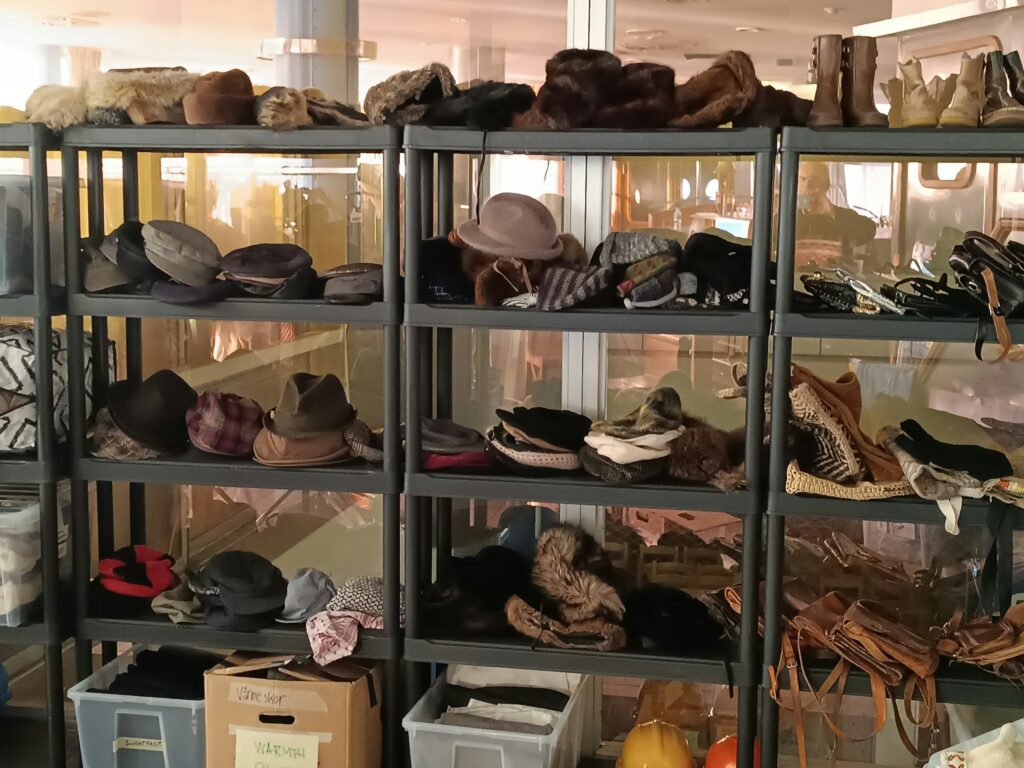
Falmouth’s wardrobe store, props from upcountry, replica weapons, stylists and HMU.
05
Logistics
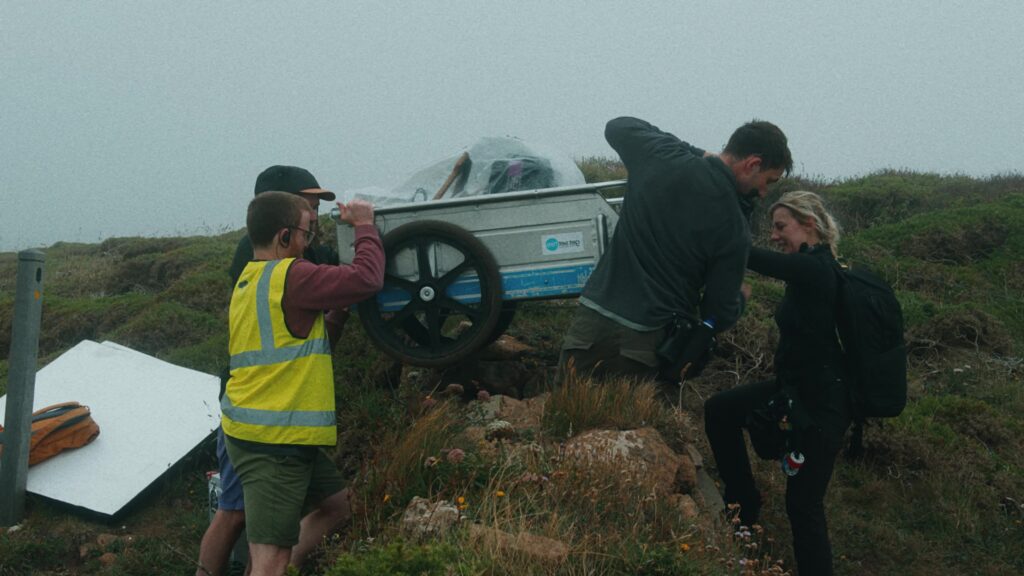
The A30, the sleeper, Newquay airport, narrow lanes, tides, weather days and crew hotels.