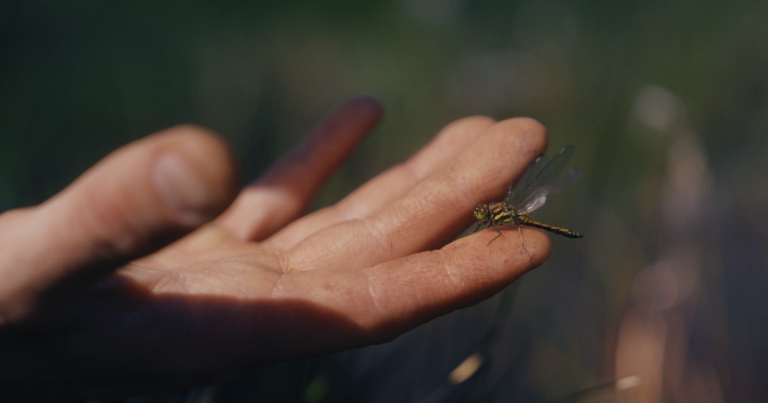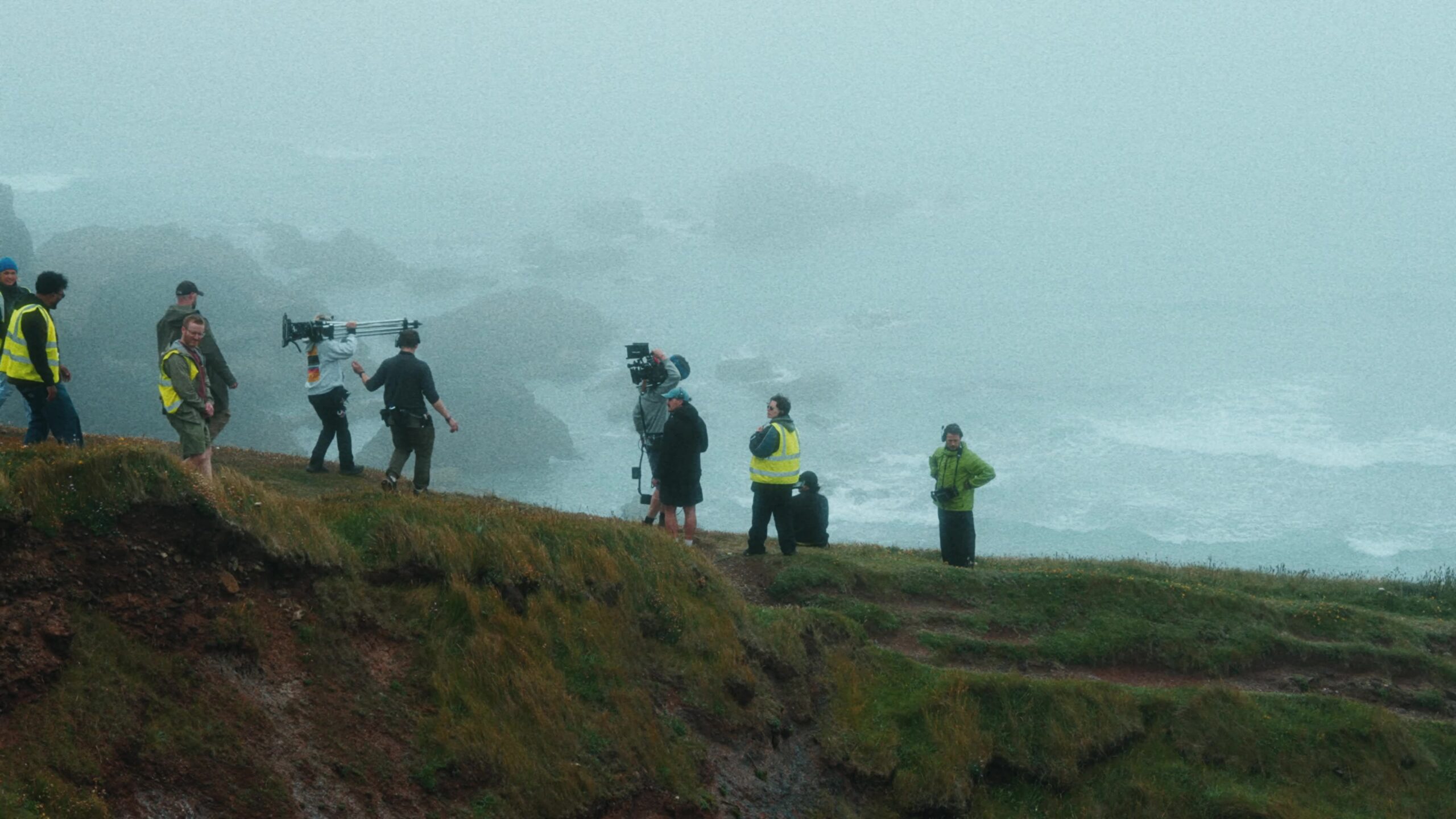

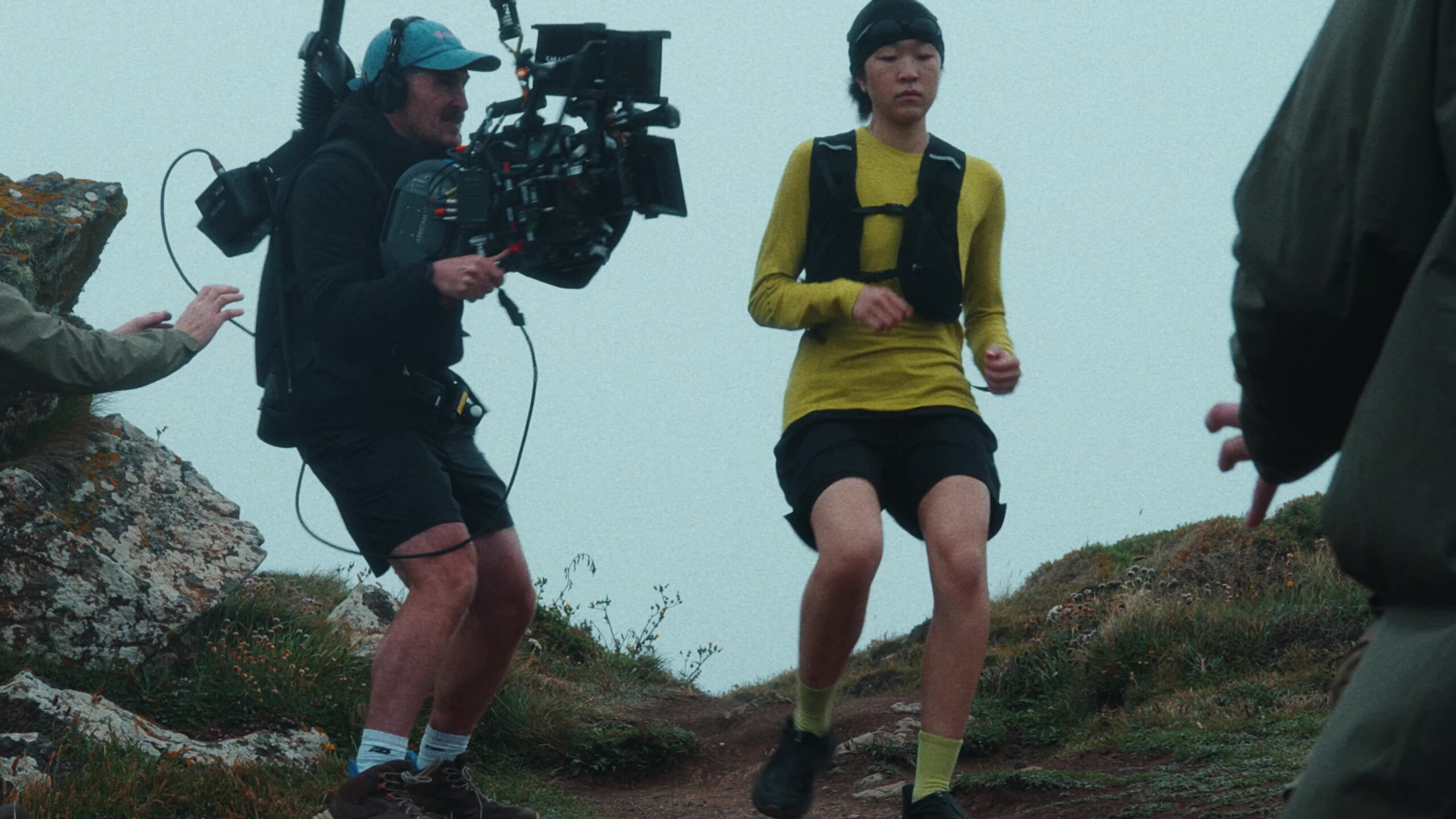
A roll of 35mm lasts about three and a half minutes. You can’t see what you’ve shot until a lab has developed it. You can’t put the exposed film through an airport scanner. Those three facts sound like trivia and they are in fact the whole production plan. In 2026 we, Here Now Films, shot Cohere’s global brand campaign on 35mm in Canada, Norway, Cornwall and Portugal, one shoot day in each, and this post is about what the format did to us along the way, with the behind-the-scenes films we shot as we went. If you’re thinking about film for a campaign of your own, this is the stuff I wish someone had told me in February.
The finished films live on the AI for Empowerment case study page. This post is the other half of the story: the part that happened behind the camera.
A roll of film is three and a half minutes long
Did you know that? We had absolutely no idea before we shot this campaign. This being our first ever campaign shot on film. Kodak Vision3 arrives in 400ft loads for the Arricam LT we shot on, and 400ft of 4-perf 35mm at 24 frames a second gives you a bit under three and a half minutes of picture. A digital card gives you all afternoon. So on a film set the pace of planning.
What that means in practice is that the shot list gets finished before the recce rather than after it. Charlie Coombes, who directed, and Spike Morris, who shot all four countries, boarded every set-up in the campaign. Where the frame starts, where it ends, how fast it travels between the two. On the day, each move got rehearsed on video with the stand-in or the subject until it was right, and only then did anyone load a mag. Nobody says “let’s grab one for safety” on film, ok… maybe we did a coupler of time, but. only for the killer hero shots. Safety is money, and you can hear it going through the gate.
The other thing it means is no playback. The camera has a video tap so you can frame and focus, but what’s actually on the negative stays a mystery until Cinelab has processed and scanned it. On this campaign that was days after each shoot, and for Oslo it was more than a week. So the director has to be able to turn round and say “we’ve got it” without ever having seen it. That’s a real skill and it’s one of the less obvious reasons film costs more than the stock line on the budget. You’re paying for people who can commit.
Ontario was the first shoot, 17 April 2026, on family land, with Aidan Gomez tapping and boiling maple syrup. Watch the behind-the-scenes film below for the rhythm as much as anything. Long stretches where nothing seems to happen while a move gets rehearsed, then a short burst while the camera runs, then stillness again. Two notes from the same day that have nothing to do with the format and everything to do with getting it right. We hired the first AD in Ontario instead of flying one over, and because the sap run had all but finished by the time we turned up, Giorgia Gray, producing, had bulk sap brought in so the boiling could be done for real rather than dressed to look like it.

If your brief needs options in the edit, film will fight you the whole way. If your brief needs conviction, film makes you have some. Cohere’s needed conviction.
Shoot the making-of properly. It might turn out to be the film
Most behind-the-scenes footage is a runner with a phone, cut into thirty seconds for Instagram. We treated it as a second production. On this campaign that decision quiethad some major impacts on the campaign.
The BTS was shot on digital, with a bit of 16mm. You don’t spend film stock on the crew, and a small camera can follow the unit into places the Arricam and its entourage can’t. Sony FX6 and FX3, plus a Blackmagic URSA Mini in Oslo. Matt Wong from Astral Creative shot three of the four legs and cut the whole package, and Cyrus Nezami covered Portugal. The rule for shooting it was simple. Follow, observe, sit with it. The BTS camera never asks the unit to do anything twice and never gets between the film camera and the person in front of it. What it records is what the day was actually like, which is the point.
Then it went through the same finishing as the campaign. Graded at Harbor alongside the vignettes so it sits next to them without looking like a different job, mixed at Sine Studio, delivered to the same channel specs. The BTS films are the only pieces in the whole campaign with a voiceover, which Cohere asked for, and the package came to 155 planned deliverables. Five films, five aspect ratios, three durations each, every captioned version delivered clean as well, subtitles tucked inside every platform’s safe zones. Not a runner with a phone.
Book the lab before you book the flights
Exposed, undeveloped motion picture film is destroyed by airport X-ray. Put that sentence at the top of any plan for shooting film abroad, because it decides where your negative can go and how it gets there. We learned it in Oslo, properly, with a negative sat on the wrong side of a check-in desk.
The Oslo shoot was 9 May 2026. Line production came from Einar Film with a Norwegian crew of around thirty across camera, lighting, grip, sound, art and styling, plus thirty extras to fill a park in the middle of the city where Magnus Carlsen walks about and reads. When the hero frame needed a low angle off the water, Spike put waders on and got in. All of that went fine. Then we tried to go home.
The airline wouldn’t take the exposed film as hand-carriage. The airport operator confirmed that no screening exemption existed. So the negative stayed in Norway while we worked out what to do, and the answer was to have it processed and scanned locally in Oslo and bring the developed negative home a few days later by controlled courier. Once film’s been processed it’s just film. The X-ray problem only exists while it’s undeveloped. Nothing was lost, and we picked up one thing on the way through.
By Portugal two months later the lesson was baked in. There’s no motion picture lab in the country, so before the shoot day we shot test rolls, sent them for processing and checked them, which proved the camera, the stocks and the water housing before any of it counted. The exposed negative then came home as hand-carried precious cargo, arranged in advance rather than argued about at a desk.

The checklist that came out of those two shoots, if you want it. Where’s the nearest lab to each location. What does it cost to process and scan there. Can the negative be hand-carried on the route home, and has the airline said so in writing. If not, who’s the courier. Answer those before the flights are booked and film abroad is perfectly manageable. Answer them afterwards and you’re standing in an airport.
Protected land rewrites how a unit behaves
Cornwall was 16 June 2026, our home turf, on the Lizard, with Serena Li hiking the coast path above Kynance Cove and cycling a road above the sea. On screen it’s one sequence. Off screen it needed three permits.
The route runs across National Trust clifftops, the Lizard National Nature Reserve run by Natural England, and a private road on the Trelowarren Estate. Three landowners, three applications, three sets of conditions, for something that plays as a single move. The cycling ended up on the estate road for a reason that catches a lot of productions cold. A non-athlete riding a bike on a public road, on camera, is ‘a stunt’, with everything that means for insurance, supervision and road closures. A private road made the problem go away and kept the landscape continuous. The moving shots came off a precision tracking vehicle that drove down from Bristol with a specialist three-person team and traffic control on the road.
The clifftops are a Site of Special Scientific Interest, and that’s where the conditions get specific. No drones. No generators, so the whole shoot ran on portable power stations. Nothing pegged or driven into the ground, so every gazebo was weighted instead of staked. Fire response on heathland. Kit went in on beach carts because vehicles don’t. And there’s no phone signal on the headland at all, so the unit ran on twelve walkie-talkies, which is a different way of running a set when your first AD, your camera team and your producer are strung out along a mile of cliff path. When the BTS rig needed a smaller lens on the day, one came from Cornish Camera Company a few miles up the road. Having a studio in the county pays for itself on days like that.
Find out the land designation before you fall in love with the location, and give the applications weeks, not days. Our Cornwall production page covers what we can sort locally.
Weather calls go in writing
Two of the four shoots turned on the weather and we handled both the same way. Every option, and what each one costs, in writing to Cohere before anyone decided anything.
On the Lizard, a fortnight of sunny forecasts fell apart into fog the evening before the shoot. The options were to push the day and pay for it, or to shoot into the conditions. We set them out, Cohere chose to go, and the call moved to 07:00 so we’d be working while the mist was thickest. The unit wrapped at 21:00, and the Cornwall film has an atmosphere the other three don’t. Fog turned out to be the right call, but it was Cohere’s call as much as ours, made with the numbers in front of them. This is super important. Don’t try to hide these choices.
In Portugal, 16 July 2026 at Ericeira, the hero shot was Jonas Niedermüller paddling out at sunset, and Ericeira faces west. No sunset, no film. So we tried to hold two days instead of one, and the day before, the team checked out the forecasts… AccuWeather, Windy, the Portuguese national service IPMA and IBERMETEO against an official local forecast, and sent Cohere the cost of shooting on each day. We moved by a day. The sky cleared. I’d love to claim that as judgement rather than luck. It was about half and half.
Neither of those is really a weather story. They’re a process story. The reason nobody felt ambushed by a moved shoot or a foggy one is that the decision was shared, costed and written down before it was made. On a campaign with talent diaries, a foreign crew and a lab schedule hanging off every day, that’s the only way a weather call stays a production decision instead of turning into an argument about money.
Putting a film camera in the sea
Portugal was also the most specialised camera day, and it shows why film in water is a planning problem before it’s a kit problem.
The brief was clear this wasn’t a surf film. Nobody rides a wave, nothing’s competitive, it’s a bloke on the water watching the day end. To shoot it from the water the Arricam went into a splash housing, and splash bags went over the focus puller’s and the director’s monitors so both of them could see the frame from inside the swell. On a digital shoot you’d check the take on the beach. On film the Atlantic is just another place you can’t see what you’ve got, which is exactly why the test rolls before the shoot day included the housing.
The stock matters here too. The water work went on Vision3 500T, the faster of the two stocks in the package, chosen for how it handles the last light of the day. The T stands for tungsten, meaning it’s balanced for artificial light and reads blue in daylight, so the footage came back cool and got warmed up in the grade. That’s a deliberate trade, sensitivity now for a known fix later, and it only works if the colourist knows it’s coming.
Service production was Ready To Shoot in Lisbon with a full Portuguese crew, and Will Parnall produced. A camera car covered the dirt road down to the coast. A camera boat and a jet ski were in the budget and got cut at the tech recce because the boarded shots didn’t need them. I’d rather a budget that can lose two lines on a recce than one that can’t.

The people who travel, and the people who don’t
Four countries in twelve weeks only works if you don’t fly everyone. What went to every shoot was small. Director, DoP, producer, art director, BTS shooter, and a plan detailed enough that the day didn’t depend on who’d been on the plane. What didn’t travel was the unit. A local first AD in Ontario. A Norwegian crew of thirty through Einar Film in Oslo. A Portuguese crew through Ready To Shoot in Ericeira. And in Cornwall, ours.
That’s how we work in the UK as well. A producer and a creative from London, crew booked from a network of over a thousand people in whichever region the shoot’s in. It’s why a Cornwall job doesn’t come with London hotel bills, and it’s why an international campaign didn’t come with four crews’ flights. The trade is preparation. A good local crew shoots a boarded plan brilliantly and an improvised one badly, because they don’t know yet how the director thinks. Film, as it happens, forces the boarded plan anyway. So the model and the format suited each other, which was more luck than design, and I’ll take it. Our film crew hire page covers the network.
Grade the longest thing first, and frame for the smallest screen
The Arricam had a 4:3 ground glass in it, so the whole campaign was shot at the negative’s native 1.31:1. That’s close to old telly and nothing like the 16:9 the films would mostly run in, never mind the 9:16 of a phone. It was a decision, not an accident. Cohere’s growth team needed the campaign in 41 different pixel dimensions across online, connected TV and out-of-home, and a taller negative gives the versioning room to recompose every ratio from the same frame instead of letterboxing it or cropping someone’s head off. The ratio matrix was agreed before the first shoot, and Spike framed every set-up knowing where the phone crop would fall.
The grade followed a rule I’d now apply to any multi-format campaign. Grade the piece with the most material in it first and make that the master. Here that was the ten-minute film for Cohere’s Berlin launch, cut by Lewis Bullock from all four shoots in both gauges. It was graded at Harbor before the vignettes, and every other asset was either cut from it or matched to it, which is why four countries, four cameras and two film gauges look like one campaign rather than a compilation. Each country then got its own note inside that look. Warmth in the Canadian firelight, a moodier hand in Oslo, colour separation coaxed out of the Cornish mist, and the blue Portuguese water brought back to skin.
Two more things the negative gave us. The out-of-home stills were pulled straight off the 4K scan and graded to match, so the billboards are frames of the film rather than a separate photography day. And where five board sizes wanted more resolution than the scan had, the upscale went to Cohere as a decision to make together rather than something we did quietly and hoped. Post ran through our London post-production team from first assembly to the last of roughly 190 files.
Go and watch the films
All four vignettes, the two-minute combined edit and the Berlin film are on the AI for Empowerment case study page, with the specs and the full credits. If you’re weighing up film for a campaign of your own, or you’re not sure whether your brief needs conviction or options, drop us a line. I read every email that comes in through the site, and the people who answer your first message are the people who’ll be on set. There’s more of our brand film production in London and our work for technology and AI companies to have a look at first if you like.
Questions about shooting on 35mm
What changes when a brand campaign is shot on 35mm rather than digital?
The unit of planning becomes the roll. A 400ft load of 35mm runs about three and a half minutes, so every set-up is storyboarded and rehearsed before the camera rolls and there’s no coverage to lean on in the edit. Footage can’t be checked until a lab has processed and scanned it, so the director commits without playback. Exposed film can’t go through airport X-ray, so lab logistics get planned before travel. On AI for Empowerment for Cohere those constraints shaped four shoot days in four countries, and you can see the discipline in the finished films.
Can you fly with exposed 35mm film?
Not through X-ray screening, which destroys undeveloped motion picture film, and not reliably as hand-carriage either. On our Oslo shoot the airline refused it and the airport operator confirmed in writing that no exemption existed. The two workable routes are to process and scan locally and courier the developed negative home, which is what we did from Norway, or to arrange hand-carriage as precious cargo in advance, which is what we did from Portugal, where there’s no motion picture lab and test rolls were processed before the shoot. Decide the lab route before you book flights.
What permits do you need to film on the Lizard in Cornwall?
It depends whose land the shot crosses. Our one sequence on the Lizard needed three. National Trust for the Kynance Cove clifftops, Natural England for the Lizard National Nature Reserve, and the Trelowarren Estate for a private road used for the cycling. The clifftops are a Site of Special Scientific Interest, which meant no drones, no generators, nothing pegged into the ground and water-only fire response. A non-athlete cycling on a public road on camera counts as a stunt, which is why the ride moved onto private land. Give the applications weeks.
What does shooting on 35mm add to a brand film budget?
Lines that digital doesn’t have. Film stock, processing and scanning, a loader or second camera assistant, test rolls wherever the lab situation is uncertain, and the cost of moving exposed negative safely. Against that, a film unit shoots less and decides more, so the edit is shorter and the grade starts from a more consistent place, and on AI for Empowerment the negative also gave us the out-of-home stills without a separate photography day. Shoot days and countries move the number far more than the format does. For a specific brief, we’ll walk you through the maths on a call.
What’s the difference between Kodak Vision3 250D and 500T?
Speed and colour balance. 250D is daylight-balanced and rated at 250 ISO, the workhorse for exteriors in decent light. 500T is rated at 500 ISO and tungsten-balanced, built for artificial light, so in daylight it reads blue and gets corrected in the grade. On AI for Empowerment the water work at Ericeira went on 500T for its speed in the last light of the day and was warmed back up in the grade at Harbor Picture Company, with 250D carrying most of the daylight exteriors across the four countries.
Why shoot behind-the-scenes on digital if the campaign is on film?
Because the stock is for the film, and the making-of needs a camera that can follow the unit without slowing it down. Our BTS on AI for Empowerment was shot on Sony FX6 and FX3 cameras and a Blackmagic URSA Mini, graded at Harbor with the campaign so it sits beside it, and delivered as 155 planned deliverables across five aspect ratios. Treating it as a real production paid off. The calm, single-shot BTS cut from the first shoot changed how the whole campaign was edited.