

Film crew hire/New York/Spark
Hire a spark in New York. Cable run, lamps up, the next set-up already lit.
Electrics, or set lighting technicians, for brand films, adverts, studio days and night shoots across the five boroughs. On a UK set you’d call them sparks. They rig and run the lights and the power to the gaffer’s plan, get the kit up the freight elevator, and have the next set-up lit before it’s called. From $550 a day, paid to the electric in full.
- 54 five-star Google reviews
- 2 hrs for our team to read your brief, in working hours
- 10 hrs a New York crew day, plus a meal break
- 500+ productions, filmed in sixteen countries

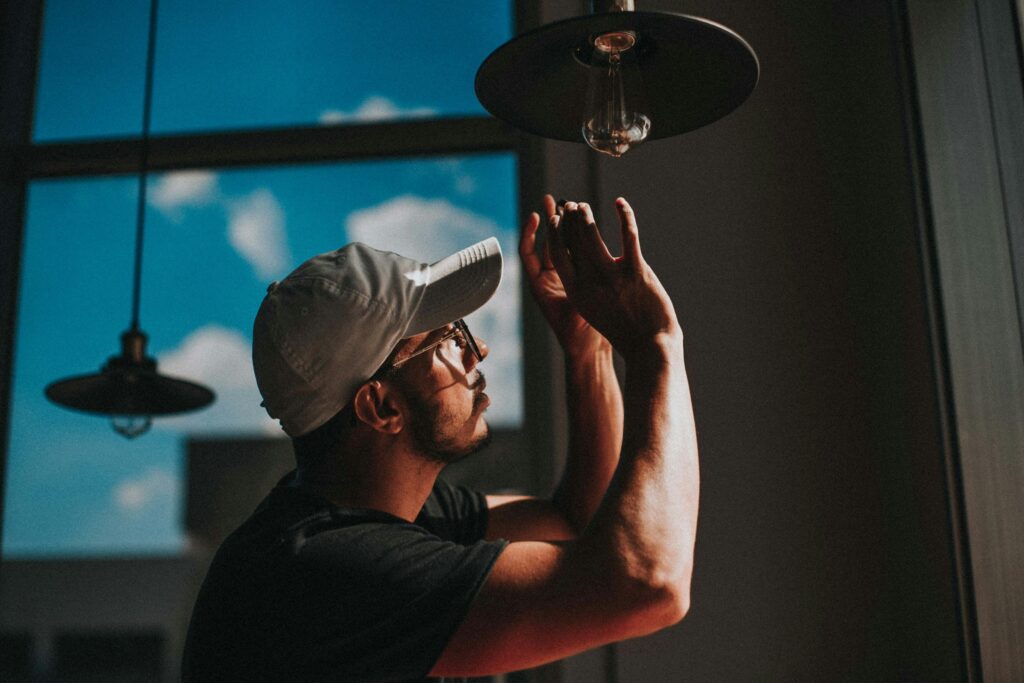
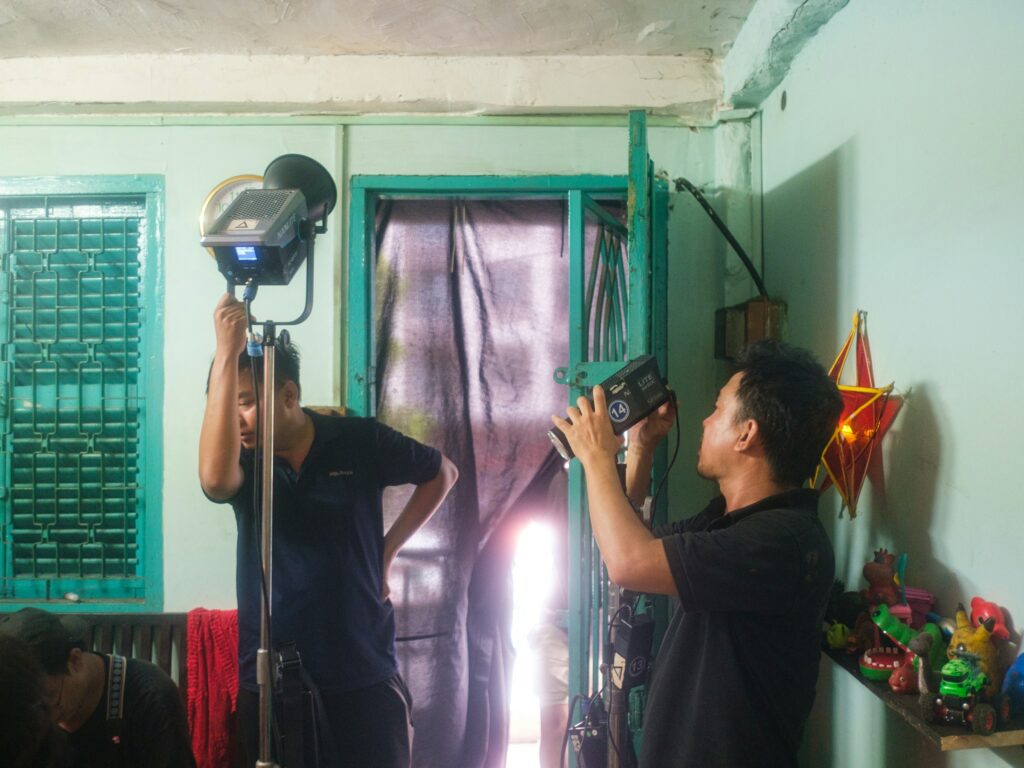
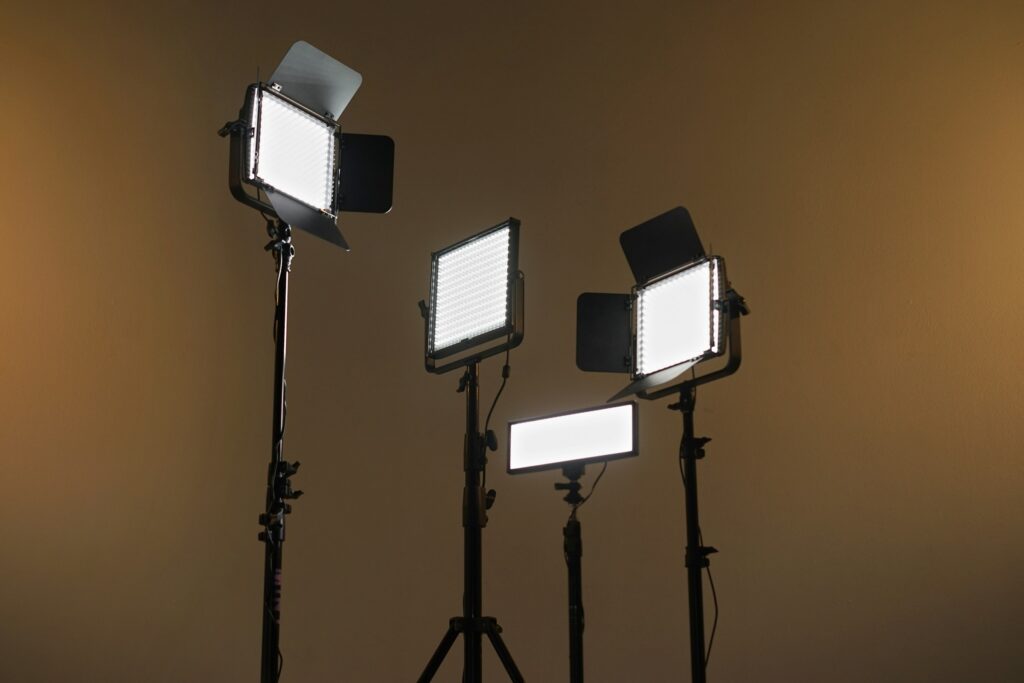

Photos: H&CO, Marcos Paulo Prado, Tri Vo, Aditya Wardhana and Here Now Films
The role
What an electric does on your shoot
An electric, or set lighting technician, is part of the gaffer’s crew. They unload the lamps, rig them on stands and in the ceiling, run the cable and the distribution, focus and adjust the lights between takes, and strike it all at wrap. The best boy electric is the gaffer’s second, running the electrics and the kit.
On a two-person electric team, the electric pre-rigs the next set-up while the gaffer and the DP are still shooting the current one. That’s where the time comes back. In New York it’s also what keeps a company move on schedule: one floor struck and in the freight elevator while the next is still being lit.
Electrics work with power, and only with power. The flags, frames and C-stands that cut the light belong to the grips in New York, so a visiting DP shouldn’t expect the electrics to set them. On a small job, a grip and electric swing covers the two.
- Rigged to the plan. Lamps, cable and distribution where the gaffer wants them.
- Cable run safely. Clear of doorways and fire exits, taped down, on distribution that won’t trip.
- The next set-up ready. Pre-rigged while the current one shoots.
- Kit looked after. Every lamp and cable counted out, and counted back to the rental house.
What’s included
What the day rate covers
In the day rate
- A 10-hour day, plus a meal break
- Rigging and focusing lamps to the gaffer’s plan
- Running cable and power distribution
- Pre-rigging the next set-up
- Gels and scrims, set and changed between takes
- Striking and loading out
On top, each on its own line
- Our 10% booking fee, on the whole quote
- Payroll and insurance for the job, at cost
- Lighting kit, from the gaffer’s package or a rental house
- A board operator, for lights run from a desk
- A generator and its operator, where the house power runs out
- Travel outside the five boroughs, and any cars or vans, at cost
How our rates work, and the two ways to book: crew rates in New York.
Two ways to book
Crew hire or full production: who’s the producer of record?
One question sets the price: who’s the producer of record? Book electrics for your own lighting crew in New York, or have us take the production on.
Crew hire
You run the shoot.
10% booking fee, on everything we book for you: crew, kit and travel. Payroll and insurance at cost, on their own line.
We do
- Find, book and brief the New York crew
- Every crew member employed for the job: payroll, workers’ compensation and COIs
- Book kit, vans and travel too, if you want them
- Send the full price, in dollars, before anything is booked
- One person to call all day
You do
- Run the shoot, or your producer does
- The plan, the schedule and the call sheet
- The location, its COI and any Mayor’s Office permit
- Responsibility for the production: you’re the producer of record
Payroll and insurance are their own line on the quote, at cost: payroll for each crew member, the insurance they need for the job, New York workers’ compensation included, and the certificates of insurance your location asks for.
Full production
We’re the producer of record.
From $20,000 for a New York production; most land between that and $75,000. One quote, in dollars, every line shown.
We do
- Our producer plans it with you and runs the job
- Locations, permits, kit, studio and travel, booked in the production’s name
- The production’s insurance, the COIs and the Mayor’s Office permit
- One quote and one contract with us, wherever you’re based
You do
- The creative calls
- Signing off the plan and the budget
The production’s insurance, the crew’s payroll and any permits are lines in the quote, so you see each one before you sign.
Not sure which you need? If your own producer or director will run the day, it’s crew hire. If you want us to take the production on, it’s a full production quote.
On the day
A day with an electric, call to wrap
A studio day on a cyc wall in Long Island City: product in the morning, two presenters in the afternoon. Times are an example; the call sheet sets the real ones.
- 07:00 Load in The truck at the loading door, the lighting package off and sorted by set-up.
- 07:30 Power Distribution off the studio supply, cable run round the edge of the cyc and off the white floor.
- 08:00 Rig A big soft source over the product table and the cyc lit evenly, with the grips flagging the spill.
- 10:30 Pre-rig While the product shoots, the presenter set-up lit on the other side of the stage.
- 12:30 Meal break Lamps cooled, gels changed for the afternoon.
- 13:30 Presenters Small changes between takes: a lamp down a stop, a scrim in, a practical swapped.
- 17:30 Wrap Everything struck, counted and loaded; the cyc floor clean for the next booking.
Which kind
Which electric do you need?
The electric department from the top down.
Gaffer Runs the electric department From $750 a day
Plans the lighting with the DP and runs the electrics. See gaffers in New York.
Book one first: the gaffer decides how many electrics the day needs.
Best boy electric The gaffer’s second Quoted on the brief
Runs the electrics and the kit: what’s on the truck, what’s on set, what goes back to the rental house tonight.
Best on big lighting crews and multi-day shoots.
Electric Rigs and runs the lights From $550 a day
Rigs, cables, focuses and strikes, to the gaffer’s plan.
Best on any shoot with more than a few lamps, a fast schedule or a move between locations.
Board operator Lights run from a desk Quoted on the brief
Runs a lighting desk for colour-changing LEDs, effects and cues.
Best for music videos, events and stage shoots.
Union electrics Local 52, on a signatory job Local 52 scale, on request
On a union job, gaffers, best boys and electrics are Local 52 members, under an AICP commercial agreement that took effect on 22 March 2026. Its rates aren’t published.
Best for union commercials. We quote it on request.
What it’s for
What people book an electric for in New York
Studio days
Cyc walls and stages in Long Island City and Brooklyn, where the lights change between set-ups.
Brand films and adverts
A gaffer and an electric, so the next set-up is ready, even with a move across town.
Overseas productions
A UK or European team lands at JFK with its DP; we add the gaffer and the electrics here.
Interviews in office towers
Several set-ups on one Midtown floor, each pre-rigged in the next room.
Night exteriors
Big lamps, long cable runs and a generator, under a Mayor’s Office permit.
Recent work
Electrics on our crews, and how we book them
How we crew it · New York
Book the gaffer, then the electric
We book electrics with the gaffer they usually work with wherever we can, because a pair that already knows each other’s habits rigs faster. The gaffer reads the plan and the schedule and tells us whether the day needs one electric, two, or a best boy as well. A single interview in a Midtown office often needs none beyond the gaffer; a brand film with a move across town usually needs one.
How we crew it · New York
Lights on a New York sidewalk
A hand-held camera on a sidewalk needs no permit. Lights, stands and cable do: anything beyond a hand-held camera or a tripod means a Mayor’s Office permit, with at least $1,000,000 of general liability naming the City, and the Film Office processes it 48 to 72 business hours before the shoot (checked October 2026). The permit also brings parking privileges for the truck, which on a Manhattan block is the other reason to have one.
Before you book
Things to know
The day
- 10 hours, plus a meal break.
- Any overtime is agreed with you before it happens.
Safety and buildings
- Electrics work to the gaffer and to the building’s rules on power, rigging and working at height.
- Many New York buildings want a certificate of insurance naming them before any kit comes in, and the freight elevator booked.
- Lights on a sidewalk mean a Mayor’s Office permit: $500 for each 14-day period (checked October 2026).
Paying and changes
- Nothing to pay until you confirm the electric.
- 50% when you book, 50% on receipt of the final rushes.
- Every line on the quote: day rate, booking fee, payroll and insurance, kit, travel.
- Cancellation terms are on every quote.
Employment and insurance
- Every electric we book is employed for the job, on payroll, with New York workers’ compensation.
- Certificates of insurance (COIs) for your location or permit, naming whoever needs naming, on request.
- On a crew hire the location, its COI, the permit and your own general liability stay with you. When we’re the producer of record, the production carries them.
- In New York, Here Now Films books its crews through established New York production companies, so every crew member is employed, on payroll and fully insured for the job.
$550 a day
Local 52 scale for union jobs, quoted on request: its rates aren’t published.
| Day rate, 10 hours | $550 |
| Booking fee, 10% | $55 |
| One day, before payroll, kit and travel | $605 |
Every electric we book in New York is employed and insured for the job. Payroll and insurance are their own line on the quote. What that covers
You won’t pay anything until you confirm the electric.
- Every crew member employed and insured for the job
- 50% at booking, 50% on the final rushes
- Our team reads every brief within 2 working hours
Or call us on +44 7412 543822.
Reviews
What clients say about our crews
Straight from our Google Business Profile.

Book a spark in New York.
Tell us the date, the location and who’s gaffing. Our team reads every brief within 2 working hours. Or call us on +44 7412 543822.
Check availability
The whole crew
Every role in New York, booked the same way
One brief, one quote in dollars, every role on its own line. Our day rates in New York, paid to the crew member in full:
Production 06
- Director From $1,500
- Producer From $750
- Production manager $650
- 2nd AD $600
- Production assistant $250
- Runner $250
Camera 07
- DP From $1,200
- Camera operator $750
- 1st AC $700
- 2nd AC $550
- Steadicam operator From $1,500
- Gimbal operator $750
- Drone operator From $1,000
Data and playback 02
- DIT $750
- Video playback $650
Sound 01
- Sound mixer $850
Hair, make-up and costume 02
- Hair and make-up $650
- Costume $700
Art department 02
- Art director $750
- Set builders $550
Post-production 01
- Editor From $600
How our rates work: crew rates in New York. Or start from a set-up: interview crews and units in New York.
Questions
Hiring a spark in New York: questions
How much does a spark cost in New York?
Our electrics in New York start at $550 for a 10-hour day, and the electric is paid all of it. On a union job, Local 52 scale applies, quoted on request, because its rates aren’t published. On top go our 10% booking fee, so one day comes to $605, before payroll and insurance (at cost, on the quote), kit and travel. The lighting package is on its own line, usually the gaffer’s or a rental house’s.
Who employs the crew, and are they insured?
Every crew member we book in New York is employed for the job and fully insured: payroll, New York workers’ compensation, and certificates of insurance for your location or permit. Payroll and insurance show as their own line on the quote, at cost. On a crew hire, the location, its COI and the permit stay with you, because you’re the producer of record. If you’d rather we were, it’s quoted as a full production.
Is a spark the same as an electric?
Yes. Spark is the UK word; in New York the role is an electric, or set lighting technician, and the gaffer’s second is the best boy electric. The difference that matters on set is the split with the grips: in New York, electrics handle the lamps, cable and power, and grips handle the flags, frames, C-stands and rigging that cut the light. A DP used to sparks setting their own flags should expect a key grip working alongside the gaffer.
How many electrics do I need?
The gaffer decides, from the plan and the schedule. A single interview in an office often needs none beyond the gaffer; a brand film one; a night exterior or a stage day two or more, with a best boy to run them. A move between buildings in Manhattan, where each has its own freight elevator and its own rules, is a good reason to add one.
Are your New York crews union or non-union?
Non-union by default, on corporate, branded and documentary work. If your production is signatory to a union agreement, or you need union crew for a commercial, we quote at scale: the IATSE/AICP commercial agreement for camera and make-up, Local 52 for grip, electric and sound, USA 829 for the art department, and the DGA for directors and ADs. Scale is wages only: fringes and payroll go on top.
Do we need a film permit in New York?
Not if the crew is hand-held or on a tripod, takes no exclusive use of a street or park, and parks no production vehicles. Equipment beyond that, parked production vehicles or exclusive use need a permit from the Mayor’s Office of Media and Entertainment: $500 for each 14-day period, with at least $1,000,000 of general liability naming the City of New York (checked October 2026). The Film Office processes most permits 48 to 72 business hours before the shoot. More in filming permits in New York.
How far ahead should I book an electric in New York?
Our team reads every brief within 2 working hours. We book electrics with the gaffer they usually work with where we can, so book the gaffer first and the electrics follow the plan. For lights on a street, the Mayor’s Office permit, processed 48 to 72 business hours before the shoot, sets the date more than the crew does.