Last week, a film we made earlier this year for a project that doesn’t physically exist yet ended up auto-playing at the top of The Sun’s travel section. Here’s what that reveals about the work concept films actually do, and what it means if you’re sitting on an early-stage idea.
The film is for Xanadoo, a new kind of cultural destination in development by Gaynor Coley and Susan Hill, two of the team behind the Eden Project. The project is currently shortlisting sites in South-East Wales, with a projected 600,000 visitors a year and £15m in annual revenue once open, and a target opening in 2028.
What’s interesting isn’t the press hit itself, satisfying as it is. It’s what the moment reveals about what a well-made concept film actually does in the world.
The building doesn’t exist yet. The site hasn’t been confirmed. The funding model is still being closed out. And yet the project is travelling, into council reports, founders’ inboxes, and now a national newspaper reaching millions of readers. The film is doing the travelling.
If you’re sitting on an early-stage idea, a venue, a charity initiative, a new service line, a startup looking for series A, that’s worth understanding properly.
What was the brief?
When Gaynor and Susan came to us, the ask was specific. They needed a single shareable asset that could:
- Explain what Xanadoo is, clearly enough for a council leader, a philanthropist, or a strategic operator to understand it in under five minutes.
- Show why South-East Wales is the right home, without locking the project to a single site.
- Put feasibility and impact up front, with the numbers visible, not buried.
Ambitious, but also tight. The film had one job: open conversations.
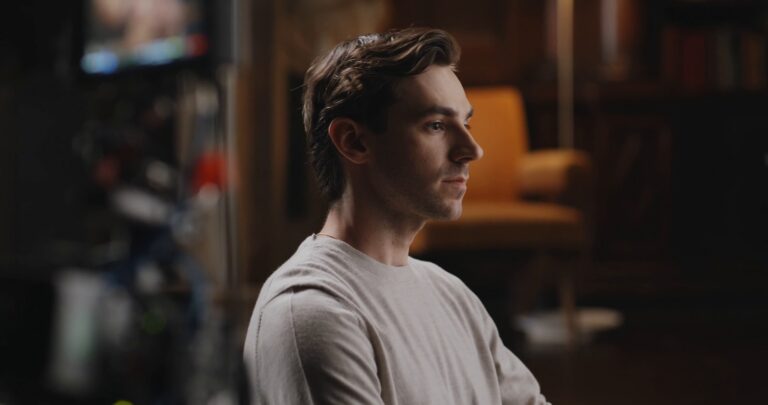
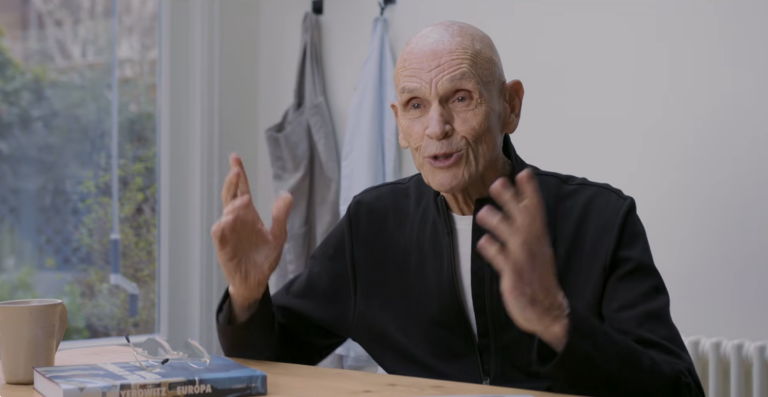
We shot it at The Forge in Bristol, interview-led, with Gaynor and Susan anchoring it and supporting voices from Jerry Tate at Tate + Co. Architects and the team at Wavehill Research adding depth. Single location, careful structure, restrained motion graphics. Optimistic but not glossy. You can see the film and the full breakdown on the case study page.
A few craft decisions worth flagging, because they’re the bits that actually made it work later.
We cut the script three times before the shoot to get the visitor journey down to five beats, Market Hall, Road to Happiness, Gallery of Marvellous Solutions, The Playground, Tomorrow’s World, Call to Action. Anything more and the film stops working as a five-minute door-opener. Anything less and the proposition loses its texture.
We used archival cues and concept imagery sparingly. Over-illustrating an unbuilt project ages it instantly, the moment you commit to one architectural language, half your potential sites stop working. We wanted a film that could survive the site decision rather than constrain it.
And we leaned hard on the founders themselves. Gaynor and Susan deliver to camera with a clarity that’s rare. The credibility of the project tracks directly off them, and a film that’s anchored on people who can carry the vision is structurally different from one that hides behind graphics and voiceover.
What can a concept film actually do?
Here’s the bit worth saying out loud, because it’s not always said.
A pitch deck explains. A brochure describes. A website lists. A concept film does something different, it lets people feel the project before it physically exists.
That distinction matters more than it sounds. Funders, councillors, journalists, future visitors, they’re not being asked to read a business case. They’re being asked to imagine themselves in a room that hasn’t been built yet. A film, done well, does that imaginative work for them.
Three things follow from this.
Concept films are reusable currency. The same film opens conversations with a council, a philanthropic trust, a strategic operator, and, as we’ve just seen, a national newspaper. You make it once. It works in dozens of rooms.
Concept films travel further than decks. A 60-page prospectus stays in someone’s inbox. A two-minute film gets forwarded, embedded, shown at events, played at investor breakfasts. The Sun didn’t pick up Xanadoo’s prospectus. They embedded the film.
Concept films build credibility before the project does. When a journalist or partner sees the founders speaking to camera, articulate, warm, on-message, the project stops feeling speculative. It starts feeling real. That credibility compounds. The Eden Project itself has delivered an estimated £6bn of economic value to Cornwall and the West Country over its lifetime — and projects of that scale don’t get built without years of credibility-building before the first spade hits the ground.
When should you commission a concept film?
If you’re early-stage, and “early-stage” here means anything from “we have a vision and a credible team” to “we have a feasibility study and our first letter of intent”, there’s a real question about when to commission a film.
Our honest answer: earlier than most people think, but later than is reckless.
You need enough clarity to articulate what you’re building. You need named voices on camera who can carry the project’s authority. You need at least a working visual language, even if it’s mood-led rather than site-specific. What you don’t need is a final site, planning permission, or fully closed funding.
Xanadoo is a useful example because the film was made before a site was confirmed. We deliberately kept the visual language flexible so the film wouldn’t lock the project to a single location. That flexibility is partly why it’s still travelling well a few months later.
What concept films can’t fix
A few things we’d want any prospective founder to know before commissioning a concept film.
It won’t solve a vague vision. If the project isn’t clear in your head, the film won’t make it clear. Cameras amplify clarity and amplify confusion in equal measure. We’ll push hard at the script stage, that’s part of what we do, but the foundation has to be there.
The on-camera voices matter enormously. Films built around founders who can speak well to camera land harder than ones leaning on graphics and voiceover. Gaynor and Susan are exceptional at this. Not everyone is, and that’s worth being honest about up front.
It’s a tool, not a strategy. A concept film is one part of a launch toolkit. It opens doors. The rest of the work, the partnerships, the planning, the operational graft, is yours.
What made this one travel?
The single thing that made this film carry was structural restraint. We resisted over-illustrating Xanadoo. We didn’t over-promise. We let the founders’ authority and the clarity of the visitor journey do the lifting. That meant the film could be picked up and reframed by a national paper without contradicting anything we’d shown.
If you’re sitting on an early-stage project and wondering whether a concept film is worth it, drop us a line. We’d rather have a frank conversation about whether you’re ready than sell you something you’re not.
See how we work as a Bristol video production company, or explore our brand video and documentary production services.
Frequently asked questions
When in a project’s life is the right time to commission a concept film?
Earlier than most founders think, but later than is reckless. You need a clear vision, named voices who can carry the project to camera, and at least a working sense of visual language. You don’t need a final site, planning permission, or closed funding.
How much does a concept film cost?
It depends on shoot scale, on-camera talent, location count, animation and motion graphics, and post-production complexity. As a rough guide, most concept films we make sit between [Ed: confirm range] — but we’re always direct about the trade-offs in either direction. We’d rather scope down to do something well than scope up to hit a number.
What’s the difference between a concept film and a brand film?
A brand film tells the story of an organisation that already exists. A concept film tells the story of one that doesn’t yet — a venue pre-build, a service pre-launch, an initiative pre-funded. The craft principles overlap but the strategic job is different. Concept films have to do imaginative work that brand films don’t.
What do you need to have in place before commissioning a concept film?
Three things. A clear articulation of what you’re building (we’ll help refine it, but the foundation has to be there). At least one founder or principal who can deliver to camera with authority. And a sense of what the film needs to do — open doors with funders, attract partners, build public momentum, or some combination. The clearer you are on that, the better the film.