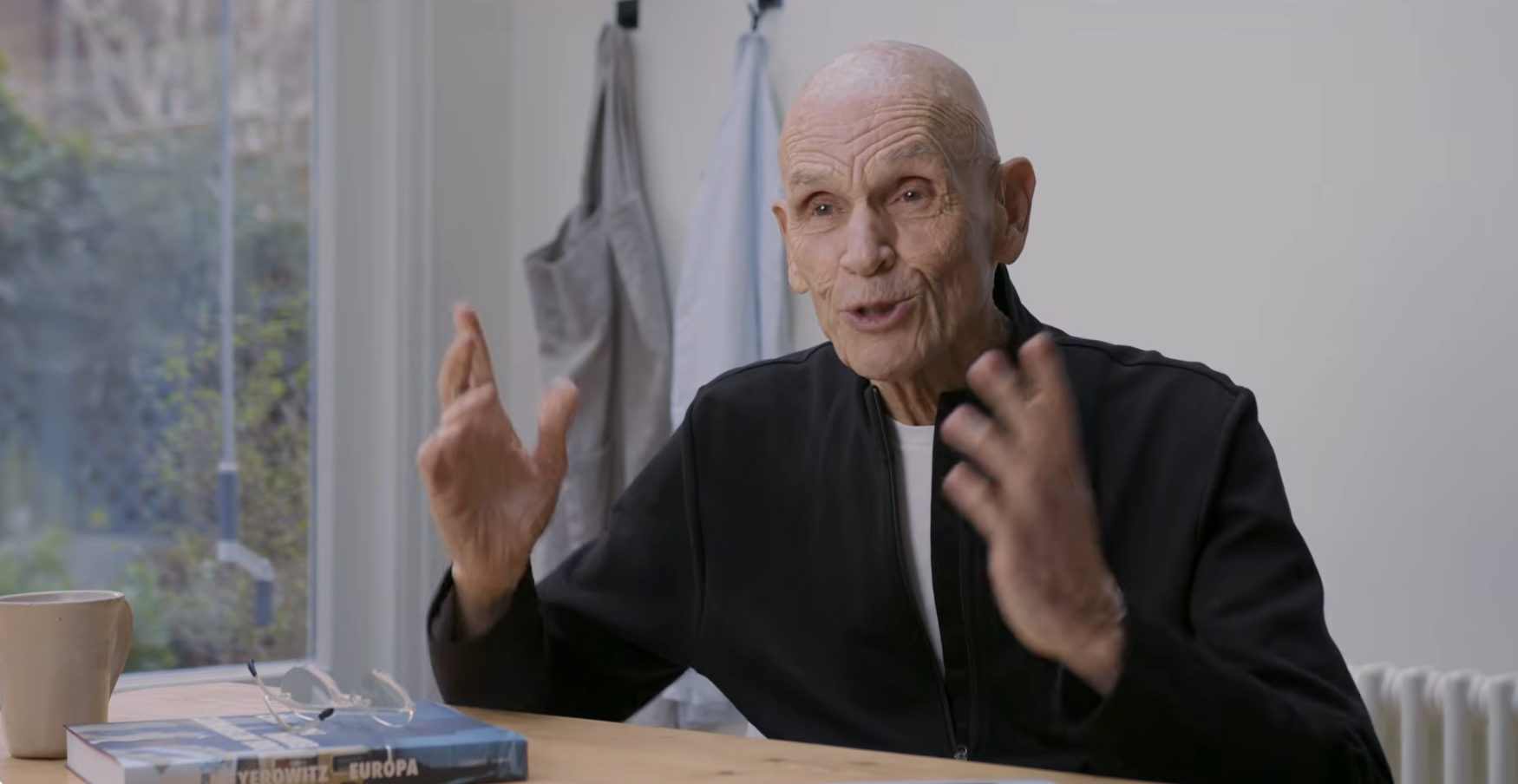

We were commissioned by the Sony World Photography Awards to produce the Outstanding Contribution to Photography film for their 2026 ceremony at Somerset House. The recipient was Joel Meyerowitz.
If you’re in the photography world, you already know who that is. If you’re not: Joel Meyerowitz is one of the most important photographers of the last sixty years. He began shooting in colour in 1962 at a time when the photography establishment considered colour beneath serious art. He didn’t care. He thought it looked right. That instinct turned out to reshape the medium entirely. His 1978 book Cape Light became a benchmark for what large-format colour photography could do — over 100,000 copies sold, which for a photography monograph is extraordinary. After 9/11 he was one of the only photographers given unrestricted access to Ground Zero, and what he made there is one of the most significant documentary bodies of work of the century so far. He’s a two-time Guggenheim Fellow. His prints are in MoMA, the Met, the Whitney. His work has appeared in over 350 exhibitions worldwide.
He’s also based in London. His wife, the writer Maggie Barrett, is English — and Joel has made this city his home alongside New York. Which meant that when the commission came in, the interview wasn’t a logistical challenge. It was just a conversation that needed to be worth having.
The conversation
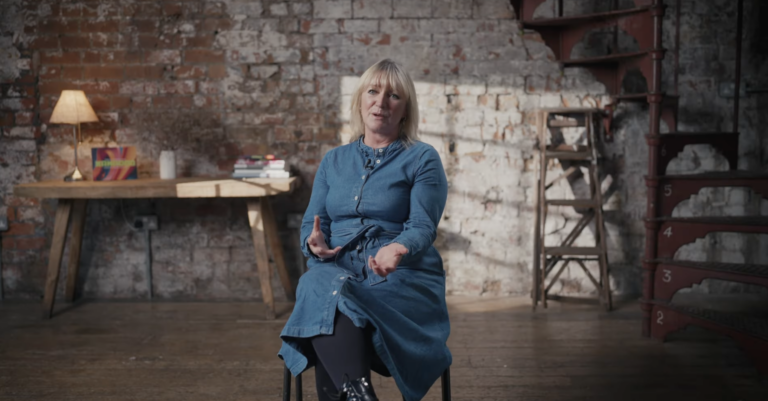
Our producer Meg Amos went to meet Joel and Maggie for the interview. What she came back with wasn’t just usable footage.
Joel wrote to Meg afterwards. He told her that he and Maggie had been through a lot of interviews recently, press cycles, promotional obligations, the routine of it, and that many had been exactly that: routine. He described what they’d had with Meg as something different. A thoughtful conversation. A real treasure, he called it. He said it had been a special day.
He then, entirely unprompted, offered to do behind-the-scenes shooting for a future documentary project they’d discussed. For free. Because he wanted to be involved.
You can’t manufacture that kind of response. It comes from approaching people as people rather than subjects, from doing the preparation, caring about the answers, and letting the conversation go where it needs to go. Meg does this better than most.
The editorial problem
A career from 1962 to now doesn’t compress easily. The temptation is chronological comprehensiveness, a highlights reel that covers the bases, respects the legacy, ticks the boxes. The risk is ending up with a Wikipedia article with music. Accurate. Inert.
Our editor Alexander Webb built the film around Joel’s voice rather than around his CV. The archive images aren’t illustrations of a timeline, they’re punctuation in a spoken argument about why looking at the world matters, and what it costs, and what it gives back. The Ground Zero work gets its proper weight. The Cape Cod work gets its proper light. The full-bleed interview sequences aren’t trimmed to soundbites; they’re given room to breathe.
The result is a film that feels like spending time with someone who has thought seriously, for six decades, about what the camera is actually for.
What this kind of film requires
We make a lot of films about practitioners; artists, photographers, thinkers, founders, makers of things. It’s some of the work we find most meaningful. We’ve done it for Tate Galleries, for arts institutions, for cultural organisations across the UK and internationally. The common thread isn’t the subject matter. It’s the conviction that the interview, done properly, with real preparation and genuine curiosity, is one of the most powerful tools available to a documentary filmmaker. Not a means to gather material. The thing itself.
If you’re working on a film about someone whose life’s work deserves that treatment, an artist, a founder, a practitioner, anyone with something real to say, we’d love to talk.